This summer, almost all tourist locations in Zakarpattia have seen an influx of tourists - for the first time in three years - in the region. This is especially noticeable at the region's water bodies (thermals, water parks, swimming pools): there are so many people and cars in the car parks that there is nowhere for an apple to fall.
Mostly families with children from Ukrainian cities, where alarms are constantly sounding and Russian missiles and "chessmen" are shooting down, come here for short holidays. People are attracted not only by the entertainment segment, but also by the opportunity to sleep peacefully at night without running to the bathroom, corridor or basement: in villages (and Zakarpattia is mostly rural), air raid alarms are hardly ever activated.
Local tourism market players note that this summer season, Zakarpattia is particularly busy with families, children in camps, and corporate or conference tourism clients. There is a separate segment of tourists from the EU who want to tickle their nerves by waiting in a country at war, and it doesn't matter that it is in the deep rear, for them you have crossed the border with the EU and are already "at war".
At the same time, it can be difficult to find a guide or mountain guide on weekends: many have left the profession or are serving in the Armed Forces. So, how the tourism market in Zakarpattia, which was almost dead after two years of Covid and the first year of full-scale war, suddenly woke up, is described in the article Ukrinform.
THE THREE PILLARS OF THE MARKET ARE FAMILY, CORPORATE TOURISM AND CHILDREN'S CAMPS
- "The largest percentage of tourists this summer in Transcarpathia is domestic family tourism, mothers with children who came here for a short holiday from other cities of the country," says Irina Gaziy, representative of the tour operator Butterfly TravelThere is also an emphasis on children's recreation (camps in the mountains or mountain villages, it is safe to hold them here, so parents are not afraid to send their children here). The third is conference or corporate tourism. It is especially popular among doctors: heads of medical institutions try to send their overworked employees here for at least a few days as part of a professional conference, so that specialists have a chance to rest. It's mentally hard for people to work all the time, and it's very important to change the picture, says Iryna Gaziy.

She notes that this is the second tourist summer in a row when most Ukrainians cannot afford to holiday in Europe and when there are no flights abroad.
- In this regard, people began to learn about Ukraine. It is striking that on any tour they want to see as much as possible in the shortest possible time. It is gratifying when people leave feedback after visiting Transcarpathia, saying that they did not even expect Ukraine to be so beautiful and that they are ready to come back here again and again," adds the tour operator's representative.
A NEW TYPE OF TOURIST HAS EMERGED - EUROPEANS WHO COME TO WAIT IN A COUNTRY AT WAR
Fedir Shandor, Head of the Transcarpathian Regional Tourism Organisationsays about another segment of tourists, who are numerous this year in Zakarpattia and Lviv region.
- We are talking about Europeans (mostly Poles) who want to wait in a country at war and show on their social media that they have been in Ukraine, a country in the centre of Europe where there is a war. Of course, few of them go further than the deep rear, such as Zakarpattia or Lviv region, to the regions where there is a real war. People want to tickle their nerves in some way - by hearing the sound of a siren during an air raid, etc. But on the way, they rent hotels and eat in local restaurants, buy souvenirs, so they fill the Transcarpathian tourist market with money," says Shandor.
He says that this type of "nerve-tickling" tourism is becoming a trend, so we need to know what it is.

IT CAN BE DIFFICULT TO FIND A GUIDE ON WEEKENDS, MANY OF THEM SERVE IN THE ARMED FORCES
Oleksandr Shershun, the head of the Association of Transcarpathian Tourist Support Specialists says that this year there are twice as many tourists in Zakarpattia as last year. However, very often (especially on weekends) there is no one to serve them: there are not enough guides in Zakarpattia.
- The number of tourists in Zakarpattia this summer is really the highest in the last four years. People come here for short-term holidays. First of all, because the alternative is difficult - there is virtually no sea, it is dangerous to swim in the South after the explosion of the Kakhovka hydroelectric power station, and it is difficult to go abroad. That's why Zakarpattia remains one of the few recreational regions," says Shershun.
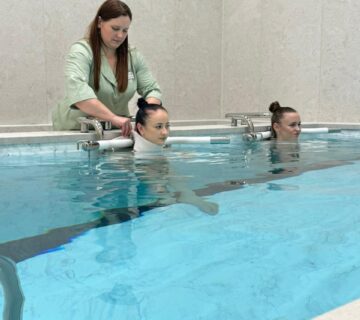
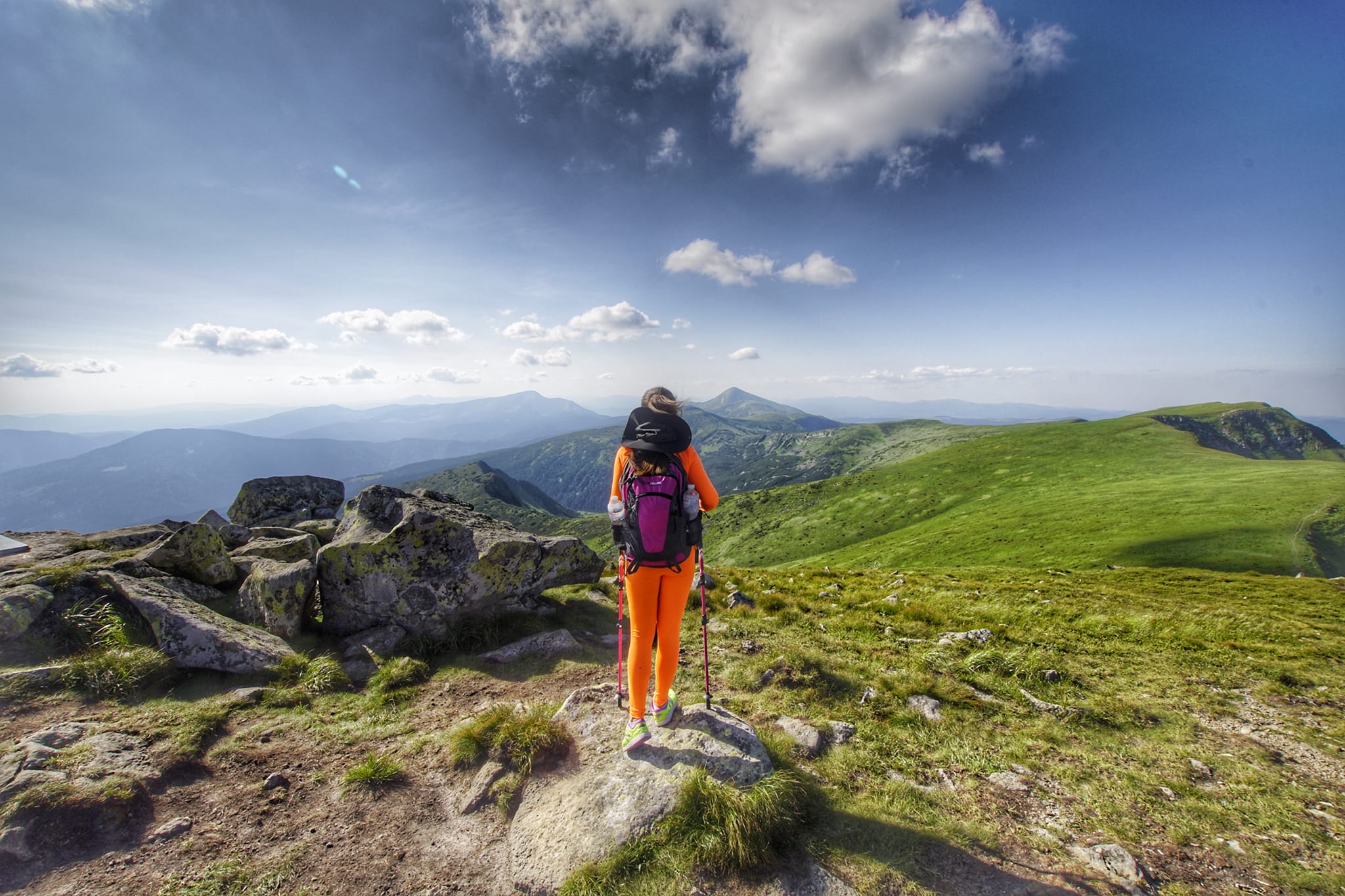
He notes that people want to go to the water first, so the busiest places are thermal baths and water parks. The second popular destination is the mountains.

- According to the figures we received for the Mukachevo Castle (it is an indicator object visited by more than 80% Transcarpathian tourists), 80,000 tourists have already visited the castle in the first half of 2023, and 82,000 people visited it last year. That is, there are already twice as many tourists," Shershun emphasises.
He also says that this year in Zakarpattia, the staffing crisis was acutely felt: there were no guides. Before the war, according to Shershun, there were 140 qualified guides in Zakarpattia, and 220 together with the Hungarians. This year, during the re-registration, it was discovered that there were just over a hundred guides left.
- In recent years, a lot of people have changed their occupation. After all, since 2020, we have had two years of quarantine, then the war: some people left the market, some left, etc. Others are serving. Eight people from the Association of Guides serve in the army - these are such well-known Transcarpathian guides as Kostia Balabanov, Vladyslav Tovtyn, Ihor Huledza, Orest Kohut... That's why it's very difficult to find a guide in Transcarpathia on weekends, especially a guide to the mountains," says Oleksandr Shershun.
FOREIGN TOURISTS HAVE BEEN REPLACED BY DOMESTIC ONES IN HUNGARIAN VILLAGES
Chairman of the Hungarian Tourist Board, Josyf Torpoi says that tourism has changed in the region where the Hungarian minority lives compactly: while before the war, it was mainly Hungarians who came here, interested in local history tourism and rural estates, nowadays, it is mostly Ukrainian city dwellers who come to Berehove district.
- They are mainly interested in the thermal baths. Before the war, we had such a specificity that there were more foreign tourists from neighbouring countries, primarily from Hungary. It was local history and rural tourism with local cuisine and wine. Now all this has been reduced to zero, all our tourists are Ukrainians, mostly residents of large cities with a population of over a million, who came to the region to take a break from air raids and shelling. Also, many families moved to us last year, from Kyiv and Kharkiv, and they have been living in hotels or estates for more than a year, and this is how our tourism representatives earn money," says Yosyp Torpoi.

THERE ARE A LOT OF PEOPLE WHO GO TO THE CARPATHIANS FOR THE FIRST TIME
Mountain guide Serhiy Prokop says that this year the number of people willing to visit the Ukrainian Carpathians has increased.
- This season there are a lot of people who want to climb the mountains for the first time. Most often, people are looking for places to reboot - a forest, a quiet river, waterfalls contribute to this. Many people used to travel abroad or to the sea, but now they don't have this opportunity, they discover their own country. Many people who go to the mountains for the first time want to go to Hoverla. I never lead first-time hikers to Hoverla, because this can discourage them from going to the Carpathians: there are constant crowds of tourists there, it's not a reboot at all. That's why I don't offer the top routes, but, for example, the Pishkonya ridge from Synevyr, where there is a wild lake on the way, extremely beautiful and quiet places. You can fall in love with the Carpathians there," says Prokop.
He also notes that Ukrainian tourists have become more careful with their money and are saving on tourism.
- Previously, if we took a group to the Synevyr and ordered lunch in a kolyba, no one would ask what we would have for lunch, but now they ask us to calculate everything down to the smallest detail. They also often ask where the cheapest souvenirs are. You can see that people are saving money.

MARKET PLAYERS NEED TO THINK ABOUT LICENCES AND LEARN ENGLISH
Despite the fact that the tourism market in Zakarpattia suddenly recovered during the war, Fedir Shandor advises market players not to relax but to think about how to survive.
- For the next few years, Zakarpattia has been designated as a region for the rehabilitation of the military. This should be taken into account by players in the tourism market, especially those who have licences to provide rehabilitation services. After the war, this is what the budget will be allocated for. Transcarpathia should not be happy that after the victory, state money will be sent to the region - it will not, because it will go to where it is necessary to restore what was destroyed by the Russians during the war. At the same time, Transcarpathia, with its existing recreational facilities, is an excellent springboard for the rehabilitation of soldiers, families of fallen heroes, and civilians affected by the war," he says.
According to Shandor, it is already necessary to create a cluster of resorts, which will include institutions that will be engaged in rehabilitation and will have state funding for this.

- There are currently 22 such institutions in the region, and those who want to join should already think about it," advises Shandor. "This means that services are provided in a quality manner, for example, if it is water, there is a certain debit of water (because it must be infused), if it is doctors, they must be licensed (we have many engaged in equine-assisted therapy, and there is only one licence for the whole of Zakarpattia). When state tenders are announced, these institutions will be able to choose clients and provide rehabilitation services, and the state will allocate funds for this.
The Association of Tour Guides is currently working on teaching English to its professionals, as it is expected that many Europeans will come here after the war and want to explore the country.
- We are working to organise advanced training courses for guides at the level of local governments and regional departments," said Shershun.
According to him, it is currently English, but ideally it should also include Polish, Czech, Slovak and Hungarian.
Tetiana Kohutych, Uzhhorod.
Photos by the author and Tour de Ukraine