
Churches
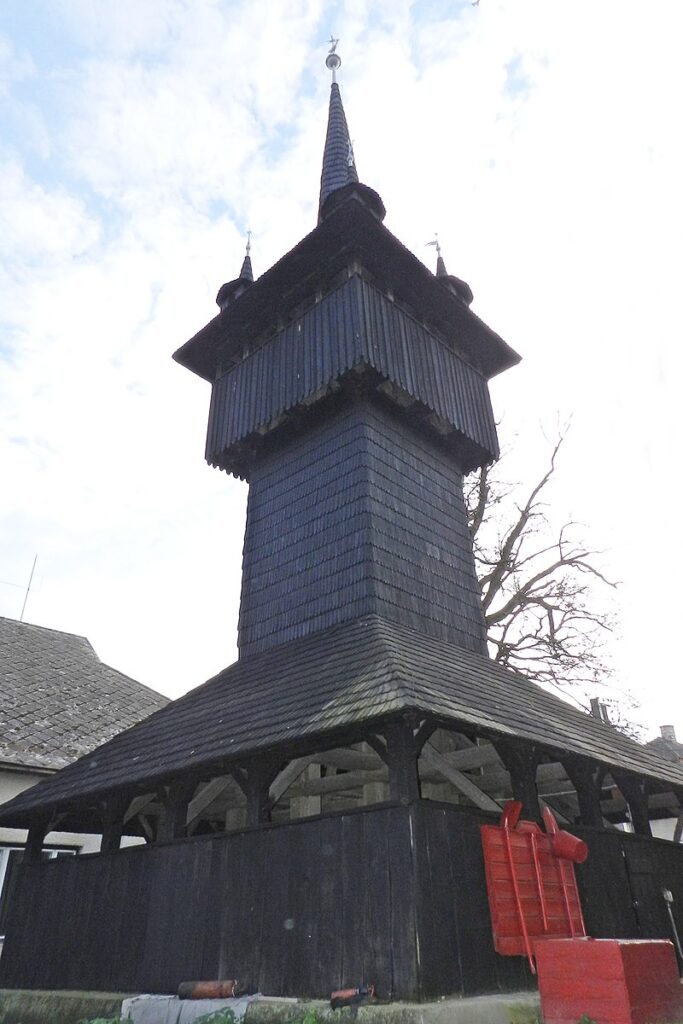
с. Гетен, Берегівського району
The Reformed church without a tower was built of stone in 1793 on the site of an older wooden one. The ensemble of ancient buildings is complemented by a separate wooden bell tower of impeccable proportions, topped by a steep spire and four tower-features. The bell tower in the village of Heten is the most graceful and sophisticated in its silhouette. The bells are dated 1783, which indicates the time of the bell tower's creation.
с. Muzhiyevo village, Berehove district
The stone late Gothic church in Muzhiyiv was built in the 15th century, and later buttresses were added. The church's remarkable Gothic elements are the lancet windows and the western portal. The separate wooden bell tower has a significantly expanded lower tier covered with a wide canopy. The four-pitched roof is crowned with a spire. The bell tower was probably built in the 18th century.
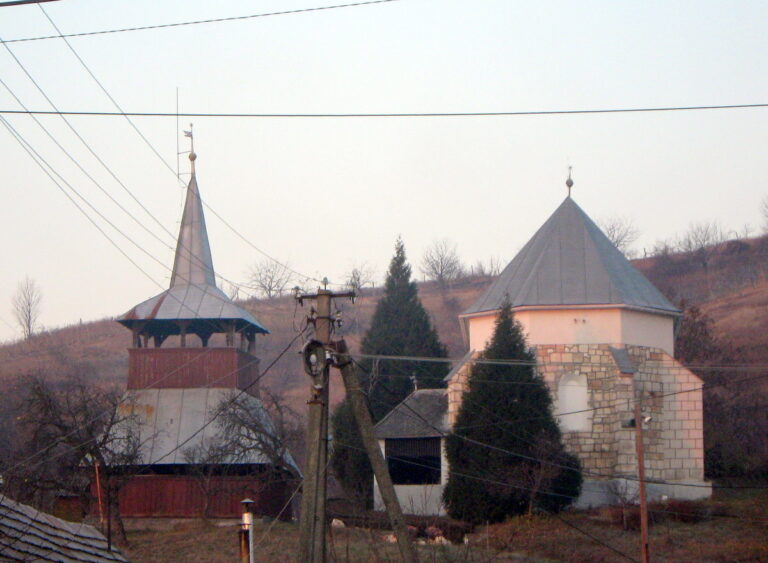
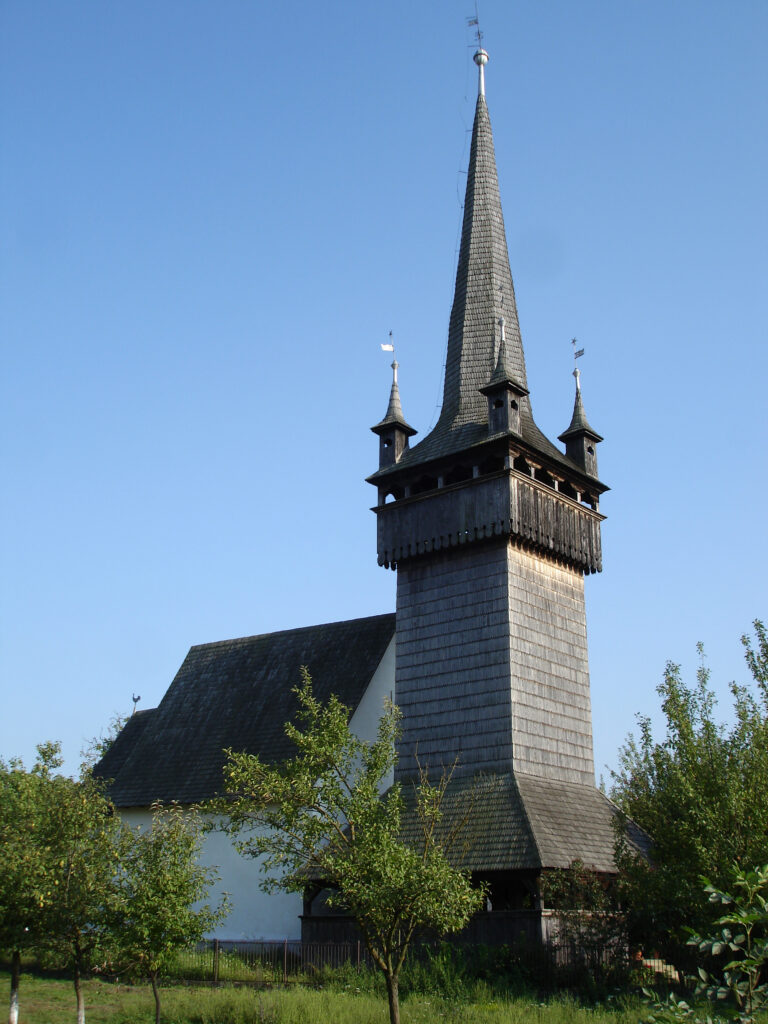
с. Chetfalva village, Berehove district
The Reformed Gothic church dates back to the 15th century. The ornamental compositions of folk style, made in 1753 on the wooden ceiling of the church, divided into 60 squares, are of great artistic value. The paintings were executed simultaneously with the construction of the wooden bell tower of frame construction, which is a masterpiece of folk architecture and the tallest bell tower in Transcarpathia.
с. Буковцьово, Ужгородського району
The church belongs to the wooden churches of the Baroque style, although it was originally built in the Boyko style with three hinged tops. According to the inscription on the doorway, in 1791 the church was remodelled by master craftsman Hryhorii Makarovych and acquired its modern appearance. A beautiful iconostasis of the 18th century has been preserved.
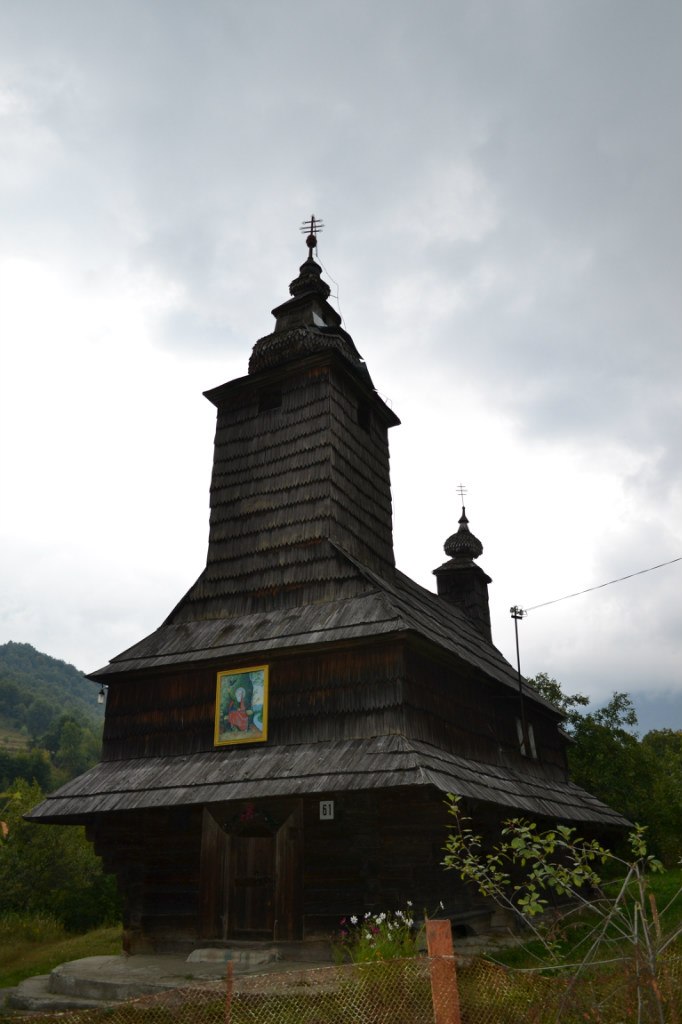
с. Кострино, Ужгородського району
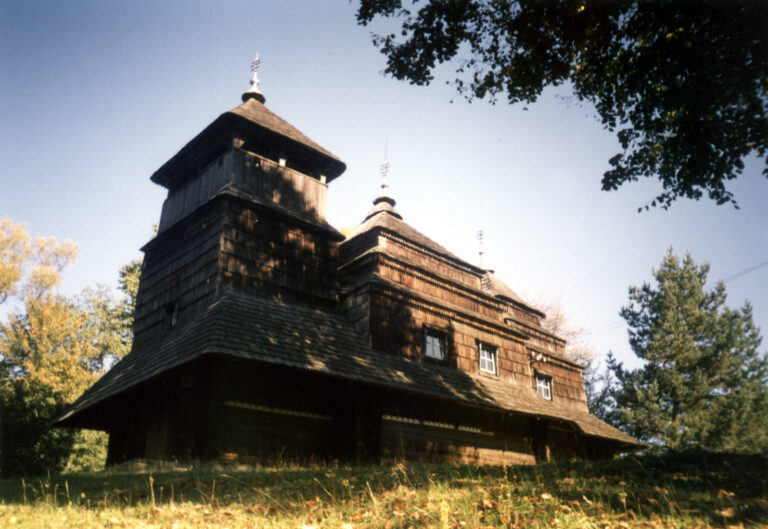
Kostrynska Church is one of the most outstanding monuments of Ukrainian architecture in the Boyko style. It is a flawlessly completed work of art, perfectly integrated into the surrounding magnificent landscape. The church is 15 m long, 7 m wide and 14 m high from the foundation.
The Church of the Intercession was moved to Kostryno in 1645 (or 1703) from the village of Syanky in the Turka district of Galicia. In 1761, the church was repaired and partially rebuilt.
с. Ужок, Ужгородського району
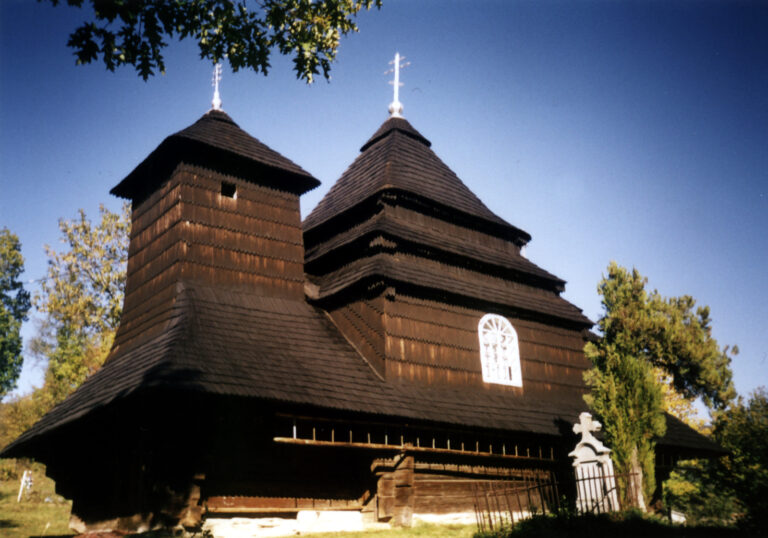
The Uzhok wooden church is a kind of visiting card of Transcarpathia. The church is one of the most interesting buildings in the Boyko style. Despite its small size, the compact form of the church with a dominant central tent gives the impression of a harsh, heroic structure. The decorative elements include crown moldings, an entrance door with a wide jamb, and a curly arched passage from the narthex to the nave.
The church was built by craftsmen Pavlo Toniv (?) from the village of Bitli in Lviv oblast and Ivan Tsyhanyn from Tykhyi, as evidenced by the inscription above the door.
с. Чорноголова, Ужгородського району
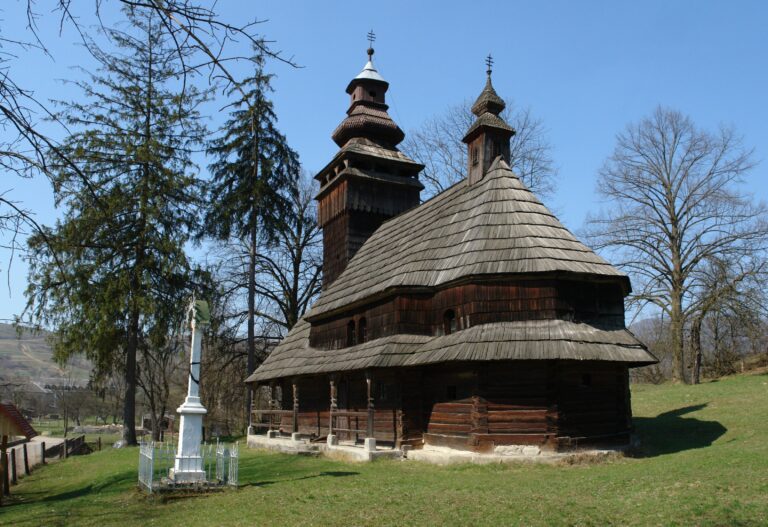
The Chornoholivka wooden church is one of the best examples of Transcarpathian folk baroque architecture. The church was built of spruce in the seventeenth century, with three floors, in the Boyko style. It acquired its modern appearance after the reconstruction in 1794 by the master Matii Khymych from the village of Luchky. Attention is drawn to the tower with its decoratively rich Baroque finish, a porch with figuratively carved ends of the boards, and an arcade of golosnits. A special feature of the church is the carved pillars that support the canopy around the narthex and nave.
с. Сухий, Ужгородського району
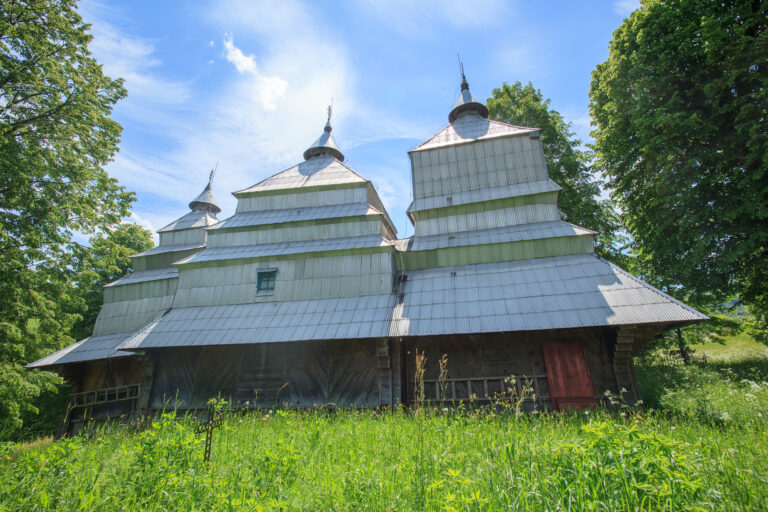
In the village of Sukhyi, there is a Boyko wooden church of the Forerunner dedicated to St John the Baptist, built in 1769. Its proportions differ from the church buildings in Uzhok and Husne. In the Church of the Forerunner in Sukhoye, the tower above the narthex is higher than the central top. It was converted into a bell tower, but it does not significantly violate the proportions inherent in the Boyko church.
The two decorative cornices on the quadruple repeat the silhouette pattern of the rest of the three-tiered tops and thus hide the forms that are alien to Boyko architecture. In the interior of the church in Sukhyi, the icons The Crucifixion (1678) by Ivan Vyshenskyi and The Sacrifice of Abraham (1679) by Ivan Shchyretskyi attract attention with their naive realism, sincerity of artistic expression, and simple narrative form. They belong to the folk style of Ukrainian iconography, which emerged during the national upsurge of the 16th and 17th centuries.
с. Сіль, Ужгородського району
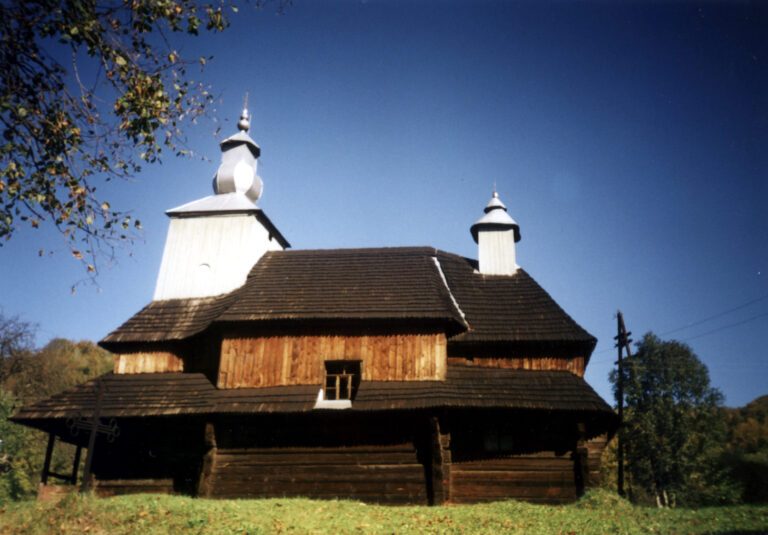
The first church dedicated to the Assumption of the Blessed Virgin Mary in the village of Sil was built of wood in 1479 on a large hill near the main road. This church burned down. The history of the present church of St Basil the Great is similar to that of Kostrynka. In 1707, a wooden church in the Boyko style was moved to Sola from the Galician village of Syanky. According to another version, the church was built in Syanky in 1703 as a three-storeyed church in the Boyko style and moved to Sol along with the iconostasis in the late eighteenth century (probably in 1777).
Initially, the church retained the Boyko three-tiered form with a dominant central dome, but in 1834 it was rebuilt. The church was given a four-pitched roof, a small tower with a Baroque finish was built over the Babinets, and a miniature tower with a conical tent was built over the altar. The roof over the central log cabin has a significant curve, clearly revealing the place where the central pyramidal top with creases once stood. The porch, which surrounds the church from all sides, is supported by crowns, and on the main façade by four pillars of an open porch. The tower is 13 metres high.
In 1849, the floor was laid with flat stones. In 1893, the priest Mykhailo Lendel organised the repair of the church and the production of a new iconostasis. Father Mykhailo also mentions the dates of the previous repairs - 1750 and 1820.
с. Новоселиця, Тячівського району
The local church is one of the most outstanding monuments of Ukrainian church building
It is the smallest Gothic church and at the same time the most dynamic. A slender tower with a high spire gives the church a dominant vertical sound. The Babynets has an inscription stating that the church was built by Kochalovych in 1669. The architectural and decorative details of the church are remarkable. A brilliant ornamental composition is carved on the doorposts. The tower is decorated with a decorative trim with tulip-shaped cutouts in the vertical plating.
The interior of the church preserves seventeenth-century wall paintings, which are a unique monument of Ukrainian painting of the Galician school. In the early nineteenth century, a new Rococo iconostasis was installed on the eastern wall. Lviv specialists restored the church and the painting in 1979-1981.
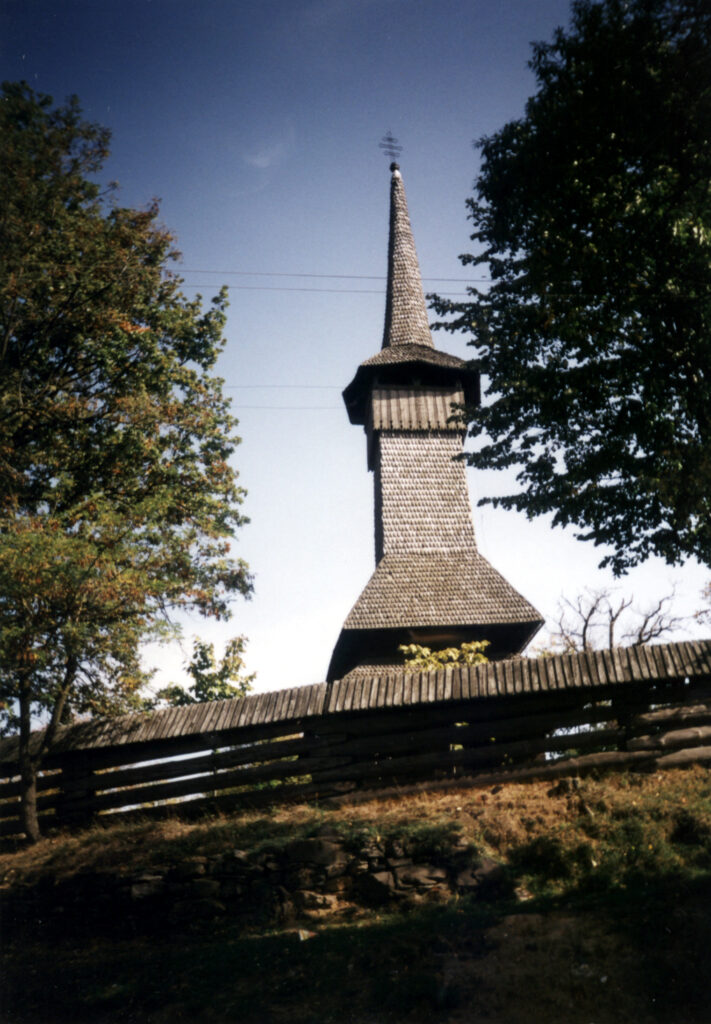
A wooden frame two-tiered bell tower stands near the church.
с. Абранка, Мукачівського району
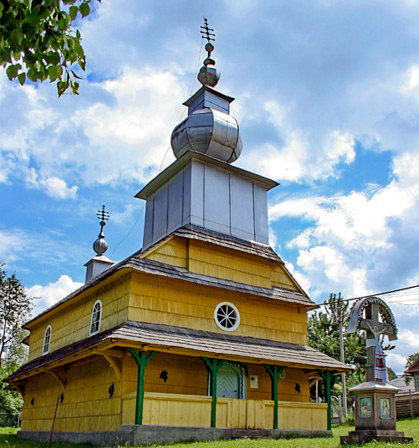
Church of the Presentation of the Blessed Virgin Mary in the village of Abranka was built in 1804 and belongs to the group of wooden Baroque churches of the upper Latorytsia River. Only the Baroque completion of the church tower and the dome above the altar are covered with tin.
The narthex and nave of the church are equally wide, while the five-walled altar block is narrower. The porch is supported by brackets and forms an open porch on four columns with braces on the main façade.
The church has a wooden two-tiered bell tower, the lower tier of which is made of logs and the upper tier is made of frame.
с. Гукливий, Мукачівського району
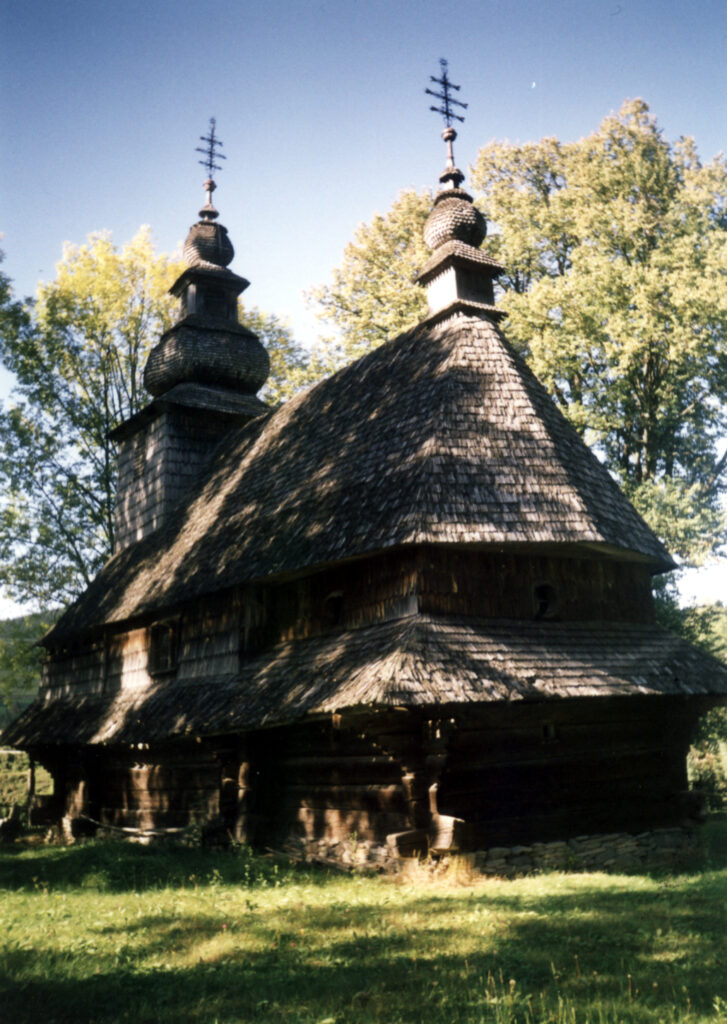
Church of the Holy Spirit in the village of Huklyvyi can be classified as a Verkhovyna masterpiece. It is the oldest church in Volovets district. It was built in Eighteenth century. fir, the foundation is made of river stones. The church is surprisingly slender and proportionate. Each element organically flows into the other, and the building fully reveals the possibilities of wood as a material. Part of the magnificent architectural ensemble is a slender 8-metre-high bell tower. According to the record in the chronicle "Huklyv Chronicle", the icons were painted by the German Franz Peer in 1784.
с. Івашковиця, Хустського району
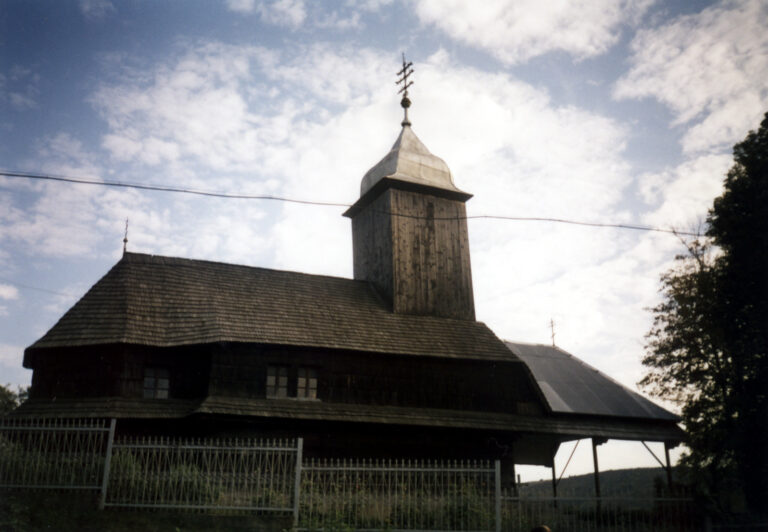
It is one of the few surviving small wooden churches. It is dated according to an inscription on the doorpost. The five-sided altar log cabin is made of oak, the other two are made of larch. The gable roof covers all the log cabins. A low tower with a pier rises above the chancel, crowned with a spire. To increase the interior space, an additional frame room was later added to the chancel log cabin. The wooden bell tower near the church is typical of many Verkhovyna villages: it is a frame, two-tiered with a wide overhang.
Unfortunately, in 1996, the church was covered with blinding tin, and the ancient log cabins were sewn up with new boards.
с. Lokot village, Irshava district
Побудована церква 1784 року в Заріччі. Проте 1800 року її було перевезено в с. Локоть, і відновлено на невеликому кам’яному фундаменті. Стіни зі смереки, дуба, бука. Первинне покриття храму дощечки-шингли, які ще збереглись па шпилі. Але за довгі роки дах прогнив і довелося перекрити його етерником. Побудовано церкву в готичному стилі.
The interior of the church has been preserved in its original form. Old icons and wall paintings have been preserved. Wood carving as an art form is widely represented. However, the artists and wood carvers are not known. The church is used by the Greek Catholic community.
The church bears a memorial sign "An architectural monument of the 18th century". The church has historical and artistic value for future generations.
с. Дешковиця, Хустського району
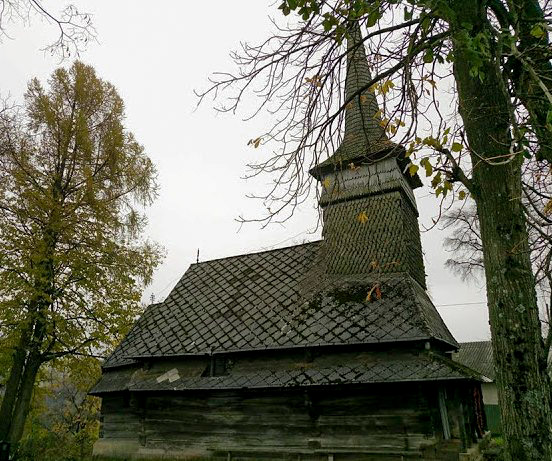
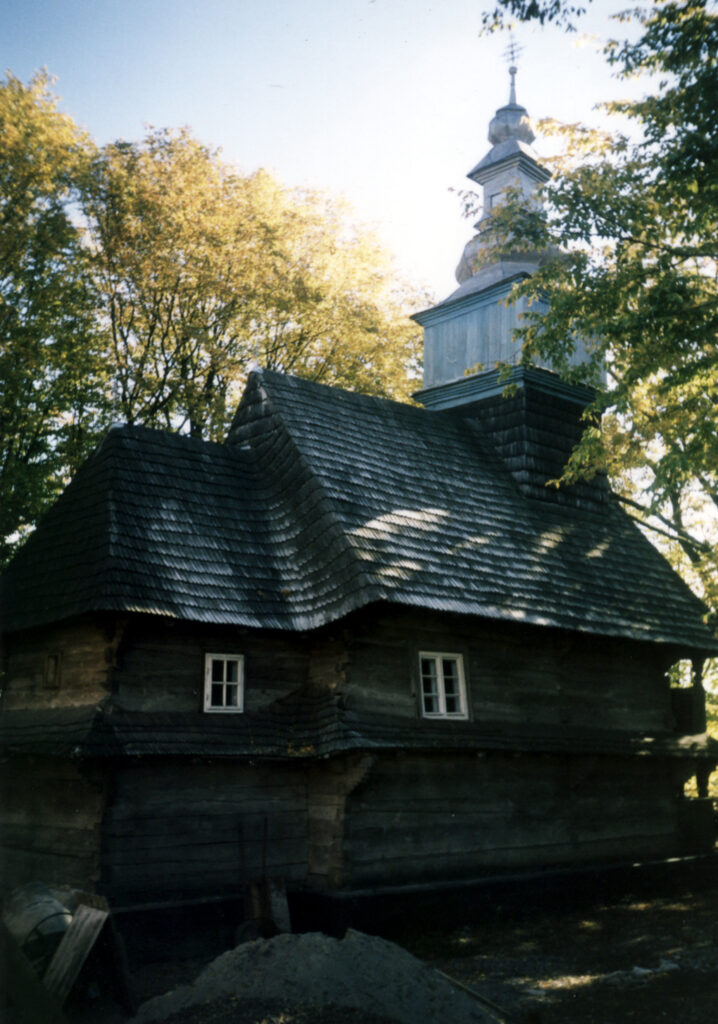
The church was built in 1699 in the village of Syltse, in 1778 it was moved to the village of Deshkovytsia. The walls are made of wood, oak, beech, and are connected by axe carvings. Old icons and wall paintings are preserved. The church is still functioning today, and Orthodox Christians worship in it
с. Колочава, Хустського району
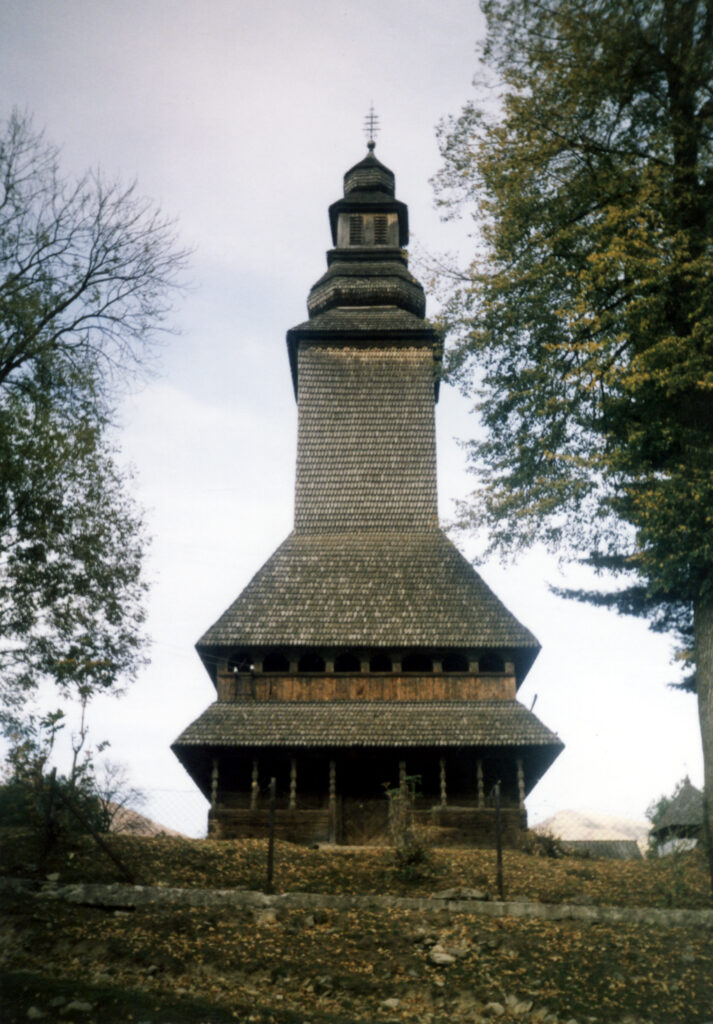
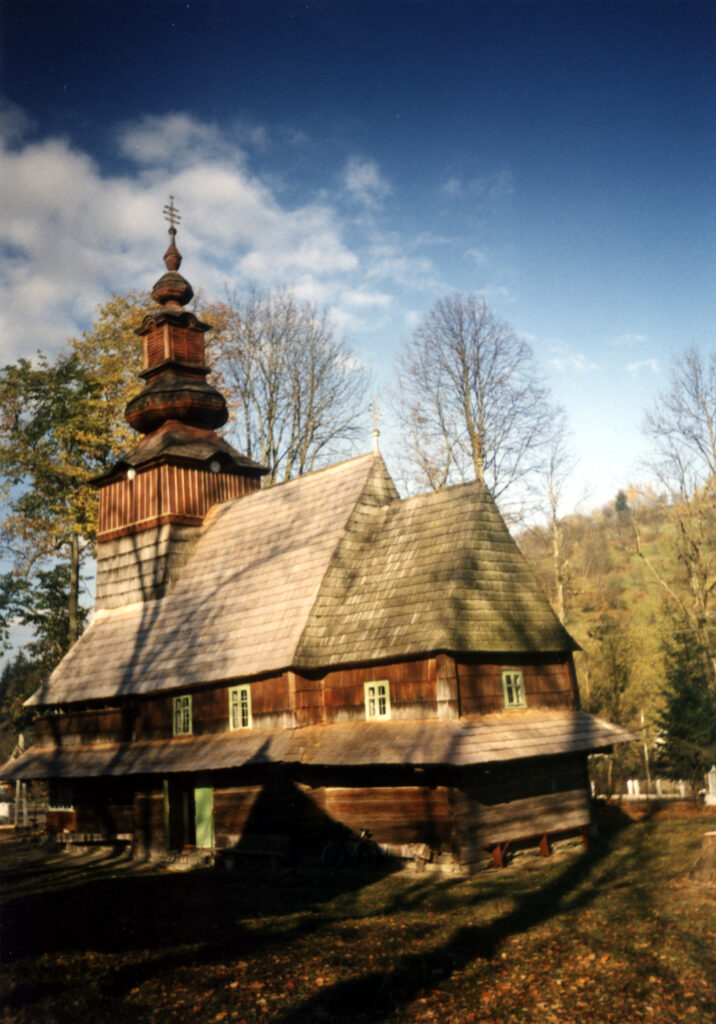
Дерев’яна двозрубна тридільна церква св. Духа належить до найвищих архітектурних досягнень Закарпаття. Згідно з написом на одвірку, церкву збудував у 1795 майстер Ференц Текка. Церква струнка і досконала в пропорціях. Висока вежа над бабинцем завершена чудовим бароковим ансамблем, що складається з гранчастої бані з дашком, ліхтаря та кулястої главки над ним. Ліхтарі з главами вдало акцентують гребені дахів над навою та вівтарем. Дерев’яну двоярусну каркасну дзвіницю оббито тепер бляхою. Обидві пам’ятки було відреставровано у 1969–1970 роках.
с. Пилипець, Хустського району
Церкву Різдва Пр. Богородицізбудували із смерекових брусів у другій половині XVIII ст. (можливо у 1780 р.), а теперішнього вигляду набула після перебудови у 1841 р. Церква виглядає монументально. Форми споруди – суворі та величні. Нижня частина вежі вкрита ґонтом, а верхня – вертикально обшита дошками з фігурно обробленими нижніми кінцями. Додають декоративності барокові форми завершення – баня, ліхтар з главкою, розвинуті карнизи, вишукана аркада нижніх голосниць та ґанок із профільованими стовпчиками. Поруч стоїть монументальна двох’ярусна дзвіниця, збудована, можливо, у 1758 р.
с. Розтока, Хустського району
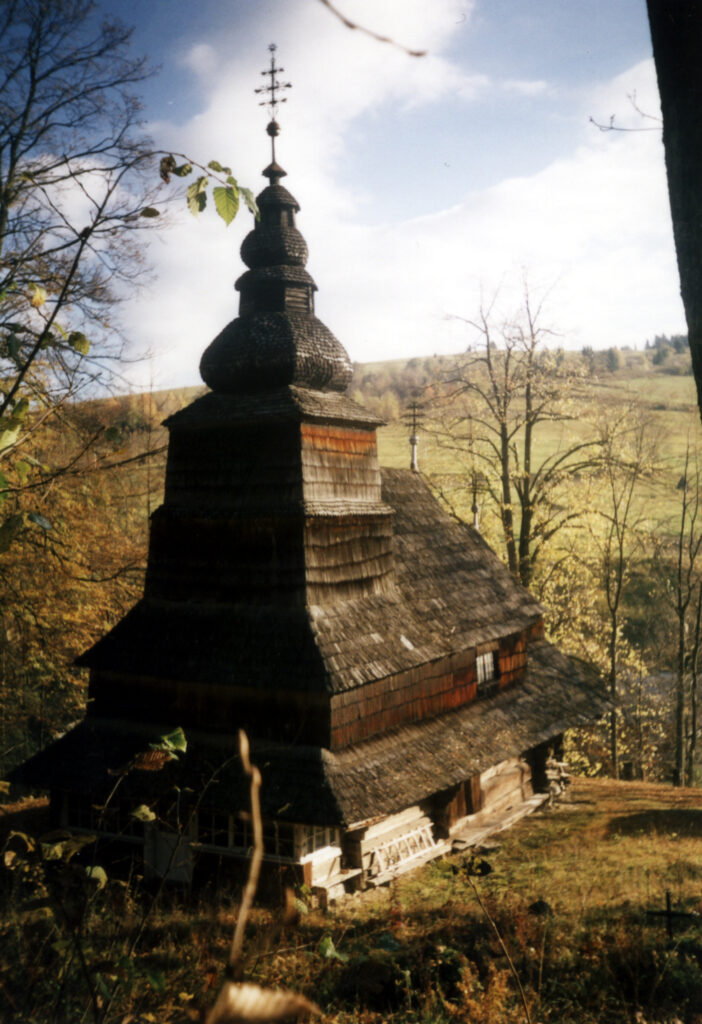
Церква Введення Пр. Богородиці має тільки їй притаманні пропорції, чудові художні деталі. У ХVII ст. це була бойківська церква з трьома верхами. Можливо, в 1759 р., згідно з написом на південних дверях, церква була перероблена й набула сучасного вигляду. Вежа має горизонтальне членування, увінчує її чотирисхилий шатор та барокове завершення. Колись відкритий ґанок зараз перетворено на засклену веранду. Дерев’яна дзвіниця біля церкви походить з XVIII ст.
с. Сухий, Хустського району
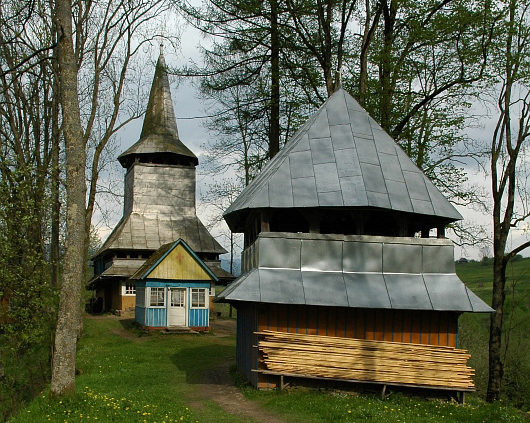
The church in Sukhyi dates back to the 18th century. In 1801, the church was mentioned as being well equipped with church items and accommodating 120 worshippers. The church is three-dimensional, three-storeyed, under a gable roof, with a tower over the Babynets under an octagonal tent, ending in a spire. There are arcades of choir stalls above the narthex and under the tower's canopy. The main façade has eight carved pillars, now hidden behind a wooden gallery with windows. The church's candlesticks were made by D. Fichoriak.
Near the church there is a traditional wooden two-tiered bell tower with an octagonal hipped roof, and four bells, three of which were cast by F. Ehri.
Two of the bells were made in 1923; the 1925 bell bears the names of the founders, Ivan Hylbych and Ivan Bryanyk, and the fourth was cast by the Akord company. In 1991, the church was returned to the Greek Catholic diocese.
с. Буковець, Хустського району
The ensemble of the Church of the Assumption of the Blessed Virgin Mary with a bell tower and a wooden gate, which is rare today. In 1751, there were two wooden churches in the village: the lower one, St Michael's (new, with a capacity of 200 worshippers, all church books, all new icons and three bells); the upper church (old, with a capacity of 100 worshippers).
In 1801, the village asked for funds to build a new church, as the existing one was too small. The new church was built of spruce beams and the date of construction - 1808 - was carved into the doorpost. It is again a classic "Intermountain Baroque". Of the three log cabins, the central one is the widest. The Babynets and the nave are covered with a common high roof, and there is a separate lower roof over the altar. The main façade is decorated with a porch gallery that has not yet been remodelled, and arcades of choir stalls. The tower has a peculiar Baroque ending with a flattened faceted dome. The roof covers all the log cabins.
In the interior, the eastern and central log cabins are covered with arched vaults, and there is a flat ceiling over the Babynets. Inside, there are wonderful examples of folk carvings, some of which come from the old church. An inscription on the altar tells us the names of the carvers: Isavka Cherepanych and Ivan Baranyshynets completed the work on 29 April 1760. The bell tower is traditionally two-tiered, square in plan, with a wide dome. The large bell was cast by Franz Leherer in Presov, Slovakia, in 1832 at the expense of Ivan Teslevych. The two smaller ones were made by Karel Manoušek in the Czech city of Brno in 1924.
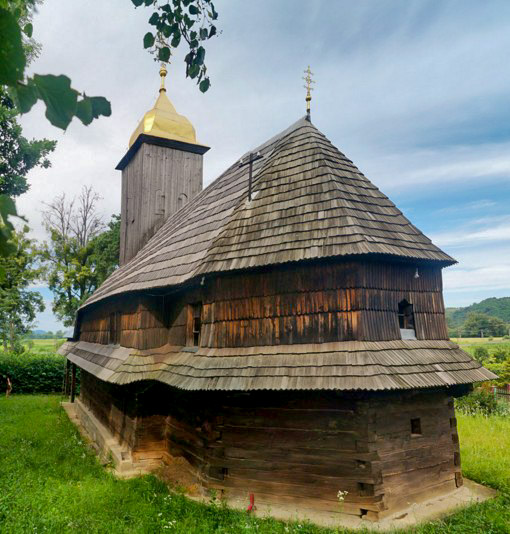
с. Vilkhovytsia village, Mukachevo district
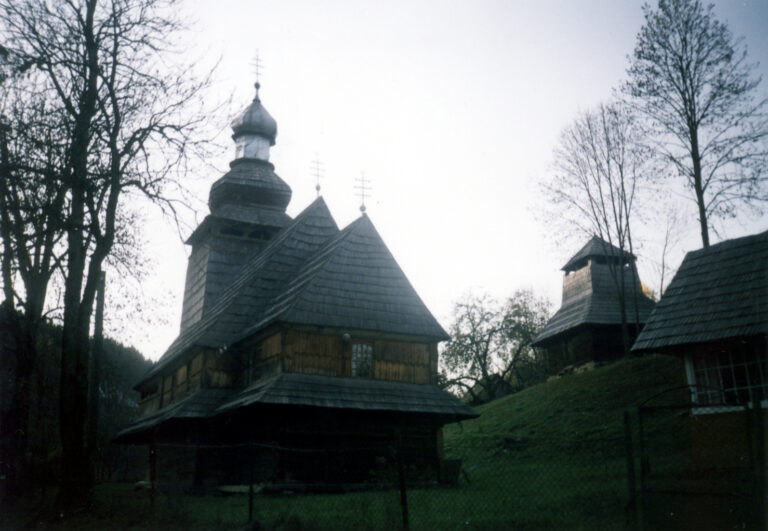
A wooden church St. Dmitry the Great Martyr, built in XVII century. in the neighbouring village of Bystrytsi, was moved to Vilkhovytsia in 1910 and rebuilt at the same time. The church was built of oak logs and covered with a gable roof, which is faceted over a pentagonal altar. The doorway, built of wide hewn slabs, exquisitely decorated with geometric motifs, deserves special attention. The interior has a curly passage from the narthex to the nave. The old iconostasis with 17th-century images was dismantled in 1990.
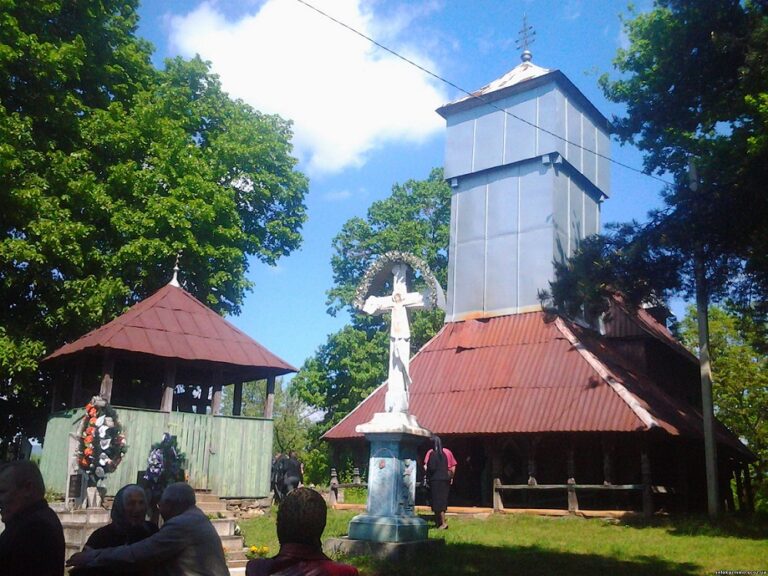
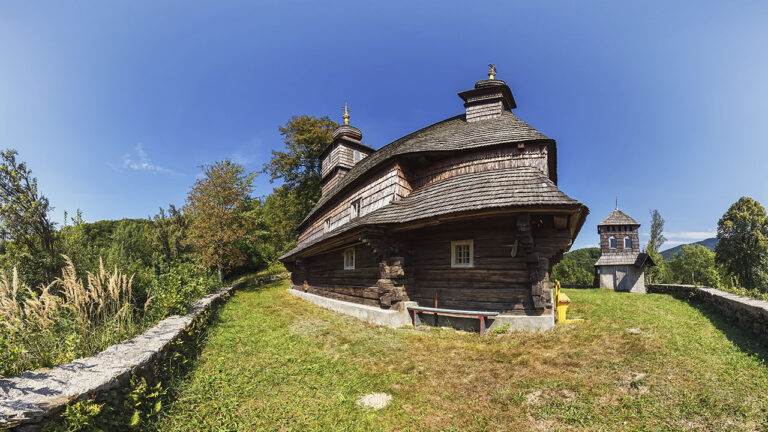
с. Ruska Kuchava village, Mukachevo district
In the village of Ruska Kuchava, there is an authentic Lemko church of St Michael the Archangel. It was once a magnificent architectural work with all the features of the Lemko style - a high tower with a baroque finish above the Babynets, hipped roofs over the nave and altar. Today there is a beautiful gallery with carved columns that surrounds the narthex and nave on three sides (a characteristic feature of Transcarpathian Lemko churches).
It was built in the village of Ruske in the eighteenth century and moved to Ruska Kuchava in the first half of the nineteenth century. Perhaps it was then that the Lemko tent roofs, which can be seen in the interior, were covered with a gable roof. Next to the church is a wooden bell tower, typical of the villages of Mukachevo district. Later, a strong storm blew off the baroque top, which was never restored, and the tower was covered with a tin four-pointed tent. In 1986, the church was covered with tin.
с. Лікіцари, Ужгородського району
Церква св. Василя Великого була збудована з ялини в XVII ст. триверхою, бойківського стилю. У 1748 р. церква була перебудована і набула сучасного вигляду. Зруби вкрили двосхилим дахом. Піддашшя і дах мають профільований карниз із цільного бруса. Над бабинцем – невисока квадратна башта з бароковим завершенням. Подібна до башти невелика главка увінчує гребінь даху над вівтарем.
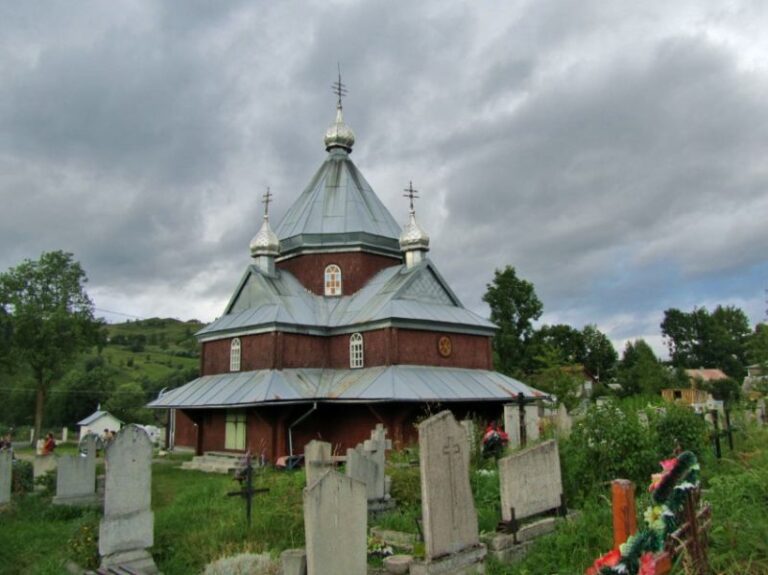
с. Лазещина, Рахівського району
One of the two Transcarpathian Hutsul cross churches stands in the village. The five log cabins of the church are formed by the intersection of two rectangles, which have an almost equal cross in plan. Four of the frames are covered with gable roofs. The central log house turns into an eight-walled drum covered with a steep eight-pitched tent.
According to one version, the church was built in 1780 in the village of Yablunytsia in the present-day Ivano-Frankivsk region, and in the winter of 1871 it was dismantled and transported by sled to Plytovatyi. More likely is the dating of the church to 1872, according to the inscription on the doorpost.
с. Середнє Водяне, Тячівського району
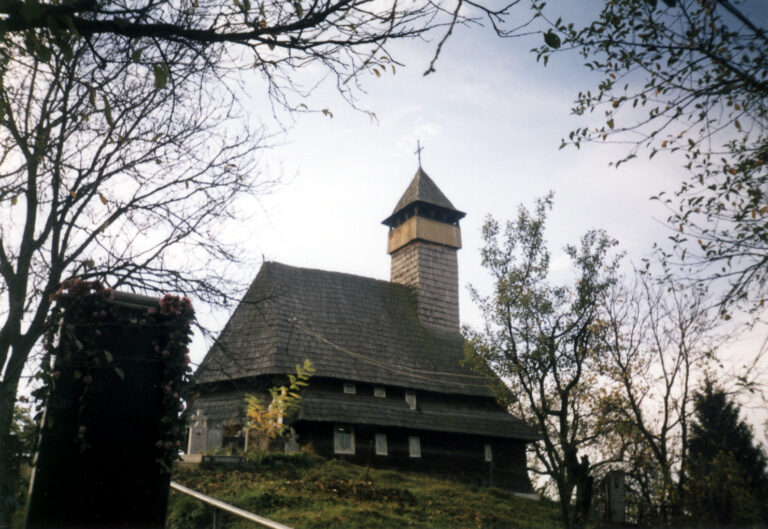
Two wooden churches have been preserved in the Romanian village. The upper church is one of the oldest wooden churches in Potyssia and Ukraine. The oldest parts are oak log cabins (1428), the superstructure over which was built around 1600. The strict monumental forms of the church, reminiscent of medieval Romanesque buildings, stand out as a masculine silhouette against the sky. It is one of the few wooden churches with wall paintings. The four-tiered iconostasis dates back to 1761. A wooden single-tiered frame bell tower and an interesting wooden crucifix stand near the church.
с. Yasinia village, Rakhiv district
The name of the famous Strukivska church comes from the name of the village founder Ivan Struk, who once built a chapel on the site of the present church, and people consider the hill with the church to be holy.
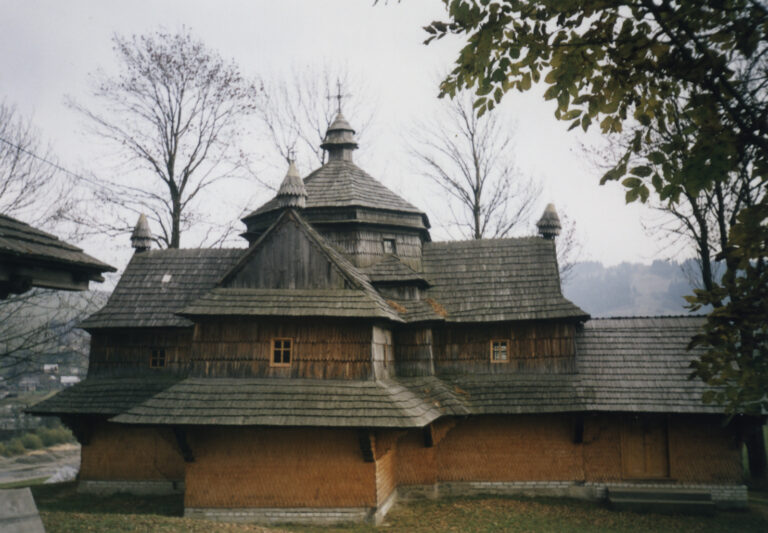
The Church of the Ascension is one of the most perfect wooden churches in the entire Hutsul region. A decorative composition of three crosses and the date of construction in 1824 are carved on the church's doorstep.
The 11-metre-high bell tower of the Church of the Ascension is one of the most perfect works of Transcarpathian folk architecture in terms of its architectural and artistic qualities. It is said that it was moved to the Church of the Ascension in 1895 from a church in the northern part of the village that was destroyed by fire. The date of the bell tower's construction is indicated on the upper jamb - 1813.
с. Уклин, Мукачівського району
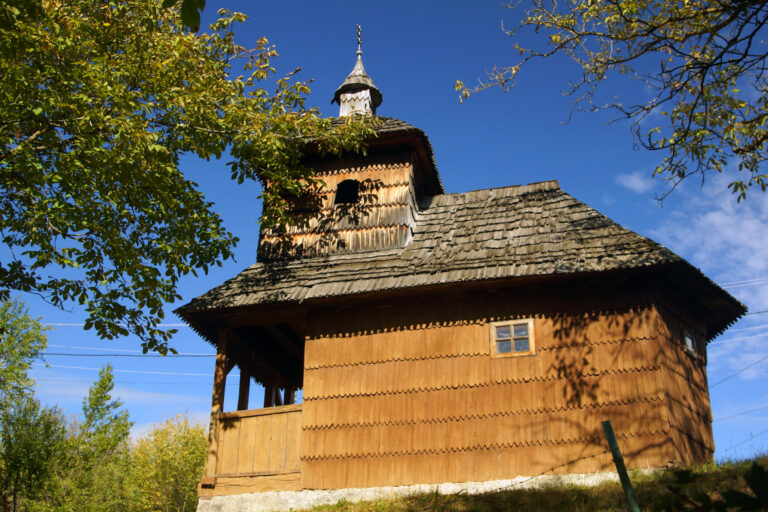
The present small church in Uklyn is a rare architectural treasure. At the end of the nineteenth century, it was admired by the famous scientist T. Lehotskyi. It is said that the church was built from the wood of an old church, and before that there were two churches here that fell into disrepair or burned down. Some of the old church items have been preserved, and two bells were moved to the new brick church built in 1992.
Свалява
The wooden church of St Michael the Archangel in Svaliava is located in the Bystryi neighbourhood, which was once a separate village that was later annexed to the city. The church stands by the road on a small hill. The first stage of construction of the church took place back in 1588. Back then, the church stood a little higher up the hill from its current location. The old church was named after St Nicholas the Wonderworker.
In 1759, the church was rebuilt and moved to its present location. It is believed that the oak logs of the narthex and nave were taken from the old church. The rebuilt church was consecrated anew, this time under the title of St Michael the Archangel.
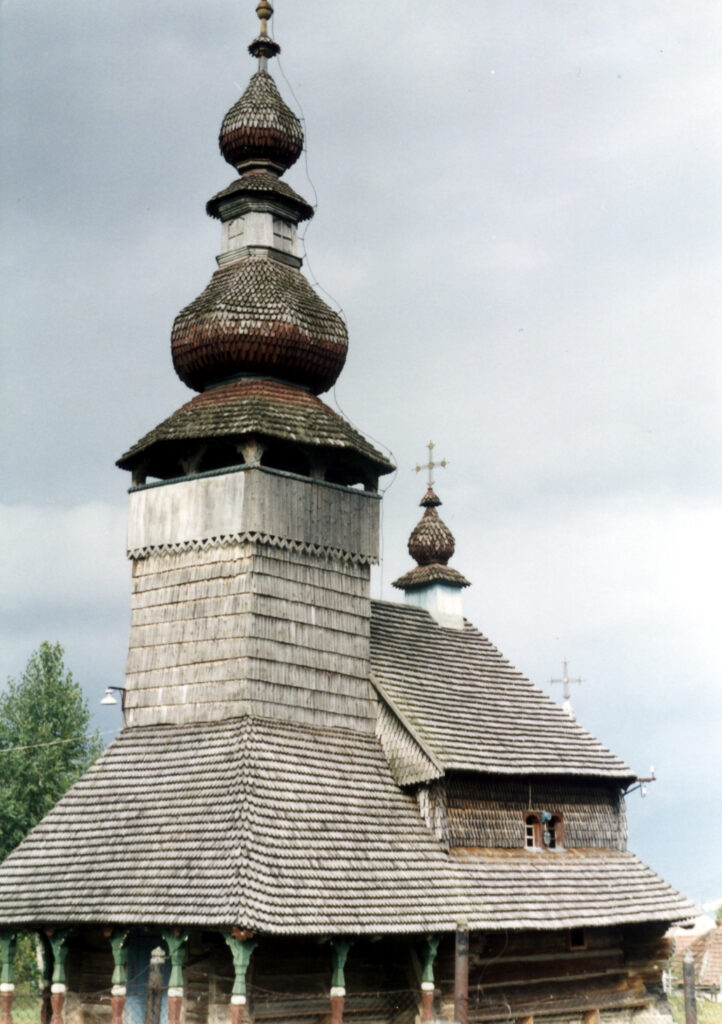
This church is a vivid representative of the Lemko type of church, as evidenced by the high Baroque tower above the narthex, the rapid growth of forms from the altar through the nave to the tower, and the classic feature of Transcarpathian Lemko churches - an open gallery with carved columns around the narthex.
The iconostasis of the seventeenth century has been preserved inside the church, but the rest of the interior has been significantly modernised. In the late 1940s, the church was closed, and only in the days of independence did it become operational again.
Previously, there was a one-tiered wooden bell tower next to the church, which was dismantled in 2001 and replaced with a new one made of stone.
In 1759, the church was rebuilt and moved to its present location. It is believed that the oak logs of the narthex and nave were taken from the old church. The rebuilt church was consecrated anew, this time under the title of St Michael the Archangel.
This church is a vivid representative of the Lemko type of church, as evidenced by the high Baroque tower above the narthex, the rapid growth of forms from the altar through the nave to the tower, and the classic feature of Transcarpathian Lemko churches - an open gallery with carved columns around the narthex.
The iconostasis of the seventeenth century has been preserved inside the church, but the rest of the interior has been significantly modernised. In the late 1940s, the church was closed, and only in the days of independence did it become operational again.
Previously, there was a one-tiered wooden bell tower next to the church, which was dismantled in 2001 and replaced with a new one made of stone.
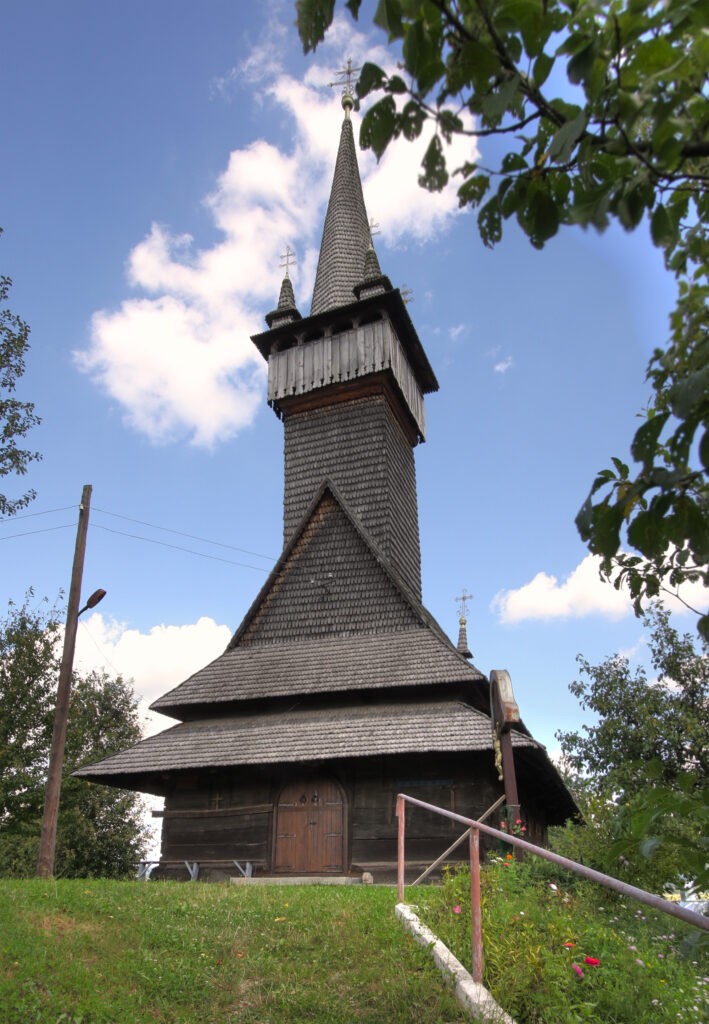
с. Dibrova village, Tyachiv district
Two wooden churches have been preserved in Dibrova. The lower church was built in 1604 (according to other sources - in 1561) and remodelled in the first half of the eighteenth century. The church is perfectly proportioned - it proudly crowns the top of the hill, soaring upwards with a high spire. The building consists of two oak log cabins, of which the triangular altar with a small arched window is the oldest part. The log cabins are covered with a common gable roof. The church was closed for a long time and turned into a museum of folk life. Since 1994, the church has been operating again.
с. Kolodne village, Tyachiv district
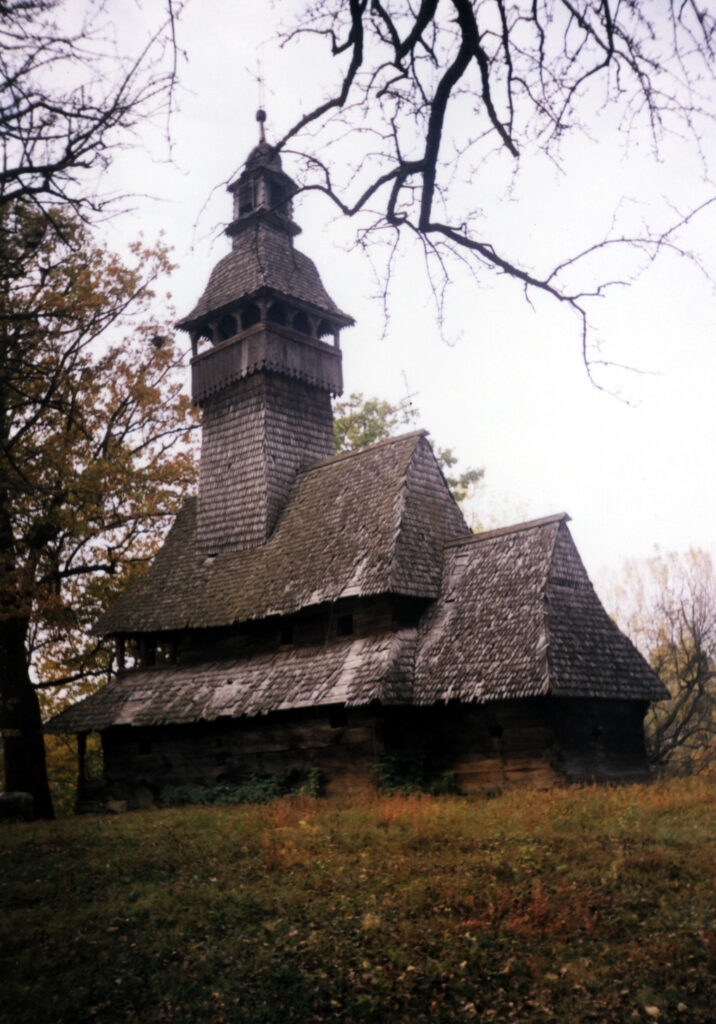
Kolodnia Church is one of the oldest wooden religious buildings in Ukraine. The church was built in the Odariv tract and later moved to its current location. The church retains certain features typical of defensive structures. The oldest parts are the main log cabins, built in the XV century from 12 m long oak logs. Other parts of the church date back to the 16th, 17th, and 18th centuries. The church contains many archaic elements: a cross-shaped window on the eastern wall of the altar and a round window on the northern wall, small square windows on the side facades of the nave, and an entrance portal with a door. According to the Latin inscription on the plafond, the Baroque wall paintings were made in the 18th century by Antony Vali.
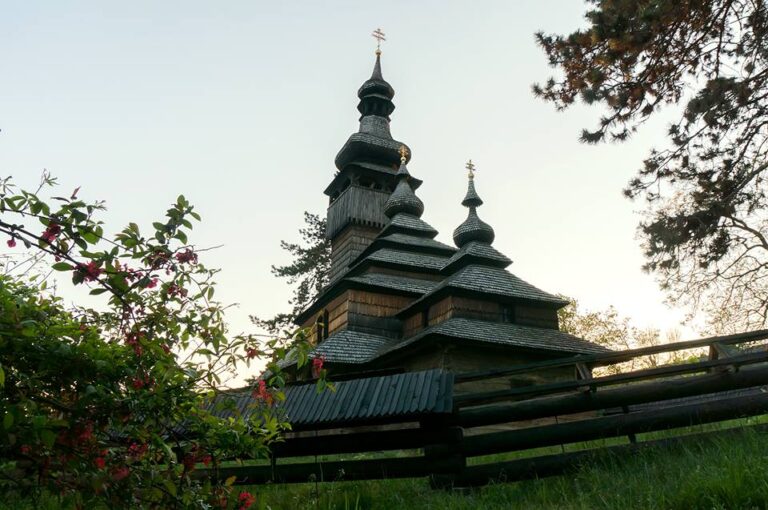
Шелестівська церква в Ужгороді
One of the finest wooden churches is now in the Uzhhorod Open Air Museum. This Lemko church is distinguished by its impeccable proportions, special slenderness, and beautifully crafted artistic details. The tall Baroque tower is full of charming grace. The main dome is crowned by the hipped tops of the nave and altar. The overall rhythm of the forms is a dynamic ascent. The height of the Babinets with the tower reaches 22 m.
The date of construction is 1777. After a new brick church was built in Shelest, the wooden church was moved to Mukachevo in 1928. In 1974, the church was moved to Uzhhorod. It is the only classical Lemko church left in Zakarpattia.
Горянська ротонда
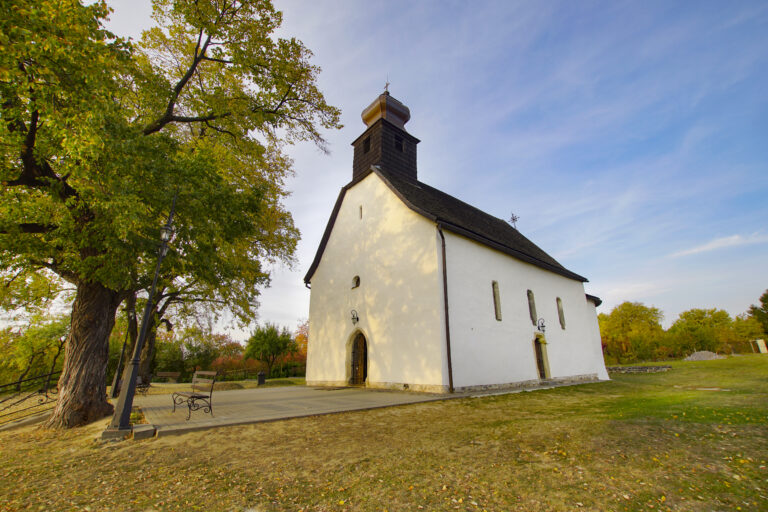
The Horyany Rotunda is one of the oldest and most valuable architectural monuments in Ukraine. The building consists of two parts. The oldest is the rotunda itself, a six-vaulted central structure with walls up to 2-2.5 m thick, covered with a hexagonal helmet-shaped dome resting on a drum decorated with a Romanesque motif under the cornice. Most researchers date the rotunda to the late tenth or early eleventh century. In the 14th century, a late Gothic nave was added to the Romanesque rotunda. The frescoes that cover the entire walls of the rotunda and the eastern wall of the nave are remarkable.
с. Oleksandrivka village, Khust district
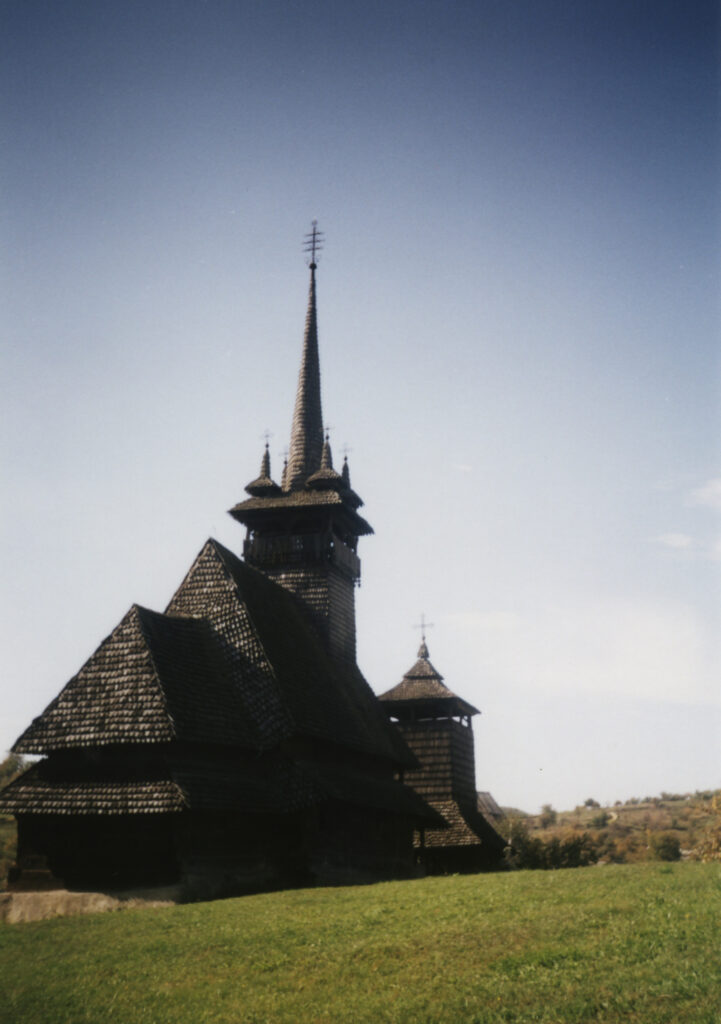
The Gothic church in Oleksandrivka crowns the broad surface of the hill and stands out as a clear silhouette against the low mountains. The church is a two-storey, three-tiered building with a visible inclination of the walls towards the middle. A tower with four violets at the base of the spire rises above the western log house. The main façade has an open porch with an arched gallery. The church of St. Alexander preserves rich wall paintings made in 1779 by master Stefan Terebelskyi and drawings by folk artists. A wooden frame two-tiered bell tower stands near the church.
с. Danylovo village, Khust district
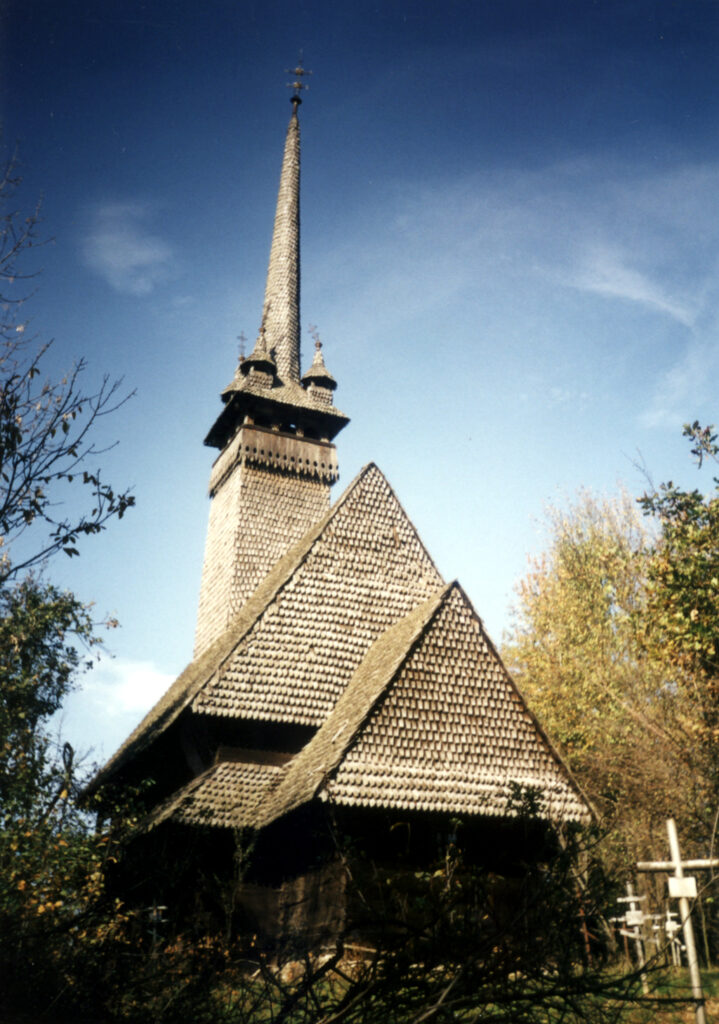
Another Gothic masterpiece is located in the village. The oak log cabins of the church are covered with high roofs. The larger log house is divided into a nave and a chancel. The tower is crowned by a four-pitched cupola with a high spire and four violets at the corners. The main façade has a closed porch with triangular window openings and an entrance portal. The doorjamb of the chancel is decorated with carvings. The iconostasis was made in 1748.
According to the restorers, the Sokyrnytsia church was built in the village of Shashvar in the early seventeenth century. In 1770, after being moved to Sokyrnytsia, the church was rebuilt and a tower was erected over the Babynets. In the same year, a high frame bell tower was built.
с. Kraynikovo village, Khust district
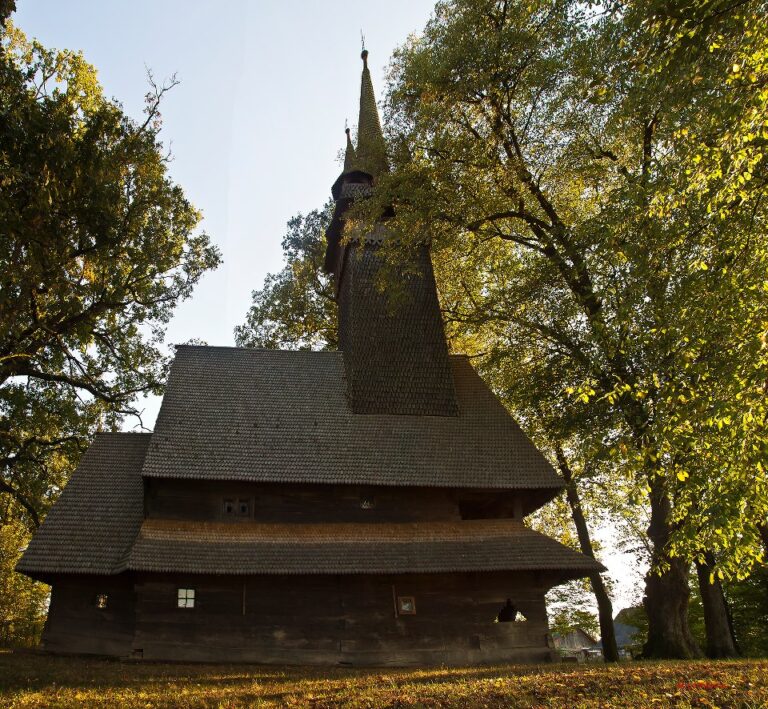
The village of Kraynikovo is proud of its wooden St Michael's Church and bell tower, built in 1668 - one of the oldest in the district and one of the most original religious buildings in the region.
The church is small, three-dimensional, with an equally wide nave and chancel and a narrower altar. The plan of the church is archaic. The church is built of tall oak beams joined by mortises, and the buzzard has a hidden straight tooth. However, a new constructive technique appears in the architecture of this church, which is absent in older churches and is very rare in general. Next is the porch-gallery, connected in the western wall into one common log house of the Babynets and the nave.
Near the church there is a slender wooden frame bell tower under a hipped roof, with three bells.
The church was built in the 17th century and had flat ceilings running along the vault. The flat ceilings were replaced with box ceilings in the XVIII century.
The oldest mural in the nave is preserved on the eastern wall. It depicts the apostles and Pantocrator with Mary and John the Baptist standing before them and probably dates back to the church's construction in 1668.
The ctitorial inscription under the images on the wall of St. Nicholas (south wall) and the Archangel Michael (north wall) indicates that they were made in 1771 by a local master in the style of Transcarpathian folk painting.
The iconostasis was redesigned in 1763-1768. It contains icons from the 17th century - the Cathedral of the Archangel Michael.
On 4 October 1997, St Michael's Church was reopened after 50 years of closure (1947).


No comment