

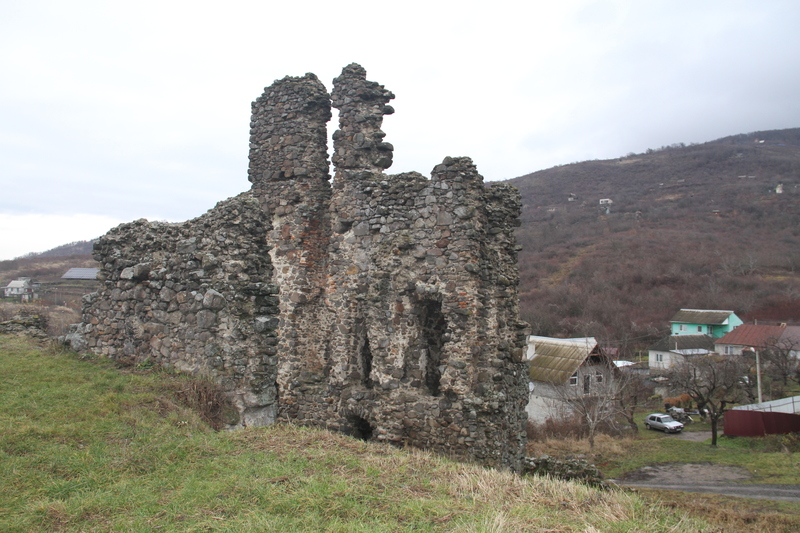
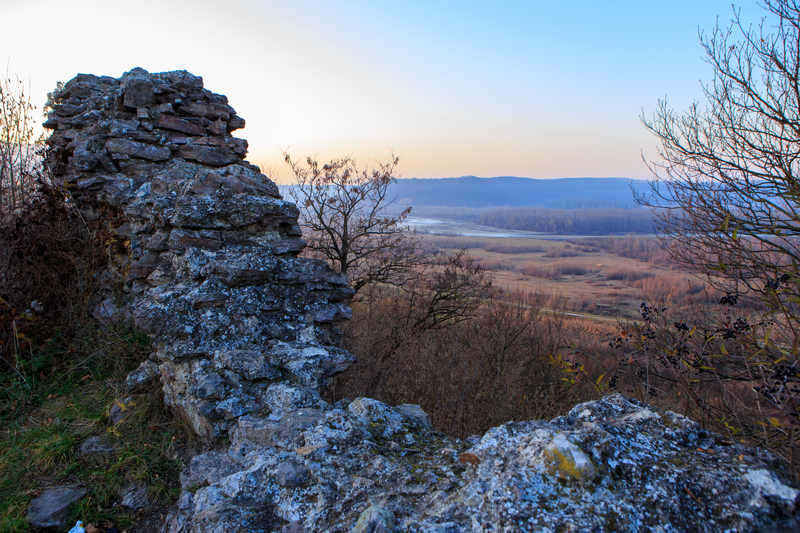
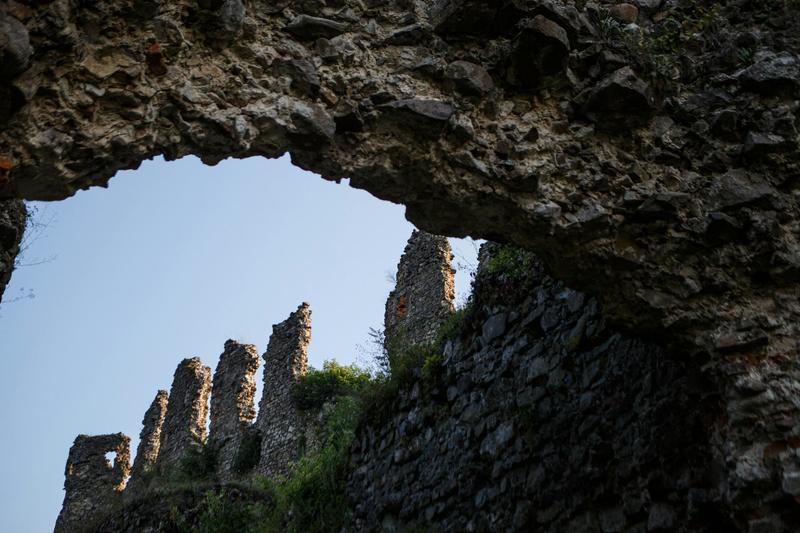
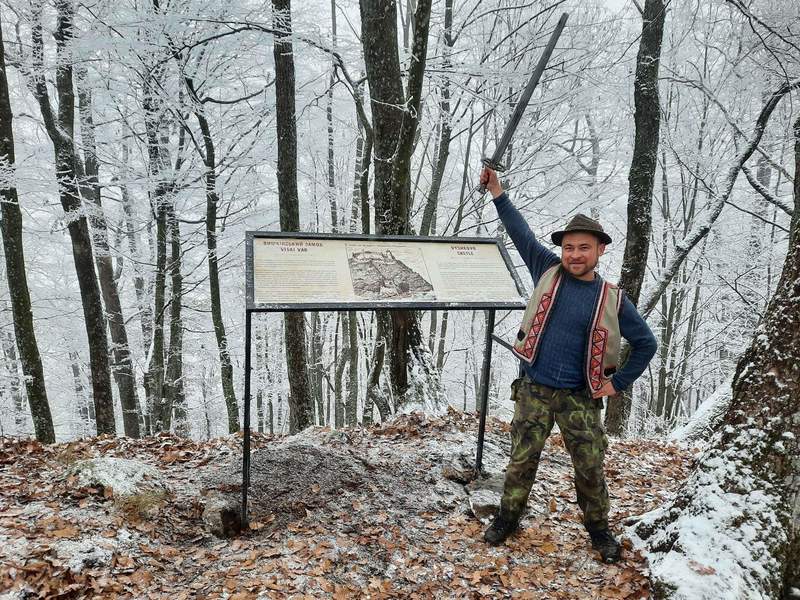

Nevitsky Castle
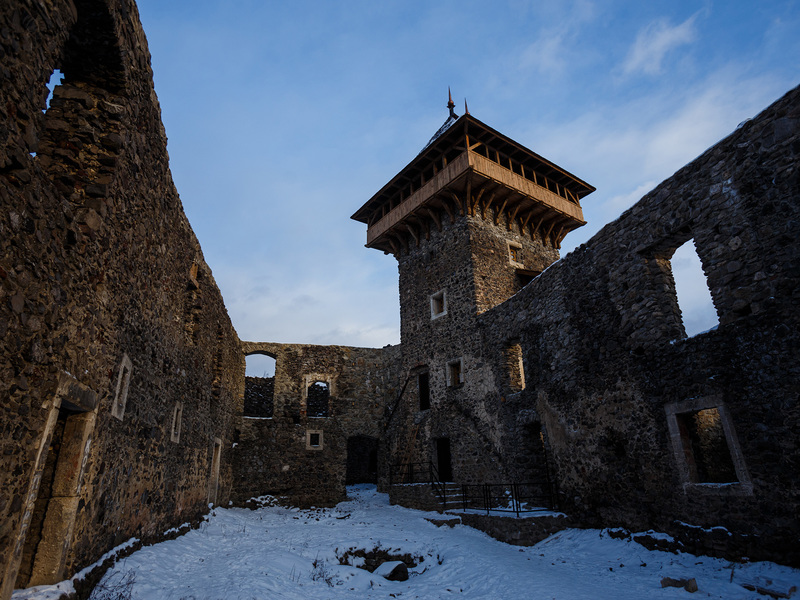
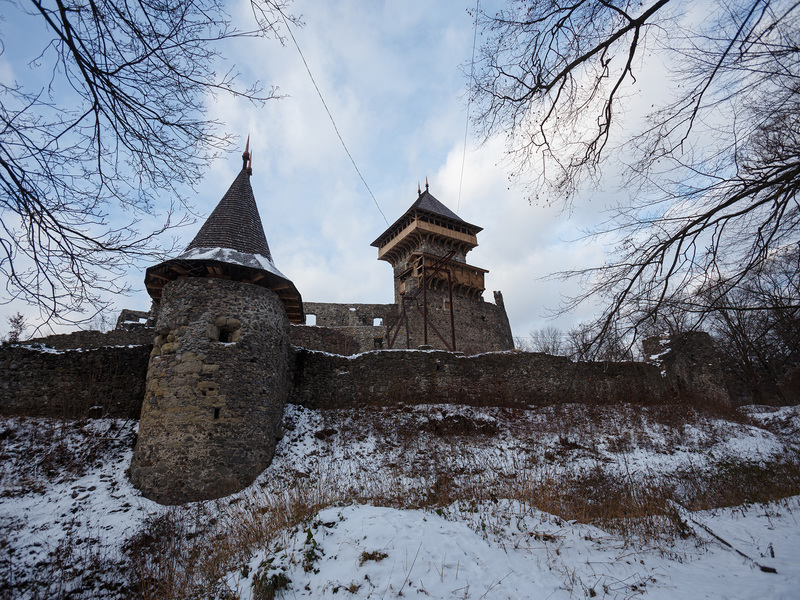
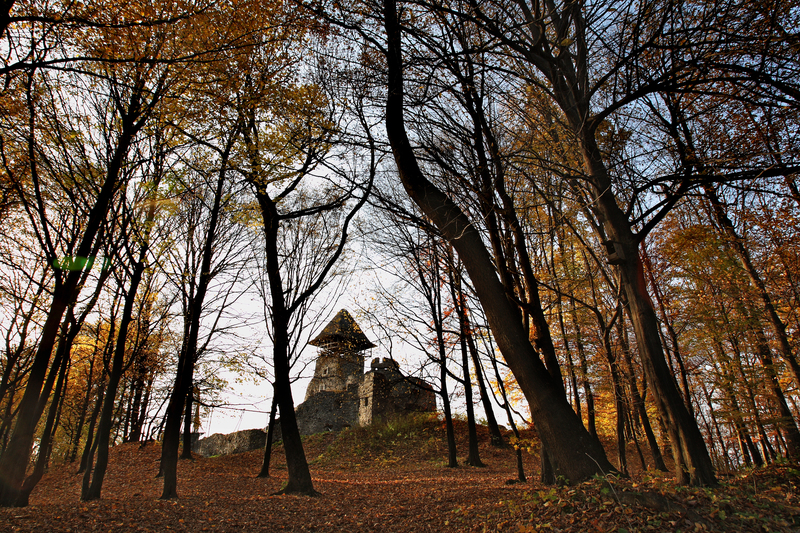
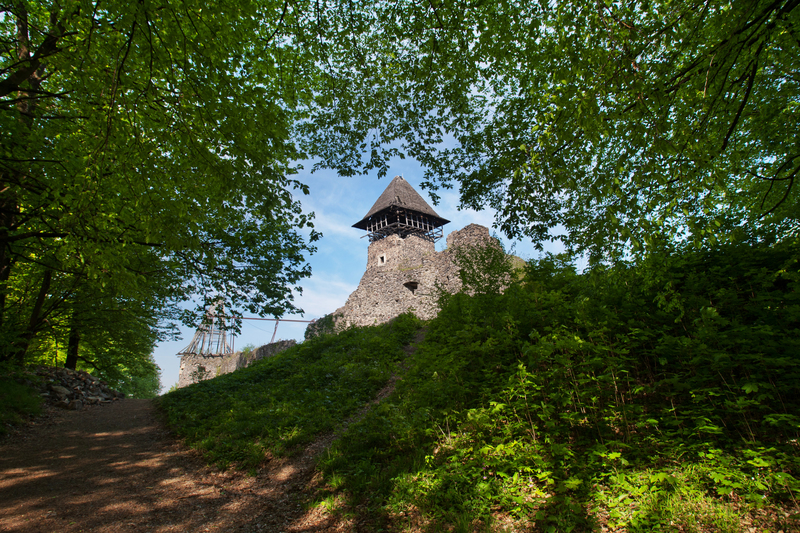
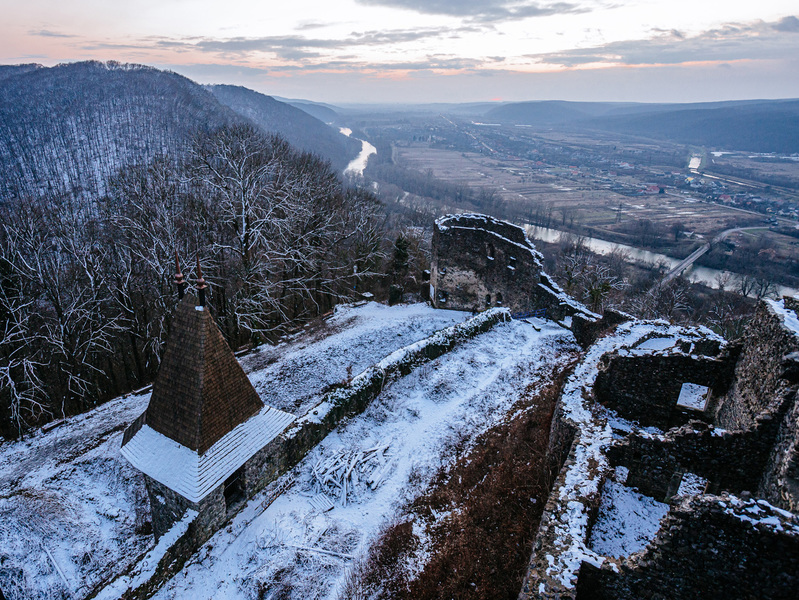
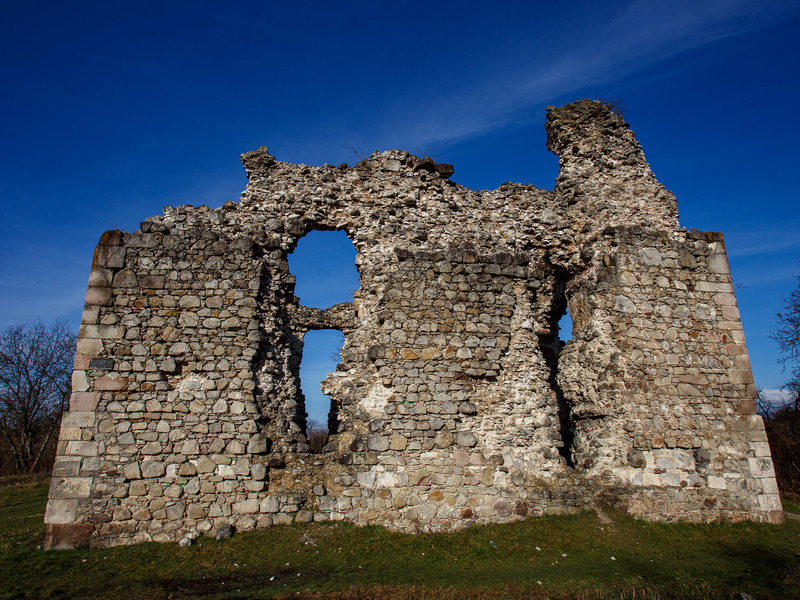
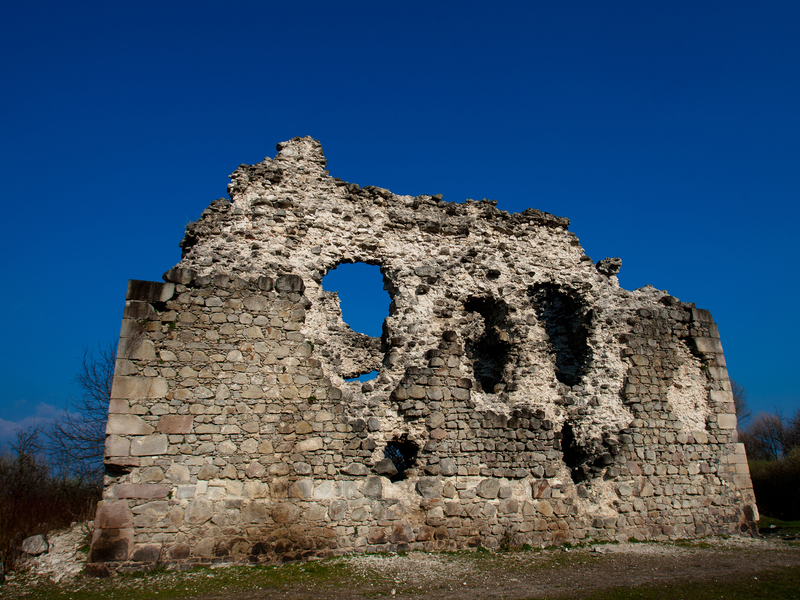
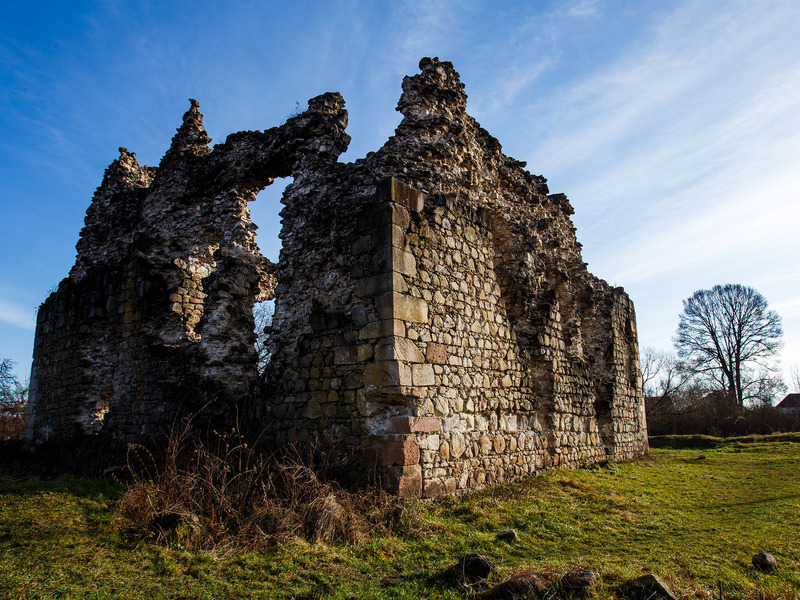
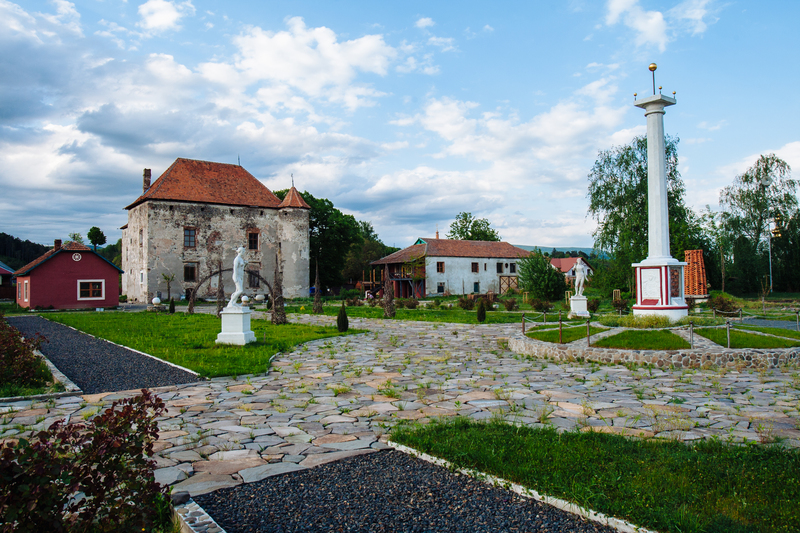
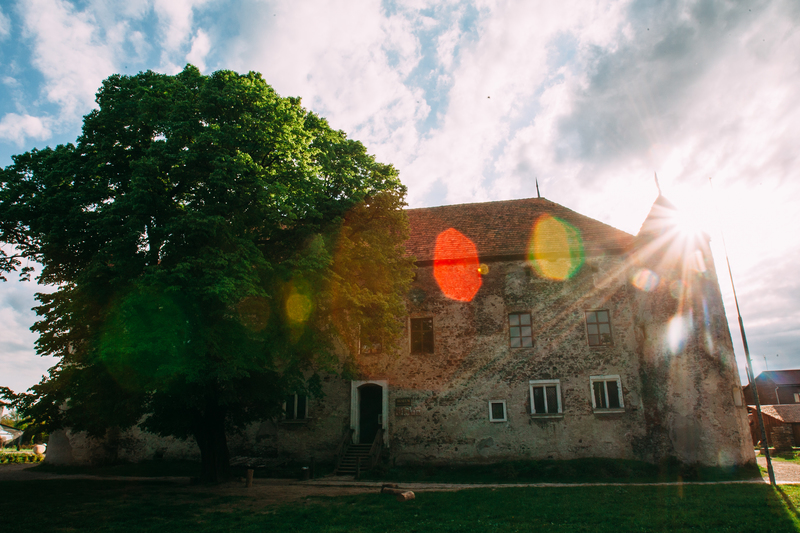
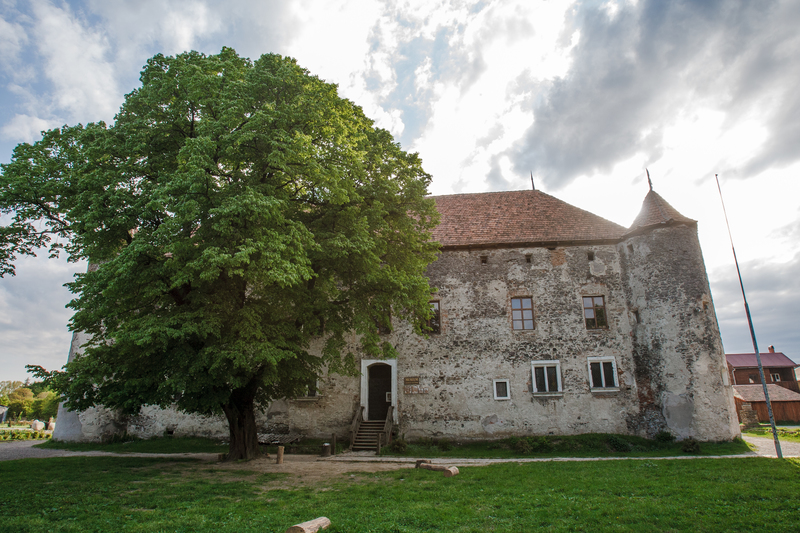
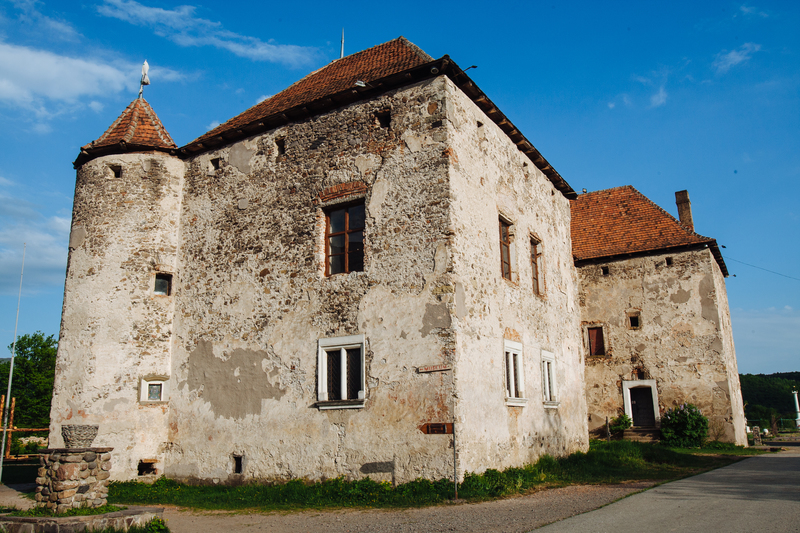
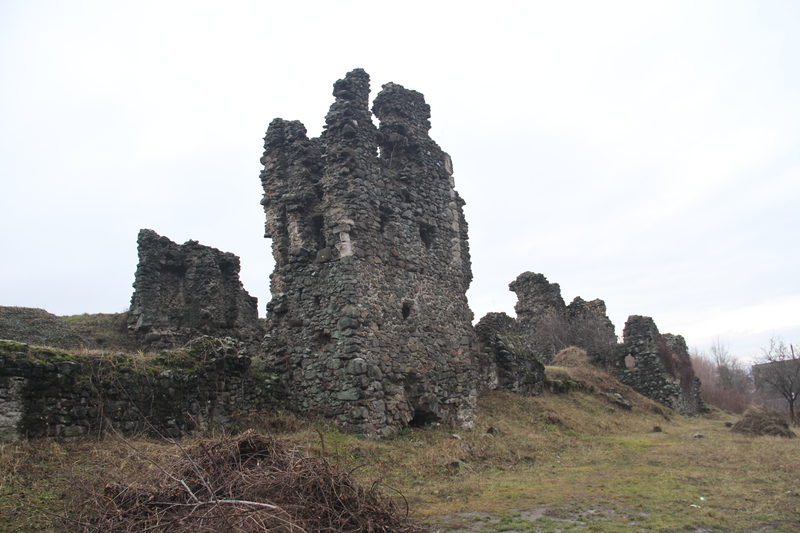
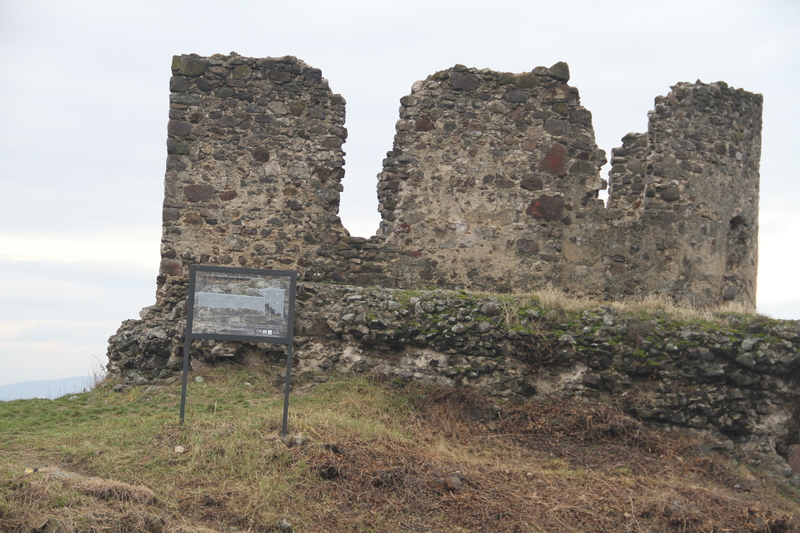
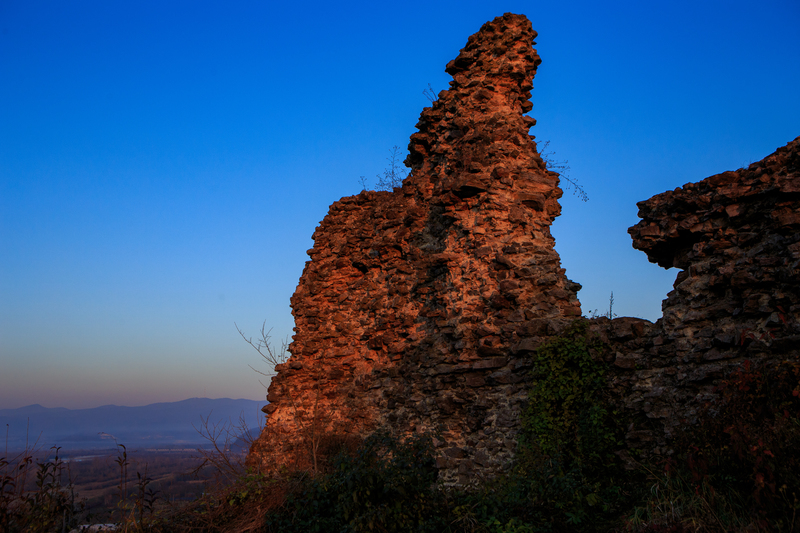
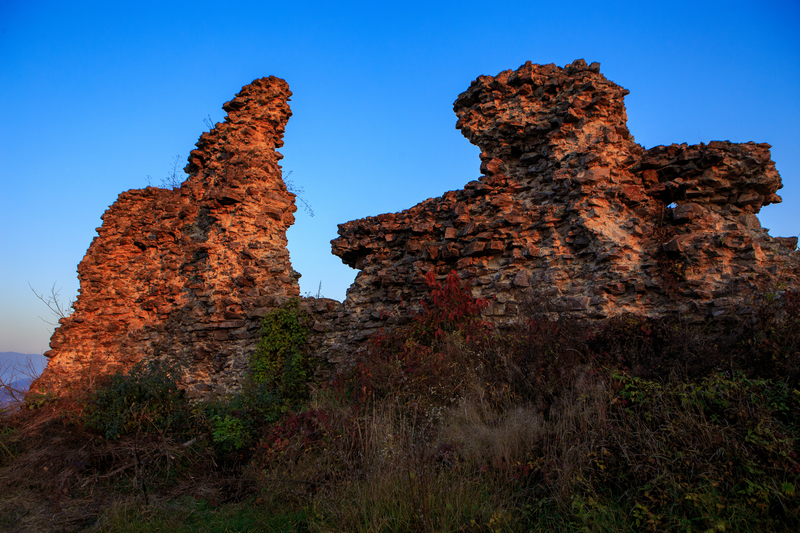
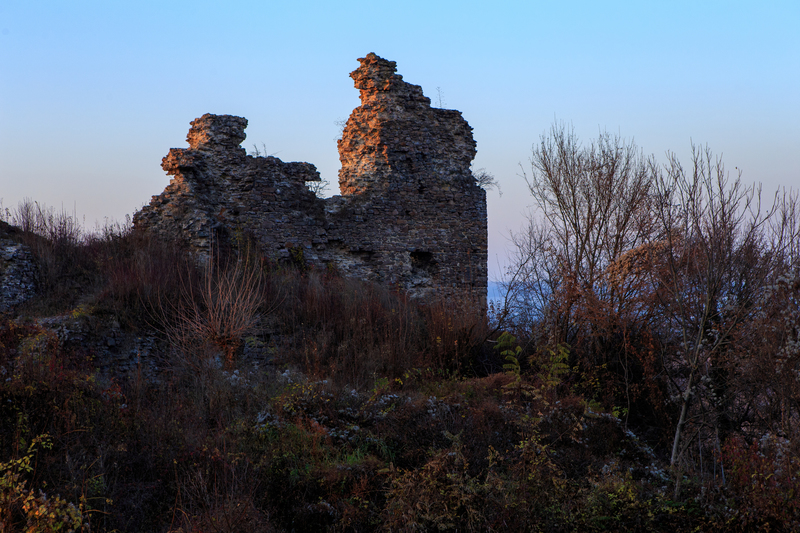
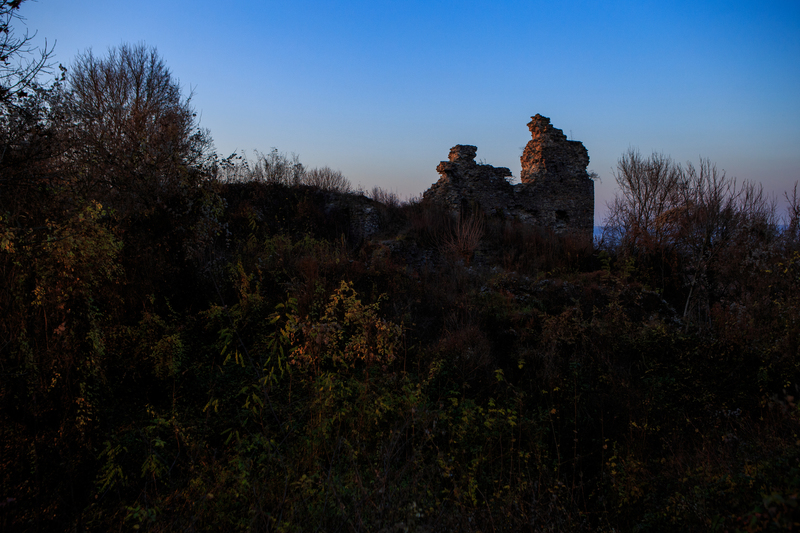
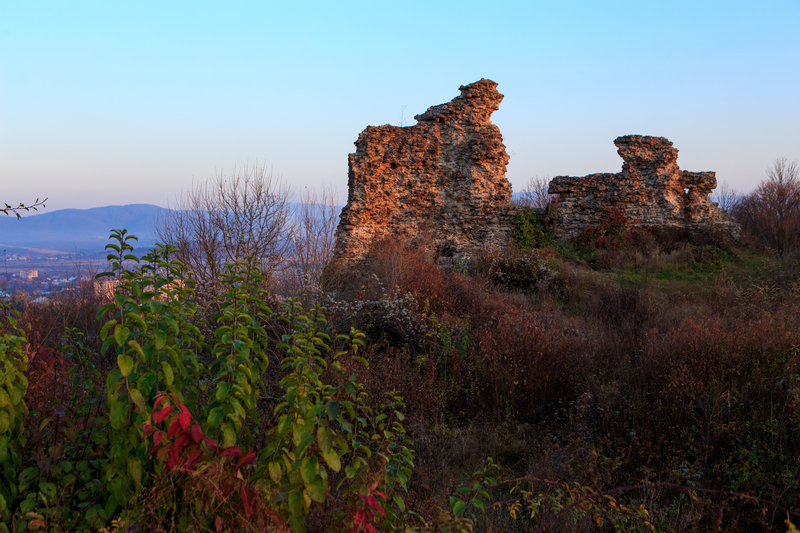
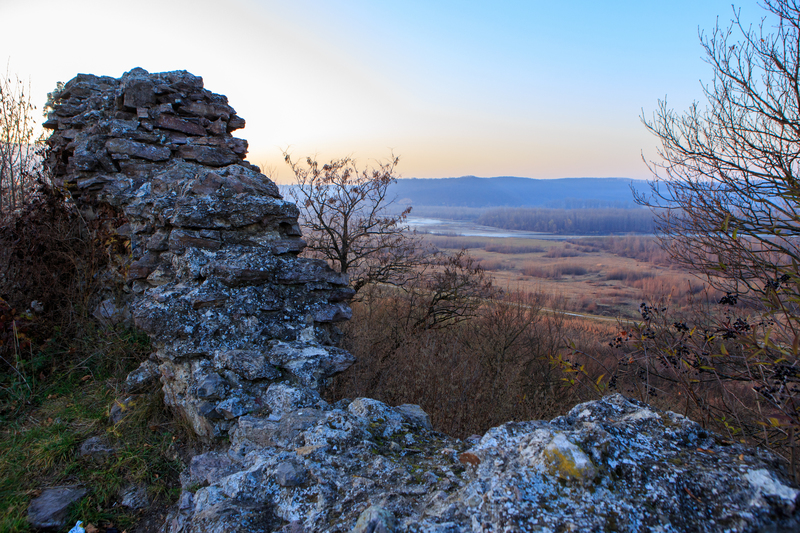
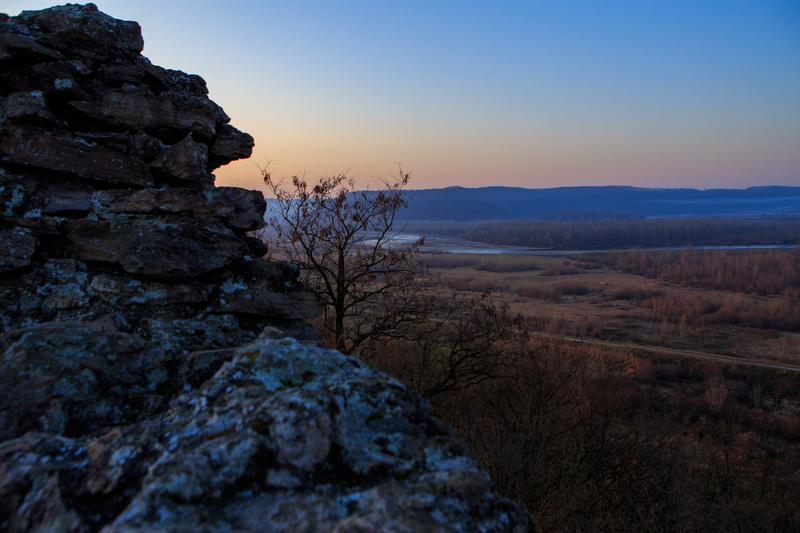
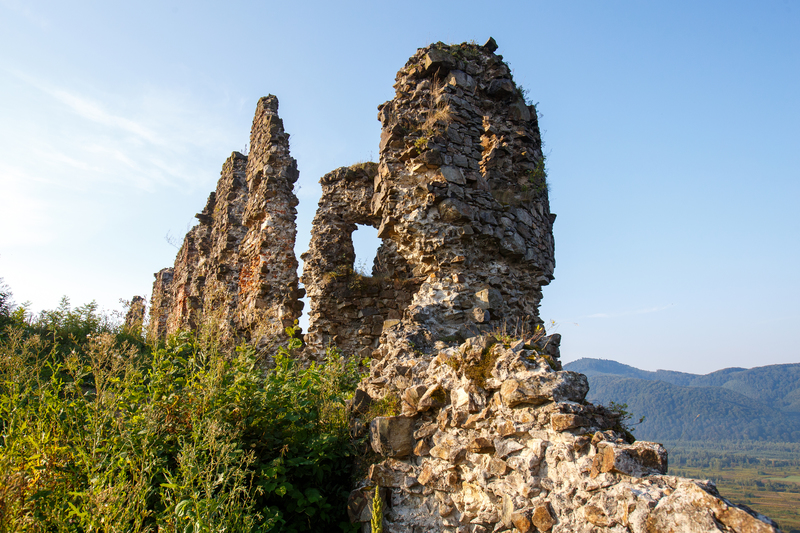
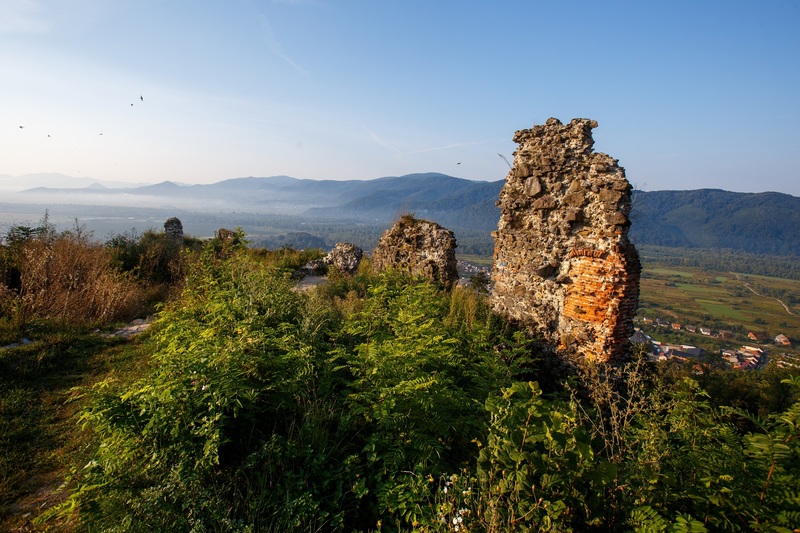
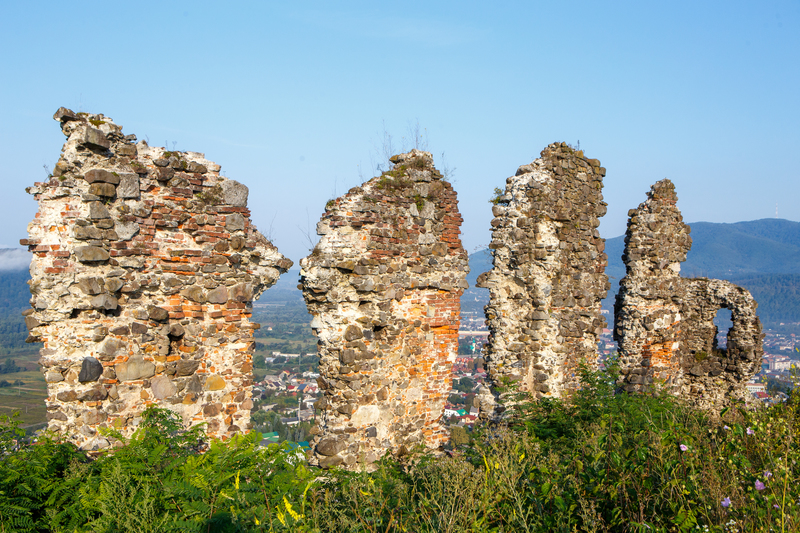
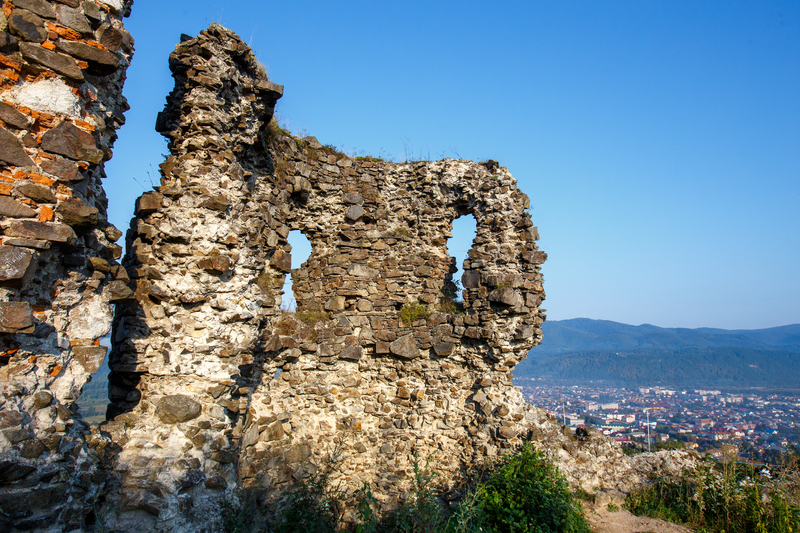
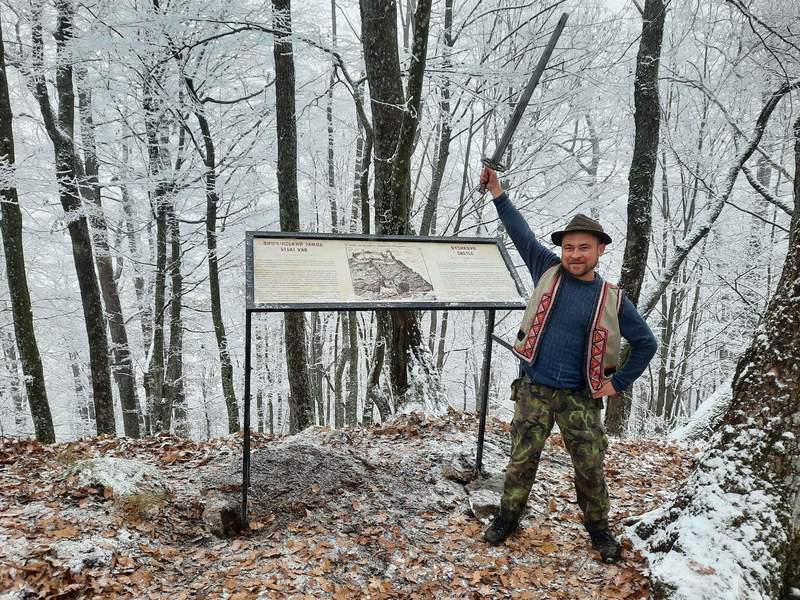
The history of Nevytsky Castle dates back to the twelfth century. Back then, there was a small earthen settlement protected by ramparts and ditches. Destroyed during the Mongol-Tatar invasion in 1241, the fortification was rebuilt in the second half of the 13th century.
In the 14th century, the banners of the new ruler, Charles Robert Anjou, flew over the castle, who defended his rights to the Hungarian throne with iron, blood and intrigue. In 1328, Anjou handed over the castle and the surrounding lands to his loyal ally, Janos Druget. From that time until the fortress was destroyed in the mid-17th century, it was the Drugets who owned the castle.
Throughout its history, the fortress was located on the border and controlled the way from the Uzhok Pass. In addition to collecting customs duties, trade was active on the palisade's territory. The international scale of this trade can be evidenced by a trade seal from Flanders, which is modern northern Belgium.
Passing through the palisade, you can see a ditch dug in the mid-fifteenth century. Water was supplied to it under natural pressure through wooden underground pipes from a neighbouring mountain. Interestingly, in addition to defence, the moat was also used for fish farming.
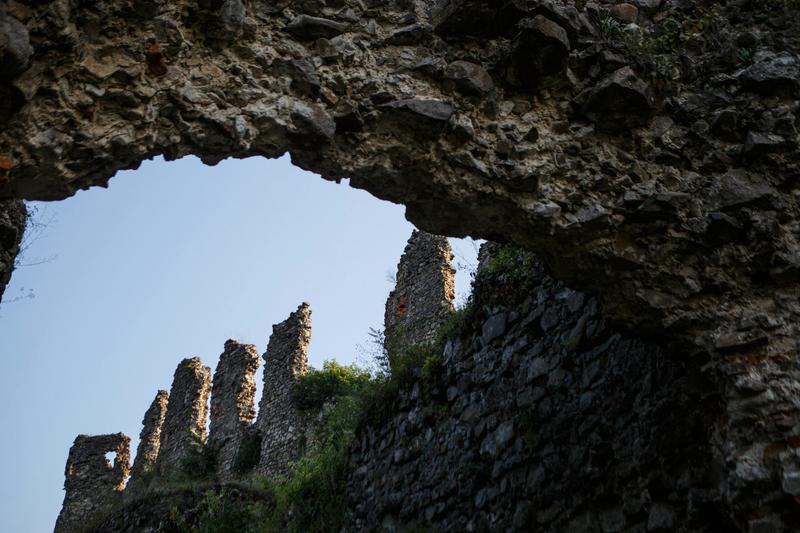
The wall in front of the moat was built in the middle of the fifteenth century and was lower than similar structures in previous eras, due to the beginning of the use of firearms.
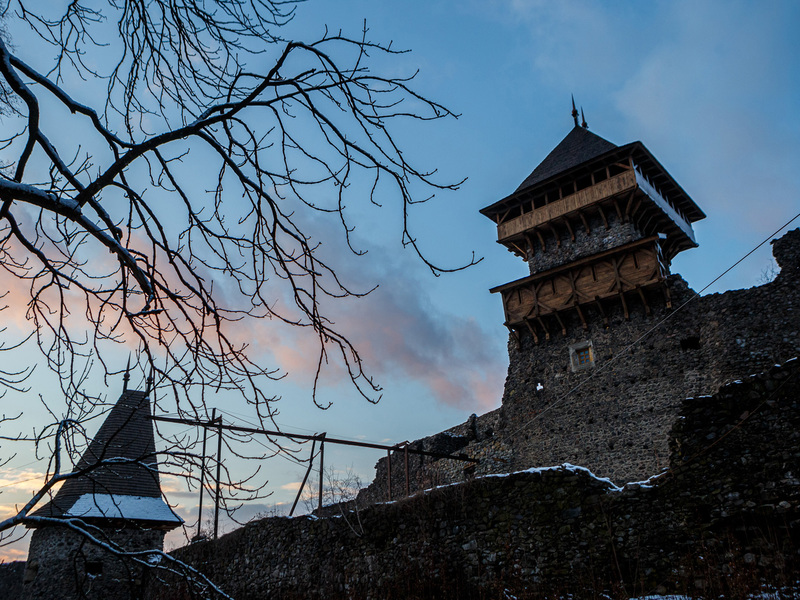
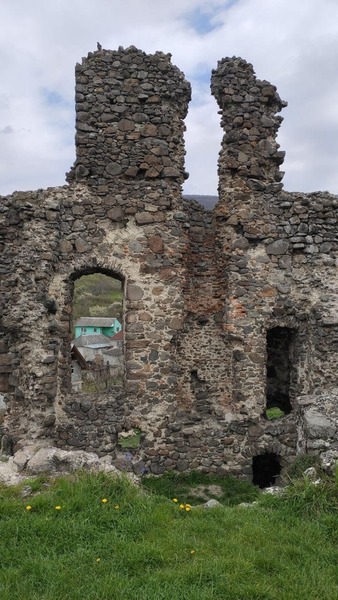
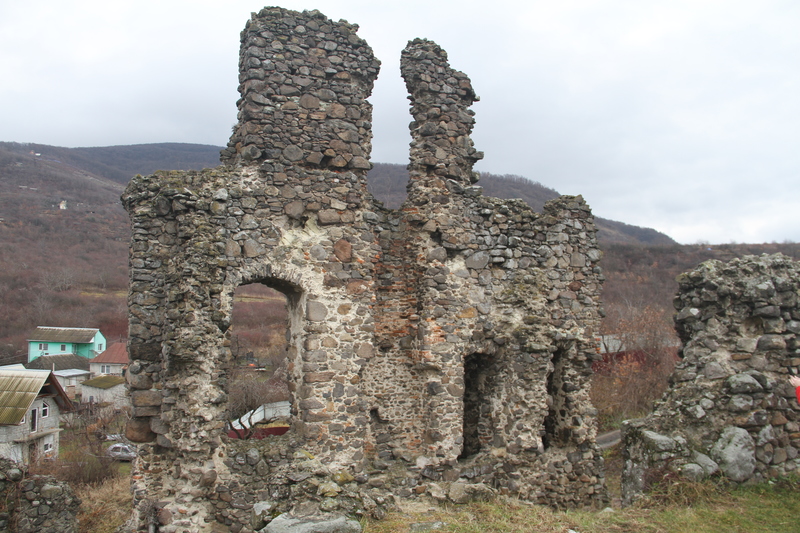
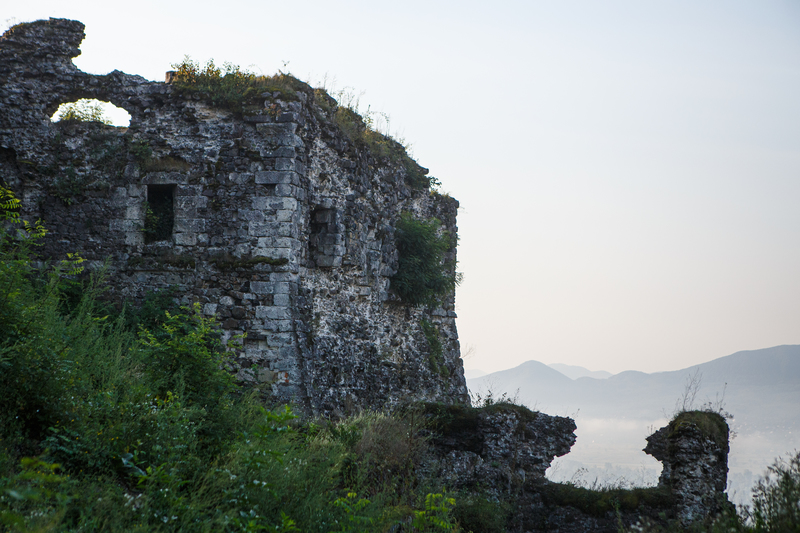
In the castle courtyard, you can see the remains of a well-tank and two donjons - the main towers of the fortress. In total, there were three such towers in Nevytsky Castle: in the second half of the 13th century, a round tower was built, which is not visible now; in the mid-14th century, a rectangular tower, whose outlines are still visible today; and in the mid-15th century, the main tower, which still stands today.
The bloody legend of the Bad Maiden is connected with the history of the castle. The princess ordered to take breast milk from mothers and add it to the mortar to strengthen the walls. When small children began to die, the area was filled with crying, fear and hatred, and a young man who lived in a neighbouring village gathered a large army and eventually defeated the Maiden.
In 1644, a Transylvanian army stormed and blew up the fortress. Since then, the Nevytsky fortress has not been rebuilt.
It was only at the end of the nineteenth century that the ruins began to arouse interest. A linden alley was planted here and a fountain was laid. The park was dedicated to the famous Hungarian forestry scientist Karl Wagner. At the same time, the first attempts at restoration began, which were hindered by the First World War.
During the Czechoslovak period, the roof of the main tower was modified. Several attempts to strengthen the ruins were made during the Soviet era.
In the 1990s, the fortress was explored by a volunteer expedition led by Oleksandr Dzembas. The Uzhhorod archaeologist can rightfully be considered the last knight of Nevytskyi Castle, as he has worked and is still working hard to preserve the historical heritage of the site.
Several years ago, the restoration of the main and outer towers began. Now the panoramic platform of the Nevitsky Donjon is ready to welcome guests again.
Uzhhorod Castle
The history of Uzhhorod is closely connected with the castle you are looking at now. The first mention of Uzhhorod Castle dates back to the late ninth century.
According to an ancient Hungarian chronicle by an unknown author of the late 12th century, the Gung fortress, ruled by Prince Laborets, already existed on the site of modern Uzhhorod. It was he who led the first armed resistance to the Hungarian tribes, who nevertheless captured the fortress. After that, the Hungarian prince Almos handed over power to his son Arpad, who led the subsequent conquest of Pannonia.
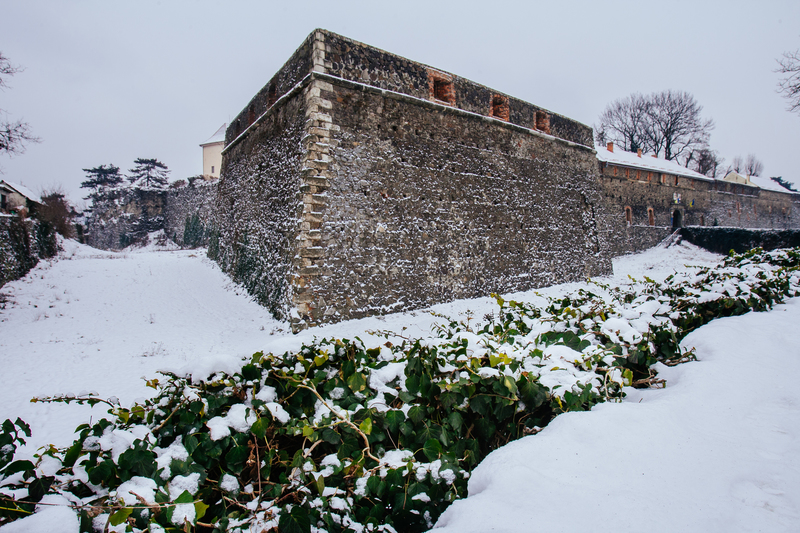
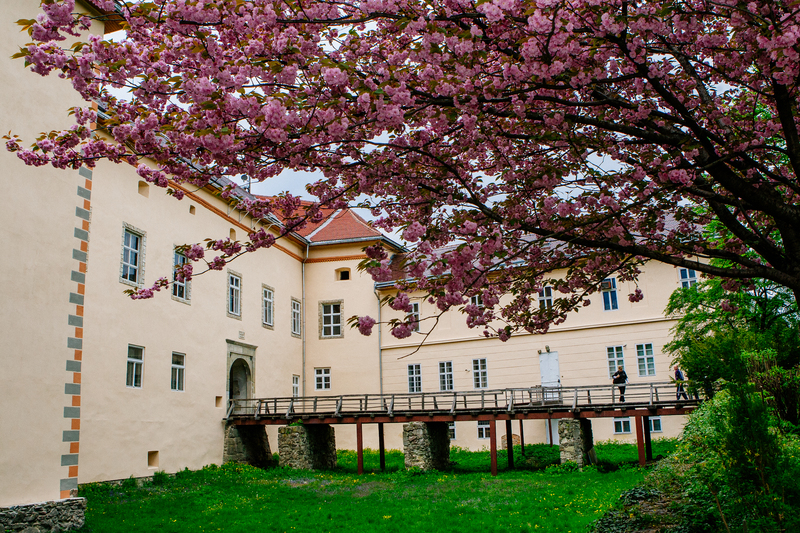
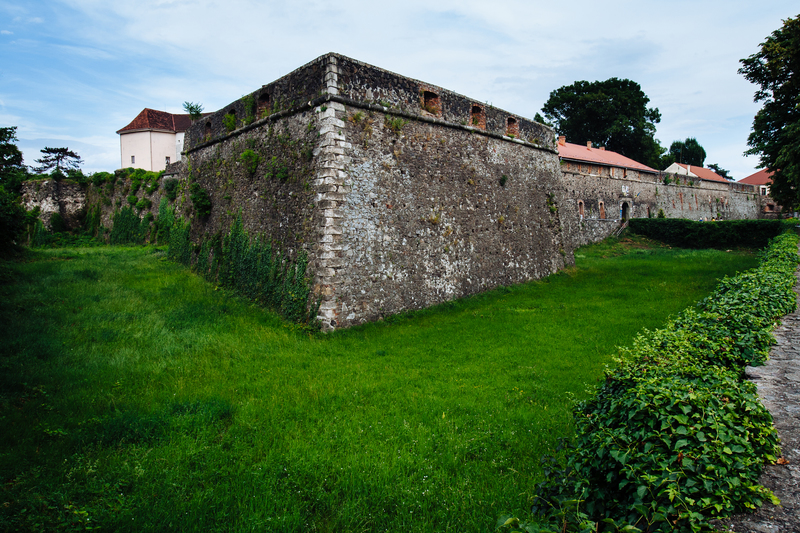
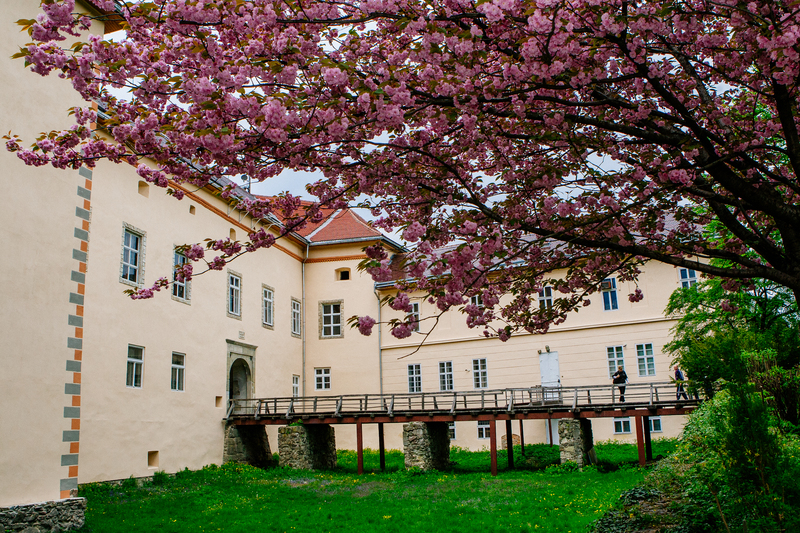
Uzhhorod Castle was first mentioned in written sources in the 13th century, however, neither its scale nor its appearance were described at that time. The castle complex began to be actively developed in the 16th and 17th centuries, and this was due to the wars between the Habsburg and Transylvanian parts of Hungary. In the middle of the 17th century, the outer defensive walls were built, a dry moat was dug around the castle, and a bridge to the gate was built. Uzhhorod Castle acquired its modern appearance in the late 18th century, when it lost its defensive significance.
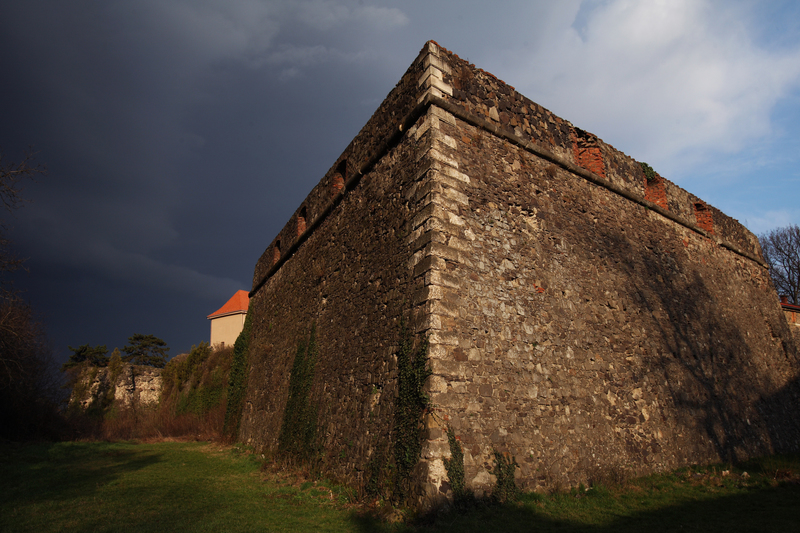
The castle has a square shape with elongated corner bastions. Warehouses and storerooms were located on the ground floor, the castle owners' chambers and a hall for banquets and receptions were on the first floor, and guest rooms were on the third floor. The fortress was surrounded by a dry moat on three sides, over which a drawbridge was thrown to the entrance gate. Another part of the castle ends with a precipice, which protected it from attacks. The walls here are 2.5-3 metres thick.
Above the entrance to the castle, you can see a bas-relief with four blackbirds, part of the Druget family coat of arms. The inscription Anno Domini 1598 carved on the right is apparently the date of one of the palace's reconstructions.
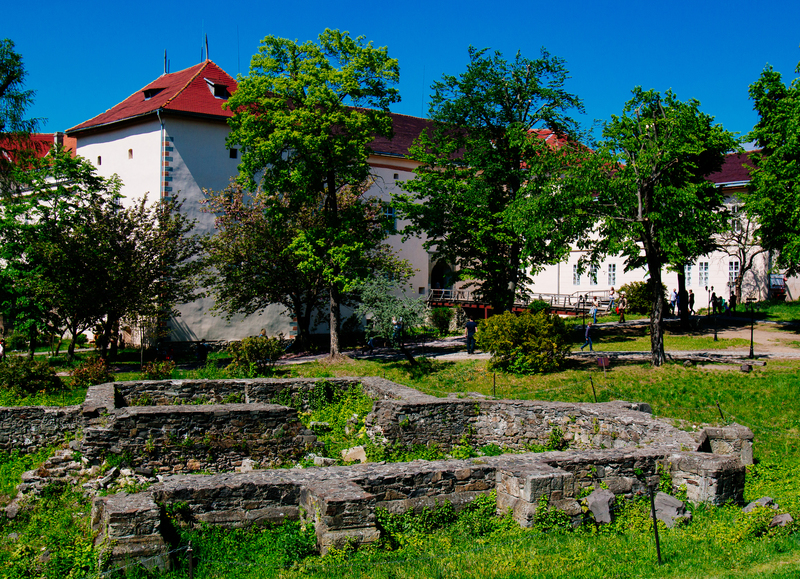
Walking into the castle courtyard, you will see the ruins of the Church of St George, which is one of the oldest stone monuments in Uzhhorod. The first mention of the monument dates back to 1248, and from 1284 there is a mention of a local priest named Stefan. There is a legend associated with the church that in the Middle Ages there was a tract called Witch's Pit nearby, where women accused of witchcraft were burned. On 24 April 1646, a great historical event took place in the church: with the signing of the Uzhhorod Church Union, the Greek Catholic Church was established on the territory of modern Slovakia, Romania, Hungary, and Transcarpathia. In 1728, the church was destroyed by a terrible fire, its remains were dismantled, and the remains were buried.
Uzhhorod Castle reached its peak in the late 17th century, when it was ruled by Count Miklós Bercsenyi and his wife Krisztina Csaky. Numerous parks and gardens were laid out on the slopes and at the foot of the Castle Hill, where the couple held social receptions and official celebrations. The only one of these parks that has survived to this day is Zvirynets, which can be seen from the bastion behind the Museum of Folk Architecture and Life. The park was laid out to breed wild animals for counts' hunting. The oldest tree in Uzhhorod, the plane tree, has been growing in the park since the time of the Drugetts.
In the courtyard of the castle, you can find a well that is about 40 metres deep.
Serednyansky castle
The Serednyansky Castle, the remains of which you can now see, is nowadays called by many "the only Templar castle in Ukraine". This legend came about thanks to the Transcarpathian historian and local historian Petro Sova, who misinterpreted the term "Red Brothers" from Hungarian chronicles. In the Hungarian kingdom, during the existence of Serednyansky Castle, both the Templars and the Pauline monks were called this way. There could not have been Templars in Zakarpattia, and the order was liquidated in 1312, while Serednyansky Castle was built much later. But the Pauline monks, according to historians, built a monastery in the village of Vovkove in the 15th century. And it is these "red brothers" who are apparently mentioned in ancient chronicles.
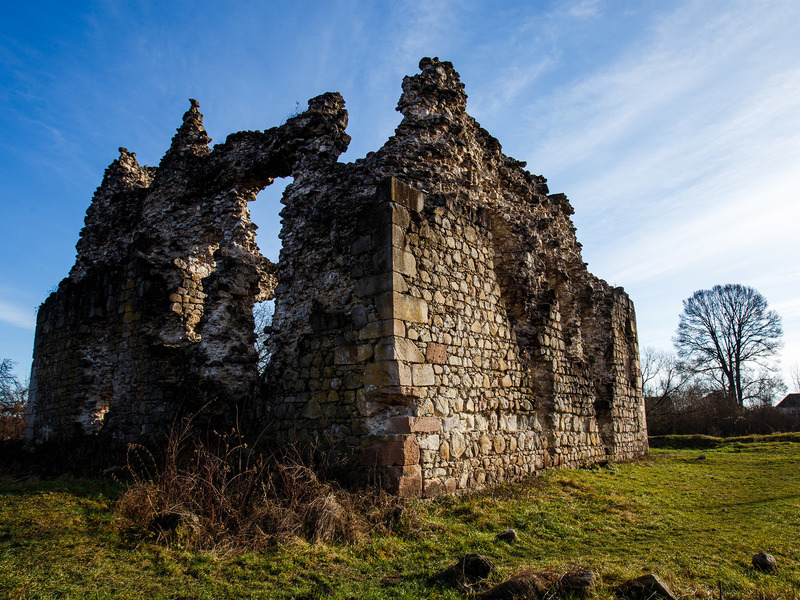
The Serednyansky castle had a rectangular shape, and once there was also a 20-metre-high tower. Looking inside, you can see the ceiling of the ground floor, where there were 2 rooms connected by a small passage. Above the ground floor is a large hall with narrow windows, the entrance to which is on the east side of the building. The roof was covered with wooden tiles. And in the northeast corner you can find the entrance to the basement. However, we do not recommend going inside, because the fortress is just waiting for conservation.
Several outbuildings were located in the courtyard of the fortress. Serednyansky Castle was protected by stone walls. Also, several defensive lines of earthen ramparts and ditches were built around the estate, which were filled from the Velya River. The total perimeter of the fortification was 200 by 200 metres. According to historians, the castle was built using stones quarried during the laying of wine cellars, for which Serednie is famous.
Serednyansky Castle was built in the 15th century by the Palochi dynasty. When the last representative of this family died in the Battle of Mohács in 1526, the fortress, along with the surrounding land, passed into the possession of the Dobó family. Its most famous representative, István, was among the winners of the Battle of Eger and basked in glory. A hero on the battlefield, he was a real bandit in everyday life. He resorted to robbery and arson of estates, traded with Poland bypassing the royal customs, smuggled wine to Poland, committed violence against competitors, and provoked a conflict with another powerful family, the Pereni. István Dobó was imprisoned on charges of treason, and most of his property was confiscated. After returning from prison to Szentes, he died in 1572.
In the 17th century, Serednyansky Castle and the surrounding lands were owned by the Rakoczy family. The estate survived several attacks by Carpathian bandits known as opryshky. During the war of Ferenc II Rákóczi against the Austrian monarchs, the fortress was heavily damaged.
In the 18th century, local residents began to dismantle the once majestic structure to build their own houses. To this day, Serednyansky Castle has survived as a ruin.
Chynadiyivka Castle
Chynadiyevo Castle, also known as Saint Miklós Castle, is a palace whose history dates back to the 15th century. "Saint Miklós" means "Saint Nicholas" in Hungarian, and this is the name of the village that would later become Chynadiyevo at the time of the castle's construction.
Founded by Baron Pereni, the castle was once the heart of the St Miklos Dominion. It served to protect not only the local settlement, but also the nearby Ruski Vorota pass. Since the fortress was of strategic importance in ancient times, it was built to last: the two-storey building with one metre thick walls, loophole windows and two powerful towers was well protected by ramparts and moats, and the extensive system of deep cellars and secret passages between the double walls has been preserved to this day.
"Saint Miklós has never been a family estate of one dynasty, and in different periods of history it belonged to different owners, which was reflected in the style and interior of the castle. After Baron Pereni, who acquired the dominion in 1574, the estate was ruled by Prince Michail Telegdy. In 1610, István Nyári claimed the castle, and in 1640, the Lonyi family took over the ownership of St. Miklós. In 1657, the fortress was heavily damaged by Polish troops, and it needed a thorough restoration. Since then, the castle has gradually lost its strategic importance as a defensive structure, only to gain a new, now "romantic" fame in 1682.
It was in 1682 that Ilona Zrinyi and Count Imre Tekeli met in the castle. She is a charming Hungarian countess, in fact the leader of the anti-Habsburg Hungarian liberation movement. He is a Transylvanian aristocrat 14 years younger than the Countess and the leader of the Kurucs insurgency. The whole of Europe watched their love with bated breath. Until Imre Tekeli first left for Turkey in the wars of liberation against the Austrians, and later, after an indomitable defence but eventual defeat, Ilona Zrinyi's beloved joined him.
During the Second World War, the German occupiers set up a prison in Chynadiiiv Castle. During the Soviet period, it served as a village council, the local forestry department, a military unit and a motor depot.
In 2001, the castle found a new owner, the Transcarpathian artist Yosyp Bartosh, who has been taking care of the estate ever since. It was Mr Bartosz, together with his wife Tetiana and like-minded people, who actually saved Chynadiyevo Castle from decay and destruction, breathing new life into it.
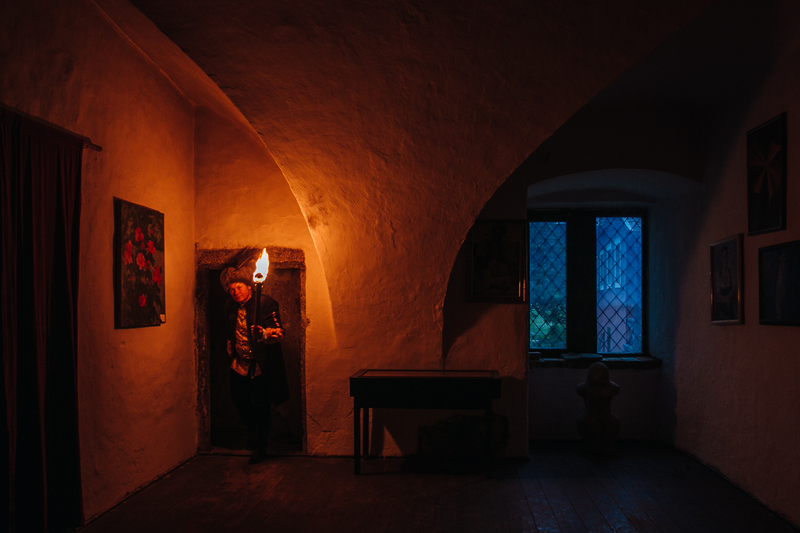
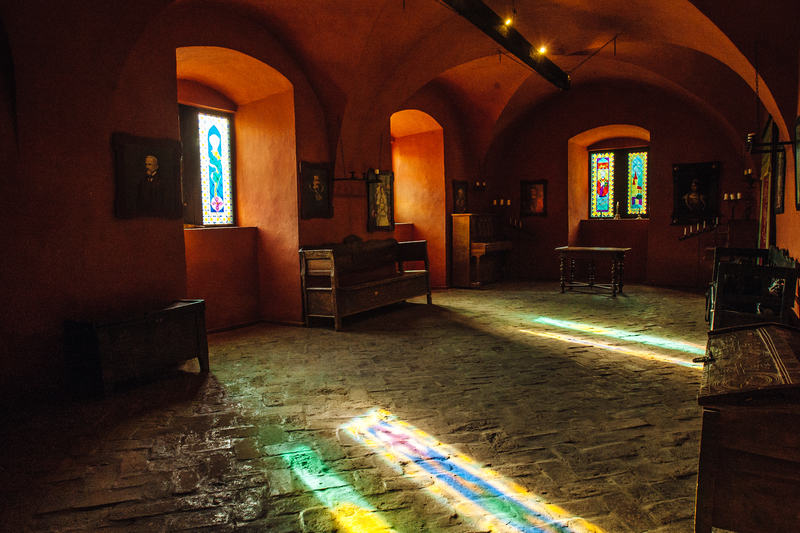
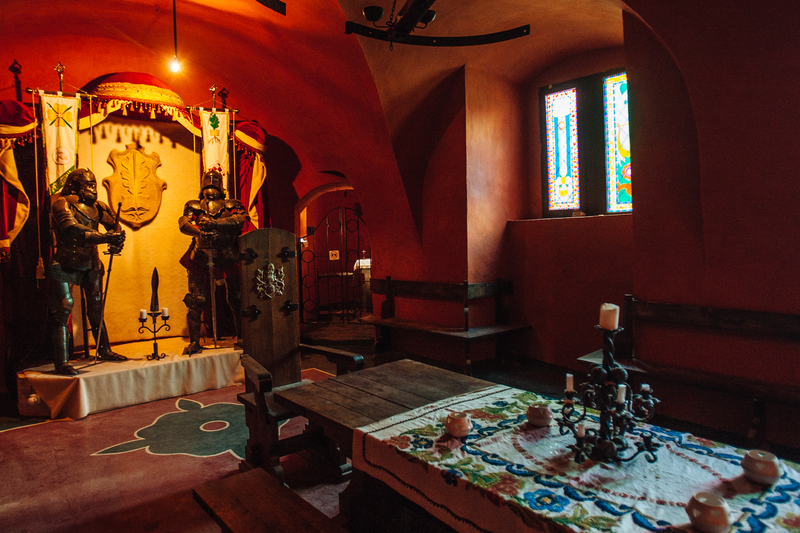
Today, guests of St Miklós are greeted by a portrait of the legendary Ilona Zrinyi, with whom the history of this castle of love is inextricably linked. The portrait was painted by Josef Bartosz himself. The large knight's hall houses expositions of Scythian and Celtic cultures, and the walls are decorated with portraits of the castle's owners from different eras. Here you can also see an exhibition of scrapers made by the owner of the castle, Mr Yosyp's wife, Tetiana Bartosh. The castle also has a library with books from the collection of Count Schönborn. The second floor has not yet been restored. Therefore, visitors are asked to behave carefully and quietly here, so that bricks do not crumble along the edges of the masonry, which is visible through holes in the plaster.
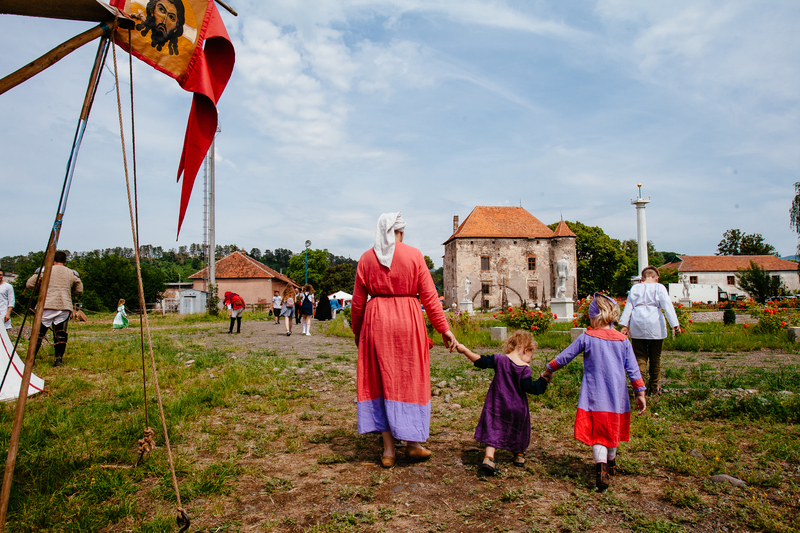
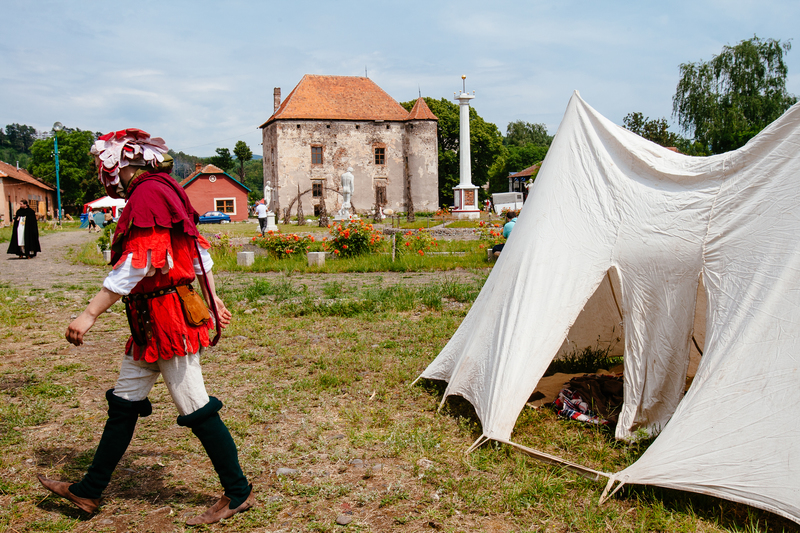
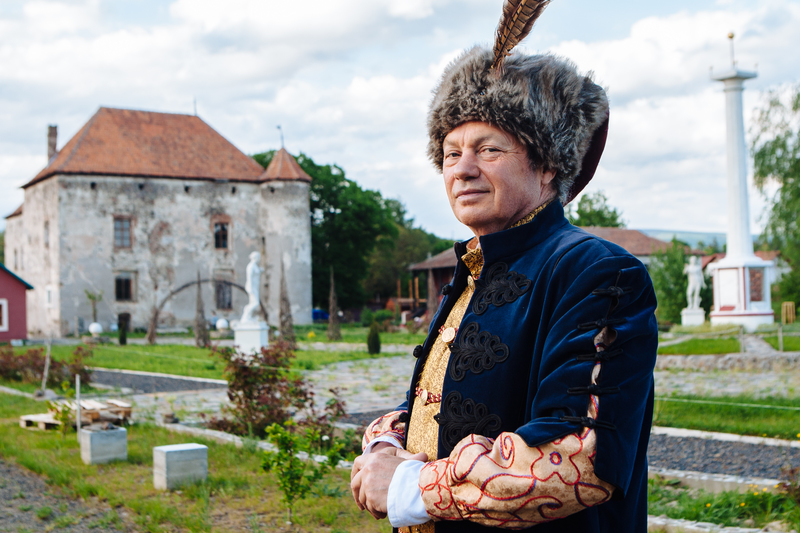
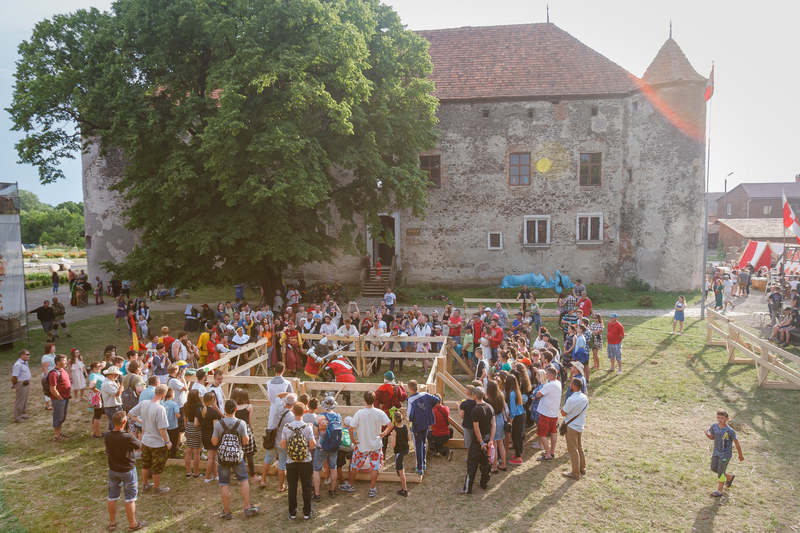
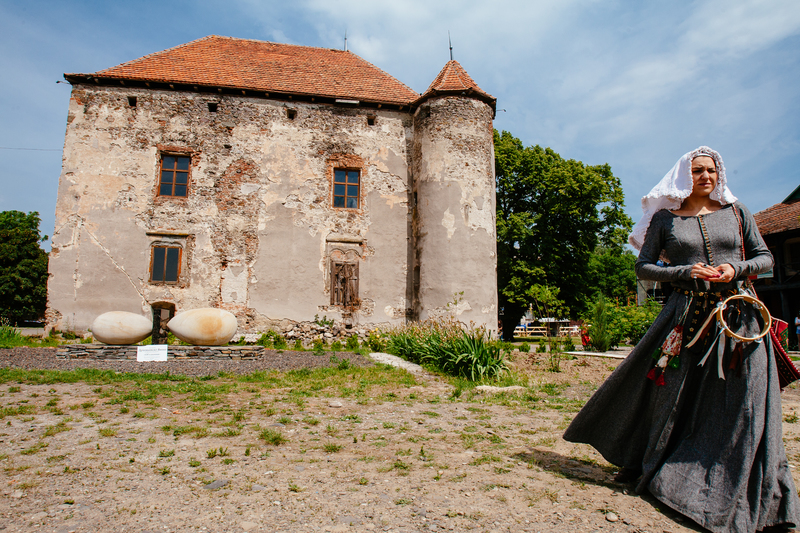
Whatever happened in Chynadiyevo Castle in the Middle Ages, today this elegant historic mansion, which has the status of an architectural monument, is a real centre of cultural and artistic events. For several years in a row, the St Miklós Castle has hosted the Silver Tatos Festival of Medieval Culture. Over the course of several festival days, knight fights and jousts, a medieval fair, and atmospheric performances by musicians and dancers take place here.
In spring, Chynadiyevo Castle turns into a "flower kingdom": florists from all over Ukraine gather here for the Love in St Miklos festival, where they create a variety of floral arrangements. These days, floral installations are everywhere in the castle: in rooms, basements, and outside.
In winter, it has become a good tradition to set up St Nicholas' Residence in the estate. During the Christmas and New Year period, children can either talk to the Saint or take a picture with him, or leave a letter with their wishes in the box.
However, the cultural and artistic life in the castle is in full swing all year round, regardless of the season. Literary and musical evenings and festivals, art plein airs and various art workshops are held here on a regular basis.
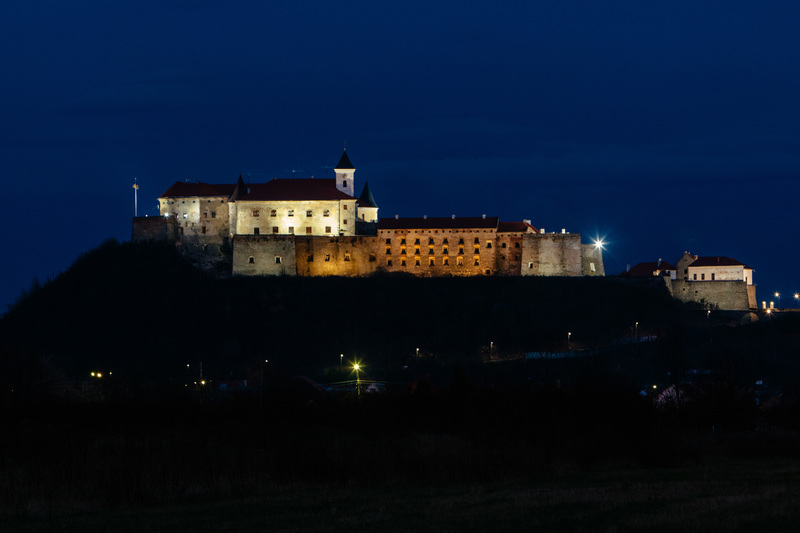
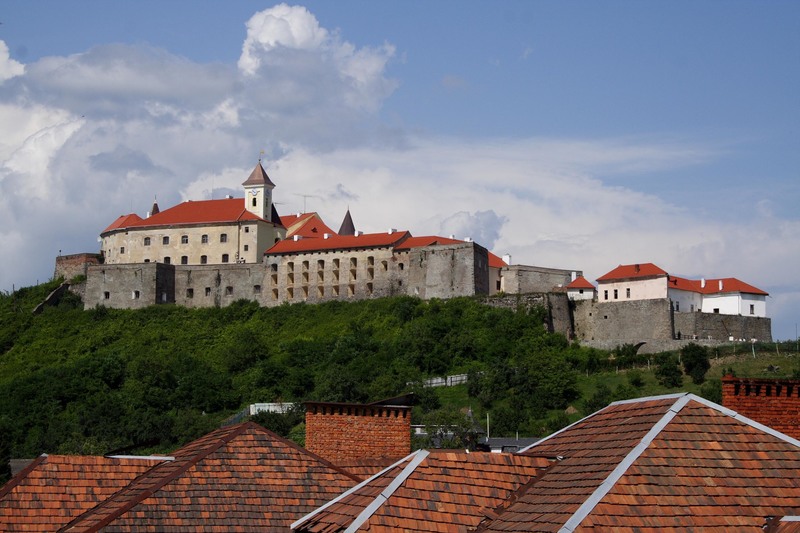
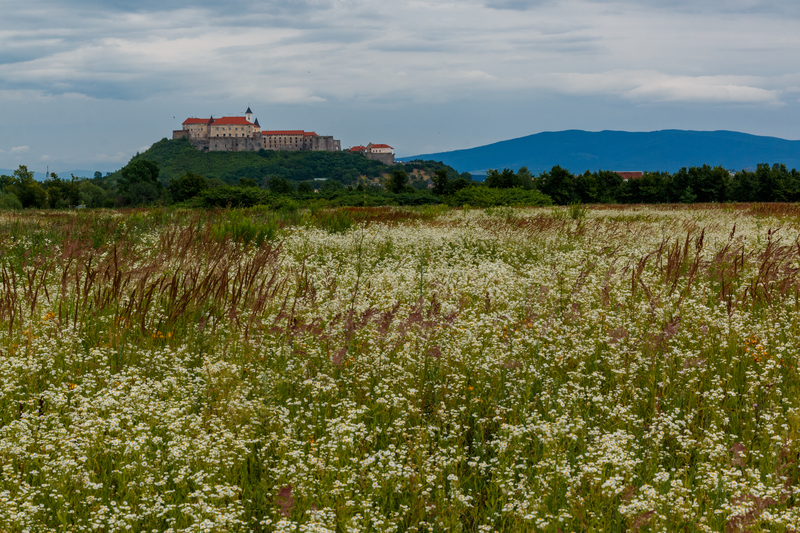
Mukachevo Castle
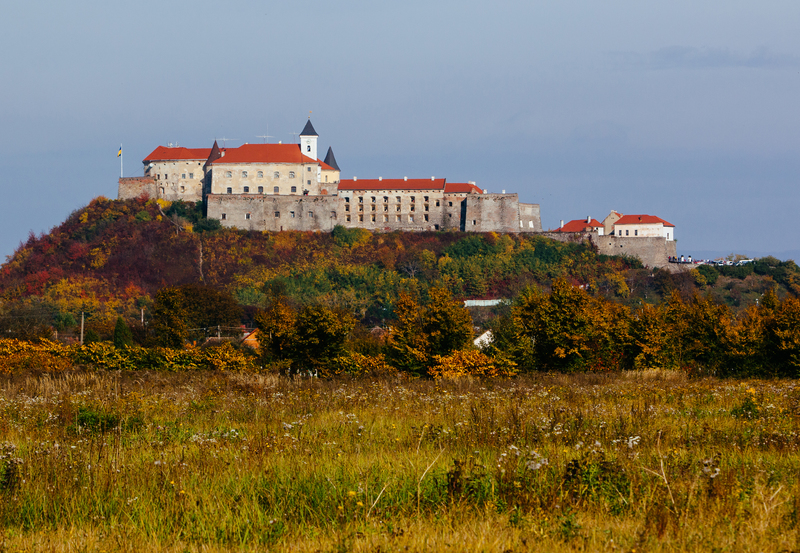
Mukachevo Castle is one of the most powerful and beautiful fortresses in Ukraine. An architectural gem of Transcarpathia, the castle has survived several eras and now attracts tens of hundreds of tourists every year.
Another name by which Mukachevo Castle is known is Palanok. It began to be used only in the 20s of the twentieth century during the Czechoslovakia. The name came from the village of Várpalánka (literally Castle Palanok, or simply Palanok).
Mukachevo Castle was built on a mountain that is an extinct volcano. The first mention of the fortress dates back to the 14th century. In 1311, after the murder of magnate Amadeus Aba in Kosice, Hungarian King Charles Robert of Anjou confiscated a number of his properties, including the castle in Mukachevo.
The fortress was owned by the crown until the end of the 14th century. After that, it was owned by Fedor Koryatovich, the Serbian despots Stefan Lazorevic and Georgi Brankovic, and the Hunyadi family. From the end of the 15th century, the fortress returned to the crown.
In 1528, Janos Zapolyai became the new owner of the estate and appointed Mihály Büdi as captain and governor of the Bereg County. During the period of Byudy's captaincy, the most famous counterfeiter of the sixteenth century, master Miklós, worked in the castle for some time.
Over the next century, Mukachevo Castle changed hands several times. Eventually, in 1633, the fortress was acquired by the Rakoczy family. During the Rakoczy's reign, the castle was rebuilt and modified, a moat was dug around the foot of the castle, and a defended settlement appeared near the castle. Some time later, a representative of the Rakoczy family, Ferenc I, would marry the daughter of the Croatian ruler, Ilona Zrina. It is her name that will be associated with the most victorious pages of the history of Mukachevo Castle.
When Ferenc Rákóczi I died, Ilona Zrinyi continued her husband's liberation struggle against the Austrian crown, leading the anti-Habsburg movement. In 1682, she married for the second time - to the Hungarian count Imre Tekeli, 14 years younger than her husband. The wedding was celebrated in the Mukachevo Castle for 8 days. And in 1685, the siege of the fortress by Austrian troops began, which lasted for 2.5 years. In 1703-1711, the fortress in Mukachevo was one of the centres of the national liberation war led by Ferenc II Rákóczi, the son of Ilona Zrinyi.
After the defeat of the anti-Habsburg movement, Mukachevo Castle became the property of the Austrian crown. During this period, the fortress underwent significant modernisation: some of the towers were dismantled and bastions and half-bastions were built in their place, which have survived to this day.
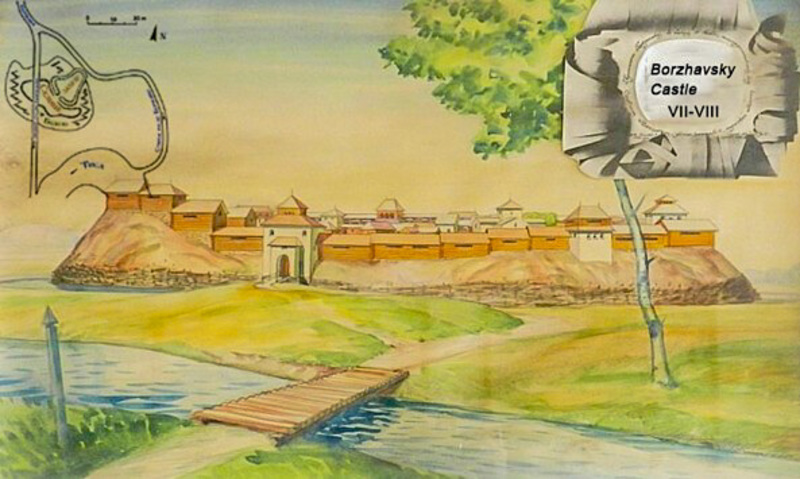
Borzhava Castle
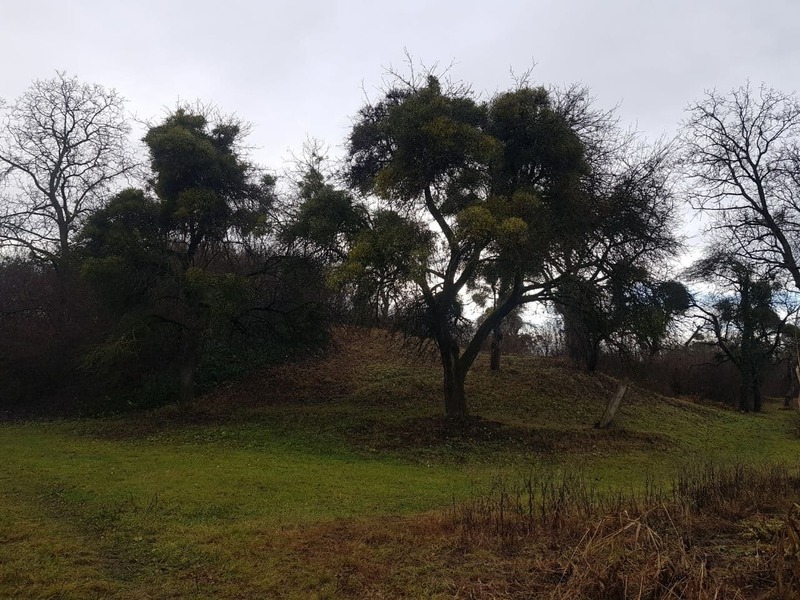
Borzhava Castle in the village of Vary, Berehove district, is considered one of the oldest fortifications in Ukraine. Unfortunately, today what remains of the castle can hardly be called an architectural object, and it is only of archaeological interest. Today, it is a meadow overgrown with grass and bushes. Only the fragments of ditches and ramparts on the site of the ancient settlement make it possible to imagine the scale of the castle that disappeared in the course of history.
And it was really quite large: the fortification system was located on a triangular area measuring 120*110 metres, between two rivers - the Tisza and Borzhava, which did not intersect each other. On the other sides, the fortress was surrounded by swamps, which significantly increased the defence capability of the fortification, limiting access to it. The perimeter of the castle was protected by a system of defensive structures: a moat, a rampart, and possibly wooden fortifications in the upper part of the rampart.
In general, the settlement consisted of two parts: the fortification itself and the area adjacent to it. In the southeastern part of the castle, you can still see a deep 10-metre-wide moat, which the locals call the Iron Gate.
Researchers disagree about the exact date of the Borzhava Castle's foundation. According to the chronicles, it existed as early as 903: the fortification is mentioned in the oldest Hungarian chronicle by an unknown author, commonly called Anonymous or Anonymus. It is believed that he was a note-taker for King Béla III, and the document itself is dated to the second half of the twelfth century. In this work, the chronicler writes about the castrum borsoa, i.e. "the fortress of Borshcho" or "the fortress of Borzhava". According to Anonymus' census, in 903, the Ugrian troops led by the leader Arpad came to the lands that then belonged to the Bulgarian kingdom. They besieged the Borshcho castle for three days, and then stormed the settlement, destroyed the walls, and escorted the castle's defenders in chains to the Gung fortress (i.e., Uzhhorod).
Already during the Hungarian rule on these lands, a real stone castle was built on the site of the settlement in the 11th century, and its construction was finally completed in the 12th century. In 1214, the comitatus-zupa of Borshá was formed around the castle. The first reliable mention in written sources of Borshávar ("var" means castle in Hungarian), i.e. the castle of Borshova, is found in 1320. Prior to that, all references to the fortress were made in chronicles.
However, not all historians adhere to the version set out in the chronicle of Anonymous. A number of researchers attribute the fortifications near the village of Vary to Hungarian settlements of a later period - the 10th and 11th centuries. For example, based on the results of archaeological excavations, historians argue that in 903 there could not have been any assault on the settlement by the Ugrians, because fortifications simply did not exist at that time. However, they acknowledge the presence of Slavic ceramic material on these lands, suggesting that Hungarian troops could not have captured a fortress, but rather a small Slavic settlement.
It is also unknown exactly when and under what circumstances Borzhava Castle was destroyed. According to one version, the fortress fell during the Tatar-Mongol invasion led by Batu Khan in 1241-1242. According to other sources, the fortification could have been destroyed later, in the 14th century, during the period of internecine strife in the Kingdom of Hungary.
After the castle was destroyed and fell into decay, the local population used its remains as building material. One of the towers of the fortification, which was preserved in relatively good condition, was adapted into a chapel. But it was finally destroyed in the mid-17th century, during an attack by Polish troops during the war between Transylvania and the Polish-Lithuanian Commonwealth.
The ruins of the fortress were preserved until the 19th century: on the Austrian map of the late 18th century, Borzhava Castle was marked as a building with four bastions, which, however, does not correspond to its type at all.
Professional archaeologists began to take an interest in the remains of the castle in the 20th century, and the first official explorations were carried out in 1961.
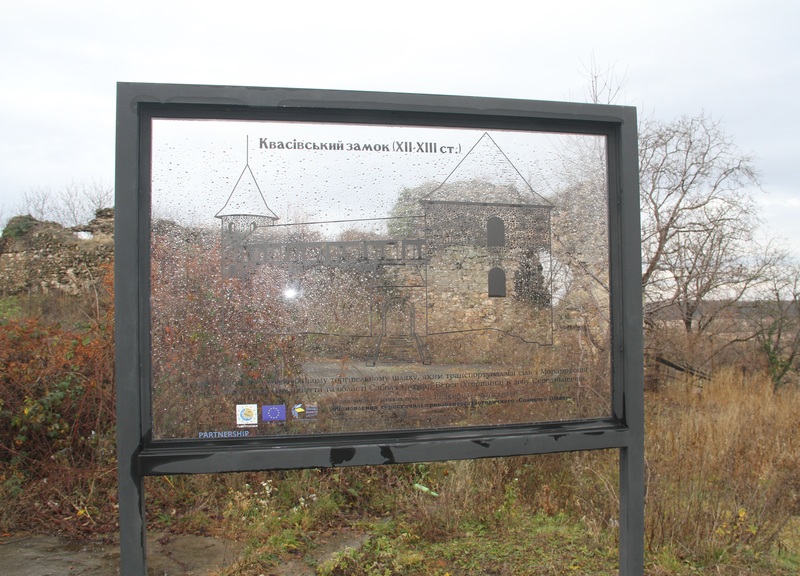
Kvasiv Castle
It was the eleventh century, the time when the southwestern Transcarpathian lands were incorporated into the Kingdom of Hungary. Consequently, there was a need to build new outposts that would ensure the protection and defence of the new possessions of the crown. One of these outposts, according to researchers, was the Kvasiv Castle, also known as the Minta Castle.
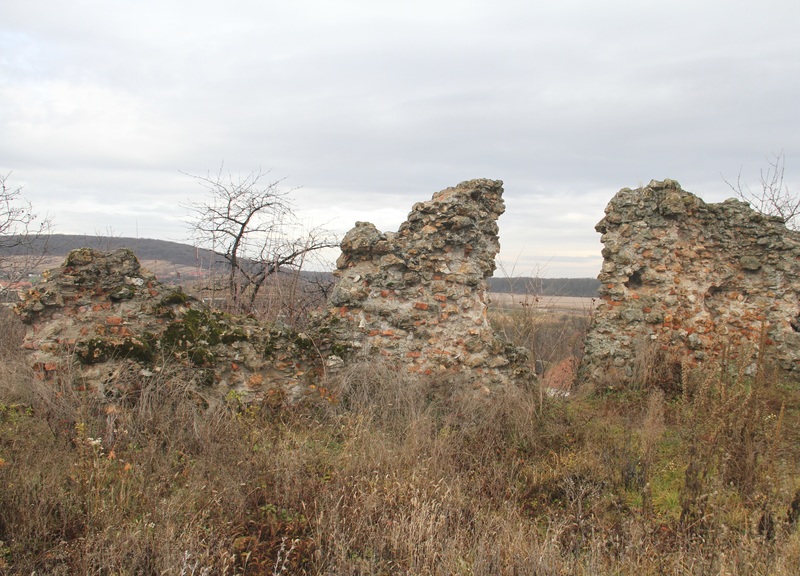
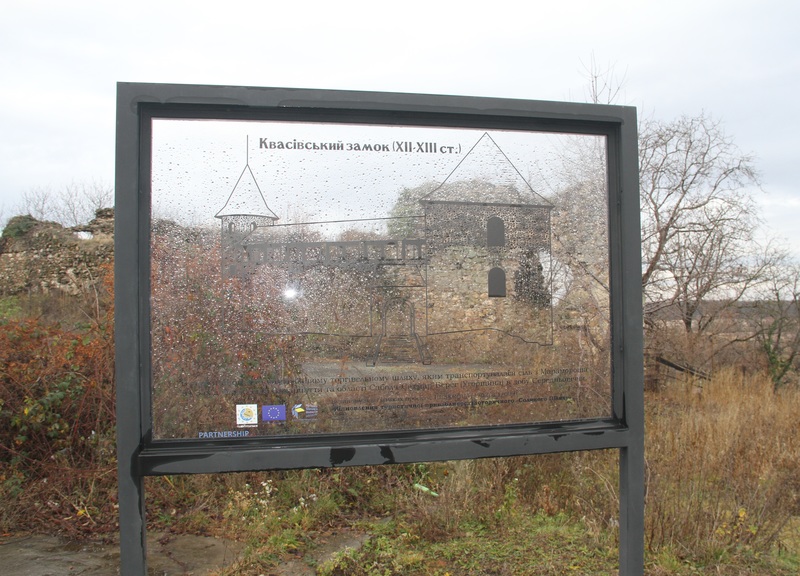
The first mention of Kvasiv Castle dates back to 1390. This fortress, of which only ruins remain today, is considered one of the earliest fortifications not only in Zakarpattia but in Ukraine as a whole. The castle in the village of Kvasovo was built for a strategic purpose: it was intended to defend the salt route and the exit from the Borzhava Valley, as it stood on the trade route from Maramorosh to the Danube region.
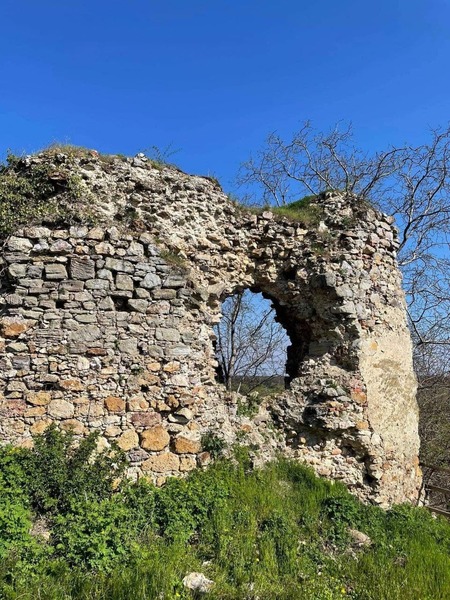
The castle was built on a cliff, 100 metres from the Borzhava riverbed, at an altitude of 15 metres above the river level. The fortifications were built of untreated stone, and the researchers explain the brick impurities found in the masonry as a later intervention in the castle's concept.
Kvasiv Castle controlled the exit from the Borzhava valley. The castle complex was triangular in shape and surrounded by strong walls 6 metres high and about 1.3 metres thick. The castle was protected by a moat that was up to 4 metres deep. The outbuildings were located under the protection of the walls, and a deep well was dug in the rock in the eastern part. In the central part, in addition to the well, there was also a side entrance to the castle. According to historians, the oldest building of the castle complex was the dungeon tower. At the beginning of the castle's construction, wooden walls enclosing the castle courtyard may have been adjacent to it. Until the castle was surrounded by high stone walls. In general, Kvasiv Castle was a small fortification: the area of the central part of the castle was 450 square metres, the longest wall was about 40 metres long, and the other two walls of the castle triangle were 30 metres long.
According to historical documents, the first owner of Kvasiv Castle in 1390 was Janos, the son of the feudal lord Yurii Nodmigali. After his death, the exact date of which is unknown, the right to rule the fortress went to the Batory family as a result of legal disputes. In 1461, the owner of the castle became the mother of the Hungarian king Matthias Hunyadi, Erzsébet Siladi. In the middle of the sixteenth century, another owner of the fortress, Elizabeth Ecky, sold the castle to Pavel Motuznaia.
Pavel Motuznai was known for his robbery and plundering attacks not only on ordinary peasants but also on the properties of his feudal neighbours. So it was quite expected that the patience of the Hungarian nobility would soon come to an end. In 1563, the Hungarian Sejm, which met in the city of Požon (modern Bratislava), decided to destroy the Kvasiv Castle and confiscate the owner's property in favour of the state as a punishment for Pavlo Motuznai. But when troops from the national militia and a detachment of imperial soldiers came to the castle walls in 1564, they did not find Pavlo Motuznai in the fortress. According to popular legend, when he learned about the decision of the Sejm, he left his possessions in advance and fled.
The castle was destroyed and burned by the decision of the Sejm. However, the fortress was apparently rebuilt again later, because in the early seventeenth century Kvasiv Castle was again owned by the Motuznai family. In 1623, the castle became the property of the Transylvanian prince Gabor Betlen, who then transferred the fortress to the commander of the princely cavalry Petro Redei. In 1627, the castle became the property of David Šikovan-Bilovar, and he was the last owner of the fortress whose name was preserved by history.
It is known that the castle was definitely inhabited in the 17th and 18th centuries, and that residential premises and cellars were built here during the same period. The 19th-century topographical map of Kvasiv shows that the fortress is intact and undamaged. The castle complex is also described in an article by journalist Beila Lukacs from 1889. In it, he mentions that the first floor of the castle is almost completely preserved, the windows in the walls are covered with metal bars, and the roofs are covered with shingles.
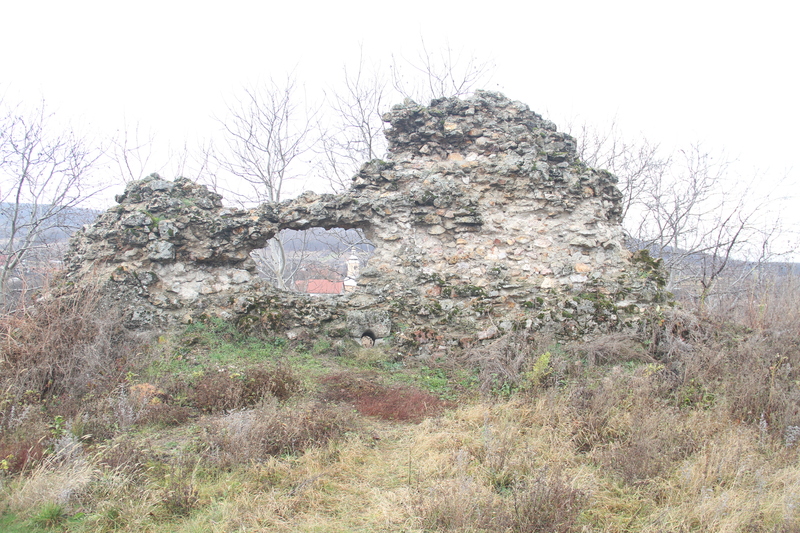
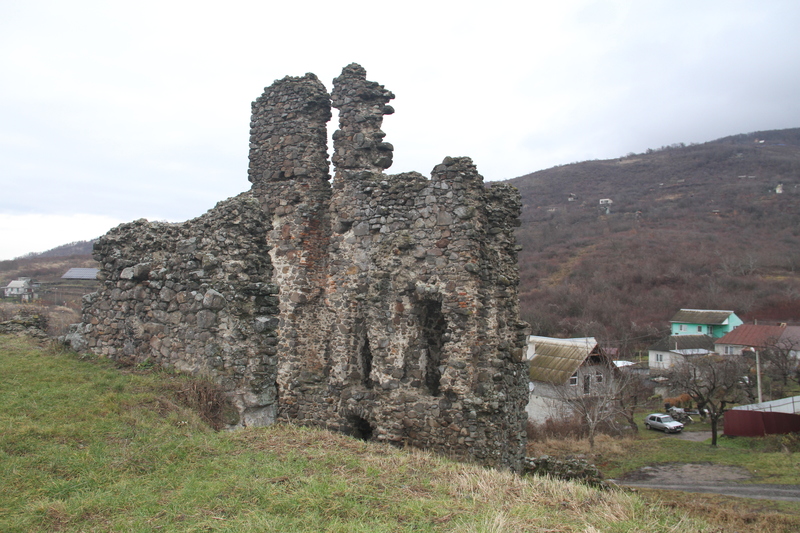
During the 19th and 20th centuries, the castle, which was in decline, was gradually dismantled by local residents for building materials.
In 2009, archaeological excavations were carried out on the castle grounds to establish the exact chronology of Kvasiv Castle. Based on the data obtained during the excavations, the archaeologists suggested that the castle was of a later date and was built in the 16th century. However, given that the excavation area was relatively small and no other research was conducted to confirm this version, the late Middle Ages are still considered to be the time of construction of Kvasiv Castle.
Vynohradiv Castle
Vynohradiv Castle is located at the foot of the Black Mountain and has a long and interesting history. During its existence, from the 10th century until its destruction, the fortress was a defensive structure, a fortress, and even a monastery.
Another name for Vynohradiv Castle is Kankiv, and there are several versions of its origin. According to one legend, during the feudal strife, the castle was owned by a robber named Kanko. Another legend says that the monks who once lived in the fortress wore clothes made of sheep's wool called "kanko".
When you go up to the castle, you can see that only ruins remain of the once mighty fortress. The majestic walls are only fragmentary, with a few pieces of walls with loopholes and the foundation of the chapel visible.
It is said that an underground passage once led from the castle to Vynohradiv, which in ancient times was called Sevliush. This statement is obviously not unfounded: during the study of the castle, archaeologists found a 12-metre-long passage.
It is believed that the history of Kankiv dates back to the 10th century. At that time, there was a fortified Slavic settlement that protected the people from attacks. In the XI century, after part of Zakarpattia was annexed to the Kingdom of Hungary, a feudal lord's castle was built here, which was used as a control and observation defence post. The Vynohradiv Castle was one of the strongholds along the salt route, which was used to transport salt from Solotvyno, and where a unit of soldiers was stationed to escort the salt cargo.
In the early 14th century, when Kankiv belonged to the royal treasurer Beke Barsha, the castle was rebuilt into a stone fortress, which was first mentioned in documents in 1308. A few years later, Beke Barsha sided with the rebels against the Hungarian king. In 1317, the royal troops captured Sevlius and stormed Kankiv, which resulted in the castle being heavily damaged.
In 1399, the then King Sigismund of Hungary gave the fortress to Baron Pereni. The tycoon Peter Pereni built a new stone castle on the site of Kankiv to replace the old one and gave it to the Franciscan monks for use, while he moved to his other castle, the Royal Castle or Nyalab.
During the Reformation, a descendant of Baron Pereni converted to Catholicism and expelled Franciscan monks from Kankow. The resisting monks were brutally murdered and their bodies thrown into the castle well. There is a legend that in this bloody way the baron took revenge on the monks who had previously imprisoned his daughter in the dungeons of the fortress.
The Vynohradiv Castle was finally destroyed in the second half of the 16th century by order of the Austrian authorities, who were actively fighting the Hungarian nobility at the time. Since then, the castle has not been restored.
However, even its picturesque ruins still inspire people of art and cinema. The centuries-old walls of Kankiv have been used as a successful backdrop for a number of films, such as "A Downpour Over the Mountains", "Over the Tisza" and the legendary "Camp Goes to Heaven".
Royal Castle
The Royal Castle in Zakarpattia, also known as Nyalab, was once not only an outpost but also a scientific and cultural centre of the area.
Nyalab Castle was first mentioned in the 13th century census. At that time, the forests in the area were rich in game. Therefore, Hungarian King Istvan V, who was fond of hunting, ordered the construction of a wooden hunting lodge here. The building was called the King's House, or Király háza in Hungarian. Later, this name was attached to the fortress and settlement that emerged here, and in the future gave the name to the village: Királyháza turned into Korolevo.
According to researchers, the construction of stone fortifications to replace the hunting lodge dates back to the late 13th and early 14th centuries. The construction of the fortified fortress is associated with the period of the Tatar-Mongol invasion of the Kingdom of Hungary in 1241-1242, when Hungarian monarchs launched a large-scale fortification campaign to protect their borders.
Nyalab Castle was one of these strongholds. Built on the top of a 52-metre-high mountain, with walls almost 7 metres high and 2 metres thick, and a reliable system of fortifications, the Royal Castle was an important military outpost of the Ugochansky Comitat and Upper Tisza, which also provided security on the Salt Route.
Nyalab Castle officially belonged to the kings of the Arpad dynasty until their lineage was interrupted in 1301. Therefore, in the early 14th century, the fortress was probably already the property of the king of the new Anjou dynasty. Since then, Nyalab Castle has changed hands several times. It was used to hide feudal lords who had the courage to oppose the king. The royal troops laid siege to it in order to return it to the crown. For 27 years, the Royal Castle was in the possession of the Volhynian Orthodox voivodes of the Drag family. Until it was donated by the king in the late 14th century to the Pereni family.
In 1401, Stanislav the Grammarian rewrote the Royal Gospel, a landmark of book manuscript art and Ukrainian literature, in the castle walls.
In 1514, rebellious peasants tried to storm the castle, but failed to capture the fortress.
In 1526, the owner of the castle, Gábor Pereni, was killed in the war, and Nyalab was taken over by his wife, Katalin Frangepan. While staying at the castle at her invitation, the philosopher and humanist Benedikt Komati translated part of the Bible from Latin and translated 13 letters of the Apostle Paul.
In 1661, the castle was besieged by the Tatars (according to other sources, the Turks). However, it was not they who eventually destroyed the mighty Nyalab.
The decision to destroy the castle in 1672 was made by the Austrian military council with the participation of the emperor. During this period, the above-mentioned part of Zakarpattia was under the influence of the Austrian Habsburgs. Therefore, after another anti-Habsburg uprising of Hungarians, Austrian Emperor Leopold I brought his troops into Transcarpathia and ordered the Nyalab to be destroyed. The sentence was carried out immediately: The royal castle was ruthlessly destroyed and never rebuilt.
Khust castle
Khust castle was one of the fortifications that was built to protect the salt route that ran from the Solotvyno mines along the Tysa River. The construction of the stone fortress on the site of a wooden fortification began in 1090 by order of King Laszlo I and was completed only a century later in 1191, during the reign of Beulah III.
During the Tatar-Mongol invasion in 1242, Khust Castle was destroyed. According to Hungarian chronicles, at that time the fortress belonged to the governor of Khust. The castle was rebuilt in 1318, but the outpost was constantly being rebuilt to strengthen it and improve its defence capabilities.
From 1281 to 1321, the fortress belonged to the princes of the Galicia-Volhynia state, but later the castle was again ruled by Hungarian kings and nobles. During this period, the fortress was used as a prison, and in 1447, during the reign of Janos Malomvizi, a church was built on the castle grounds.
In the sixteenth and seventeenth centuries, the Habsburgs and the princes of Semyhorod fought for the city of Khust and its castle. The stronghold dominated the entire plain and controlled all the roads around it, thus playing an important strategic and defensive role. Khust Castle's military inventory included 50 cannons, several tonnes of gunpowder, and 3,000 cannonballs in three warehouses. There was also a deep well on the territory of the castle, which could provide drinking water to all the inhabitants of the castle in case of a siege. The fortress was never taken by storm, only by bribery or deception.
During the liberation war of 1703-1711, Khust Castle was an important stronghold of the Kuruca rebels. It was here that the leaders of the rebels proclaimed the independence of Transylvania at the Semigorod Sejm in 1905. However, during the uprising, the fortress was severely damaged and gradually began to lose its strategic role.
In 1717, the city of Khust was attacked by a 12,000-strong Tatar horde. The soldiers of the Khust castle garrison caught up with the Hordes near the village of Vyshkovo and together with the villagers defeated the Tatars in the Strymtura tract. This was the last military performance of the fortress garrison.
In the summer of 1766, lightning struck the powder magazine of the fortress. As a result of the explosion of the gunpowder warehouses, Khust Castle and all the buildings on its territory were destroyed, and several people died in the fire. Despite the intentions to repair it and the funds allocated for it, the fortress could not be revived. The royal garrison left the castle, and it began to gradually decay.
In 1798, a storm damaged the last tower of the castle. With the permission of the authorities, the local community dismantled the castle for stones, which were later used to build a Catholic church in Khust. The church was enriched with the bell and tower chimes that once rang in the fortress.
Today, only picturesque ruins remain on the site of the once mighty fortress. However, the Castle Hill also offers a magnificent panorama, which adds additional charm to the ancient settlement.
Vyshkiv Castle
The place where the mighty Vyshkiv Castle once stood is now just a mountain overgrown with forest. And nothing reminds us that in the 13th and 14th centuries this fortress was one of the strongholds of national importance, as it guarded the strategic "salt route" and controlled the transport of salt.
The first mention of Vyshkiv Castle in written sources dates back to 1274-1281. The fortress was built on a 589-metre-high mountain not far from the village of Vyshkovo, which in the past had the status of a crown town. It is believed that the mountain got its name Varged (translated from Hungarian as "Castle Mountain") after the construction of the castle.
Vyshkiv Castle had a triangular shape, typical for defensive fortifications of that time. It was protected by steep mountain slopes from the north, while the other sides were more vulnerable, so a system of earthen ramparts and ditches was built to protect it. Each side of the triangle formed by the ditches and ramparts was 60-70 metres long. Inside this triangle was another line of ramparts that protected the central area of the castle. There may have been a watchtower in the middle of the site. There are small depressions in the rocky outcrops where food was probably stored.
Originally, Vyshkovo Castle belonged to the feudal lords Miku and István Csepa of the Gontpazmán family. In 1281, King Laszlo IV Kun granted the brothers Vyshkovo as a reward for their heroism in wars. They built the castle on the mountain, which became their private feudal property. At the same time, the fortress was also used to protect the salt mines of the Maramorosh region.
In 1329, during the reign of King Charles I of Anjou, Vyshkovo lost its status as a private feudal possession and became a crown or royal town. At the same time, the Maramoroski Commitat was formed, Vyshkovo became its administrative centre, and the Vyshkovo Fortress became the royal castle, the main fortification of the Commitat.
At the end of the 14th century, a stone fortress in Khust, 20 kilometres from Vyshkiv, gained more and more power. At the same time, the castle in Vyshkiv gradually declined and lost its importance. Thus, the Vyshkiv castle survived the shortest of all the strongholds in Transcarpathia - about 100 years.
Like every "decent" castle with a history, Vyshkivskyi also has its own legend. It says that after the fortress fell into decay, 12 robbers settled in its ruins, plundering and keeping the local population in fear. One day they kidnapped Ilonka, the daughter of the richest merchant in Vyshkiv, locked her in one of the castle's prisons and demanded a large ransom for her return. Ilonka's pleas and curses were heard by the higher powers: lightning struck the Castle Hill, causing a fault that swallowed up all the robbers. And later, a lake was formed nearby, which for a long time was the decoration of this place.
Bronetsky Castle
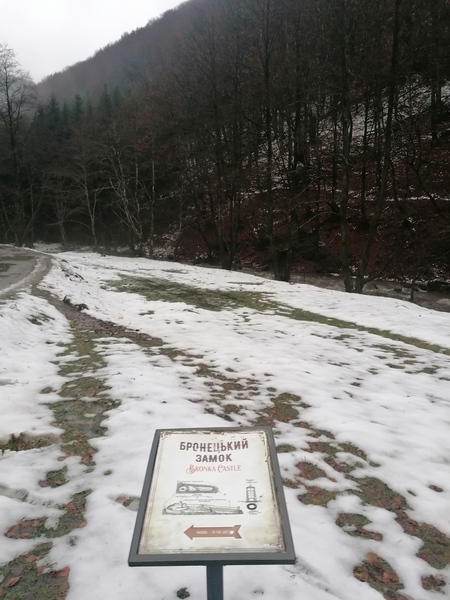
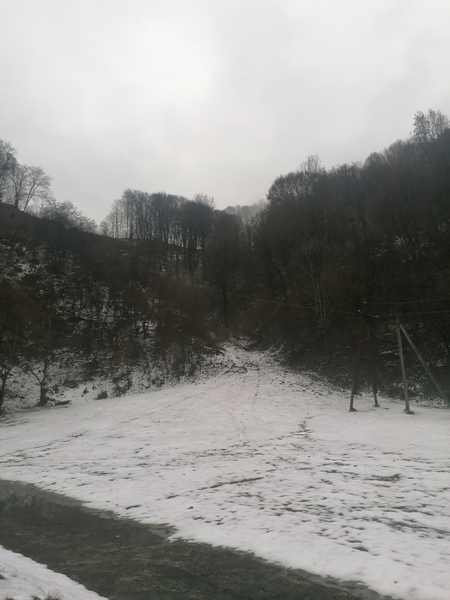
Bronets Castle is one of the most mysterious and, obviously, the most difficult to reach of all the castles in Transcarpathia. In fact, it is hard to call these ruins a castle: destroyed 700 years ago, Bronets Castle is now a pile of stones and a few fragments of walls under layers of earth.
Bronka Castle is located on the top of the mountain, which the locals call Tsarska, between the villages of Bronka and Sukha in the former Irshava and now Khust districts. The mountain is surrounded on three sides by the river Bronka, and the mountain itself is rocky and steep. So if you look at it from above, it becomes clear that the fortress was once as impregnable as possible.
Sometimes Bronetskyi Castle is also called the Black Castle, and it is considered the least studied. The remains of the fortress were discovered in 2008. While working on the site, an archaeological expedition found many traces of "black" archaeologists who almost completely destroyed the cultural layer on most of the mountain top.
The exact date of the castle's construction is not known for certain, but it is believed that the first fortifications on this site appeared in the times of the Dacians. The first mention of the castle itself dates back to 1265. And in the boundary descriptions of the area in 1336, i.e. 70 years after the first mention, Bronetskyi Castle is marked as destroyed. It is not known exactly what caused the destruction of the fortress. Some versions are based on legends, others on historical events that could have led to the destruction of the castle.
In general, Bronets Castle is very "rich" in legends and tales. For example, there is the story of the knight-errant Brynda, who was able to ride his three-legged horse from mountain to mountain. According to legend, it was in the hard-to-reach Bronets Castle that Brynda set up his den, from where he went on robbery sprees. In the legends, Brynda is sometimes a local Robin Hood, who robbed the rich and did not touch the common people. And sometimes he is a thief who terrorised the local population, which is why people lost their patience and drove Brinda out and destroyed the castle.
According to another legend, the Tsar's Mountain, on which the castle stands, hides the treasures of a bad king. No one has managed to find these treasures yet, because they are guarded by a devil with a long black beard, and whoever meets him will lose his mind.
There is also a legend about the destruction of the castle by a robber nicknamed the Moustache. Allegedly, wanting to win the hand and heart of the royal granddaughter Gabriella, the Moustache threw a stone from the foot of the mountain to the top of the castle. However, King Endre III, who had set this condition himself, did not keep his word and refused to give his granddaughter in marriage to the robber. So Vusach took revenge on the king by destroying and burning his estate.
However, the most probable version is that the castle was destroyed as part of a peace treaty. Thus, in the late 13th century, the last king of Hungary from the Arpad dynasty, Endre III, fought a war for the Hungarian throne with Duke Albrecht of Austria. After a year of fighting, the duke gave up his claims to Hungarian possessions and signed a peace treaty with Hungary. Under one of the conditions, Endre III undertook to destroy a number of border fortresses. And one of them, quite possibly, could have been the Bronets Castle.
In fact, after the destruction of the castle, the ruins could indeed have served as a refuge for gangs of robbers. This assumption can be made, among other things, because during the aforementioned archaeological expedition in 2008, a small amount of material from the fifteenth century was found among the ruins of the castle, as well as an Austrian pfennig from 1270. According to legend, the bandits were finally defeated in 1471.
Since it is difficult to get to the castle, there are no convenient paths leading to it, and the fortifications were located on a relatively small area, some researchers suggest that the fortress was built and used as a control and watch point.
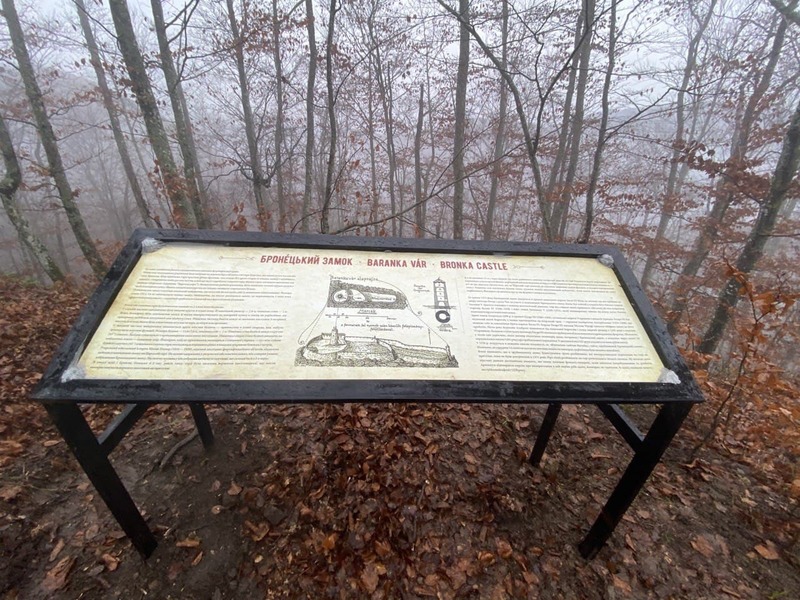
The conventional image of Bronets Castle was created by the Hungarian military historian Szós Elemer, who studied the fortress on Tsarska Hora from afar. According to his version, the elongated castle had three terraces, and its perimeter was protected by a line of stone crenellated walls. Two transverse walls separated the castle terraces from each other and formed three relatively isolated castle courtyards connected by a gate. In order to get to the main upper courtyard, one had to overcome three lines of fortifications in turn. According to the researcher, there was a separate main round tower on the territory of the upper courtyard. However, Shoosh Elemer's drawing does not completely coincide with the excavations, so his version, although it has the right to exist, is only one of many assumptions about the mysterious Bronets Castle.