
Palace of the Counts of Schönborn
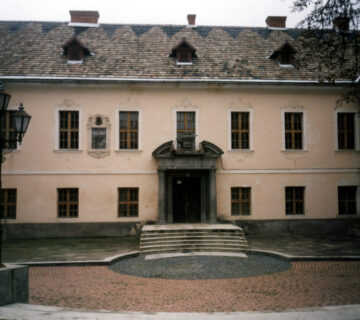
The Schönborn Palace is a former residence and hunting lodge of the Counts Schönborn, and since 1946 - the Karpaty sanatorium. It is located in the village of Karpaty (Mukachevo district, Transcarpathian region). As of 2011, it is part of Ukrprofozdorovnytsia CJSC.
This palace was built by Count Erwin Friedrich Schönborn-Buchheim in 1890-1895. A magnificent arboretum garden (now the Park of the Karpaty sanatorium) with a decorative lake in the centre was laid out around the palace. The hunting castle itself was built in the Neo-Romantic style, combining Romanesque and Gothic motifs. The palace is also original in that it has 365 windows (the number of days in a year), 52 chimneys (as in the year of weeks) and 12 entrances (as in the year of months). The castle is decorated with rich décor (bas-reliefs, weathercocks, stained-glass windows) on the theme of the family heraldry of the Schönborn counts; there is a tower clock with chimes. In the palace park, there is a memorial sign (with an inscription in Hungarian) and two sculptural compositions - "Deer" and "A Bear with a Cub". The outlines of the pond dug in the late nineteenth century (as conceived by the park owner) conventionally reproduce the map of the Austro-Hungarian Empire.
In 1945, the land and estates were nationalised, and the Schönborn hunting castle became the Karpaty sanatorium.
For reference: Schönborn (n. Schönborn) - an aristocratic (count) German-Austrian family, which includes several high-ranking members of the Roman Catholic clergy.
Representatives of this family were the largest landowners in Transcarpathia. After the suppression of the anti-Habsburg uprising, the estates of Prince Rakoczy and the rebels were donated by Emperor Charles VI to Archbishop Franz Schönborn of Lorraine on 31 July 1728, who entrusted the management of his possessions to his cousin Friedrich Carl Schönborn as heir.


No comment