Introduction
Today you will get acquainted with Berehove district, a unique part of the Zakarpattia region that welcomes guests with sun, fragrant wine and miraculous thermal springs. Here, locals speak several languages, almost everyone has grapes in their yards, and if you ask what time it is, it is better to ask Kyiv time or local time.
Gat
Let's start our acquaintance with the village of Hat.
The area of the village of Hat was inhabited even before the Hungarians settled there. The name of the village apparently comes from the Slavic word "gat" - in this once swampy area around the large, now drained Lake Serne, people settled, gatting the land they had reclaimed from the swamp. Although it was far from the easiest task, the settlement was better protected from enemy invasions, including the Mongols.
Work on draining the lake began in the 19th century and lasted almost a hundred years.
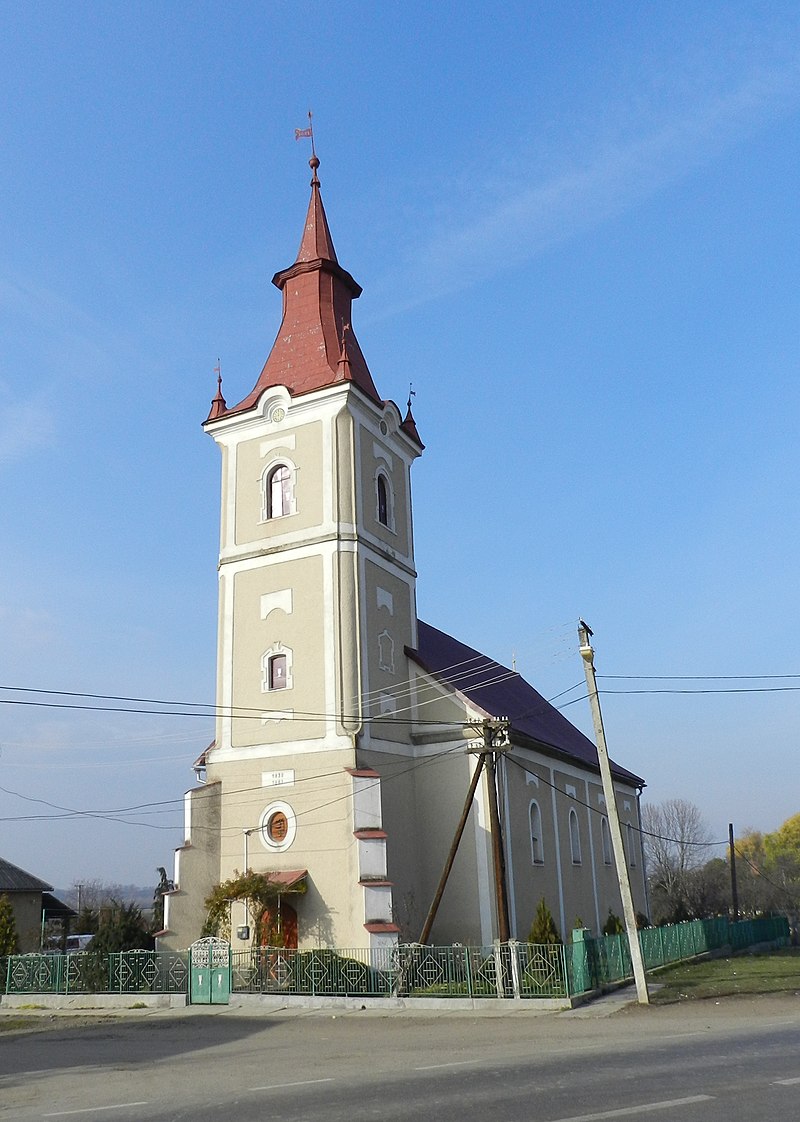
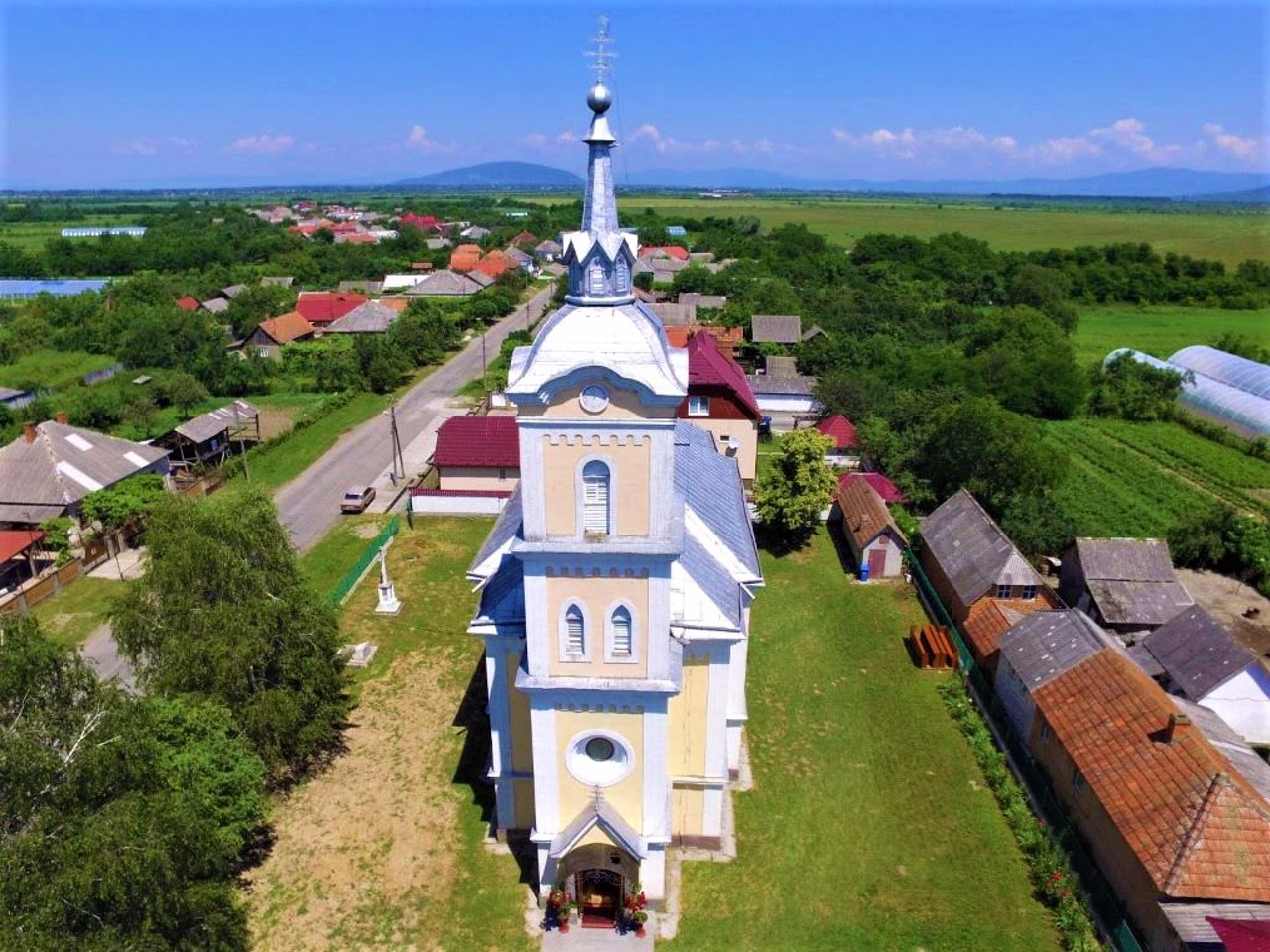
Nowadays, there are many roadside vendors in the village, who are happy to treat you to homemade products and sell goods from all over Hungary. Of course, you can also find a Reformed church in the village, which was typical of all villages in the region - the local population was protesting against the Austrian crown in this way.
The village was home to the famous Transcarpathian poet and writer Vilmosh Kovach and opera singer Gisella Tsipola, who won the international vocal competition in Tokyo in 1976.
Janosy
Our next stop was first mentioned in the 14th century as "Ivanoshi", i.e. Ivanovo.
At that time, it was ruled by Queen Erzsébet, and records of the 17th century mention an oak forest near the village called the "Queen's Hill".
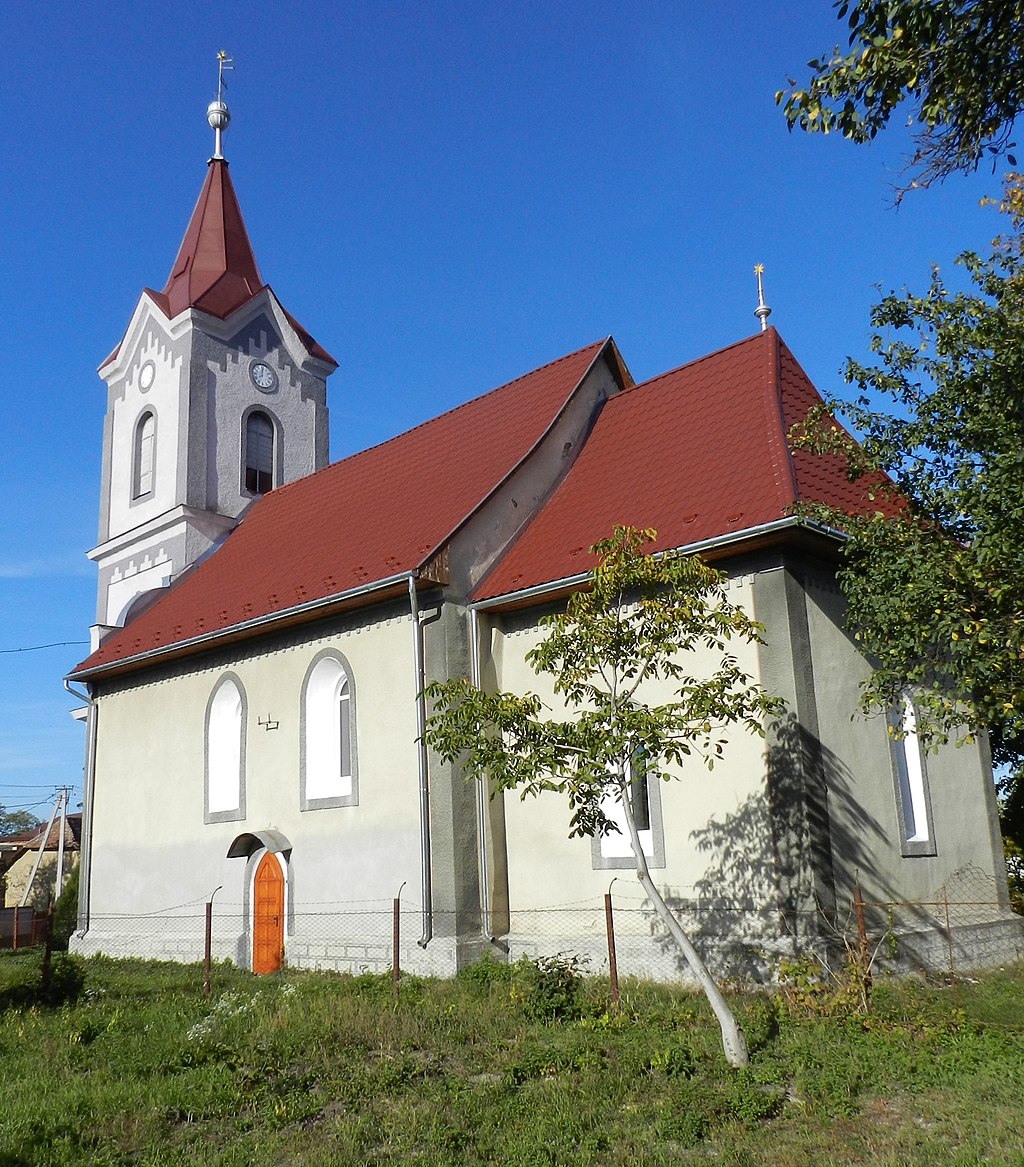
There is a Reformed church in the village, which is typical for this area. It was built in the 14th century in the Gothic style, but it has seen many alterations throughout its history. There could be many reasons for such reconstructions of medieval churches: destruction by the enemy, floods, and the banal need to expand the church due to population growth.
Near the village council, on Shevchenka Street, you can see a carved monument to Prince Ferenc Rákóczi II. He was the prince of Transylvania, the leader of the anti-Habsburg national liberation war of the Hungarian people in 1703-1711, and the owner of the Mukachevo Palanok Castle. As you can imagine, a very important historical figure in Hungarian history and one of the symbols of the struggle for freedom and independence
Bolshaya Byihan
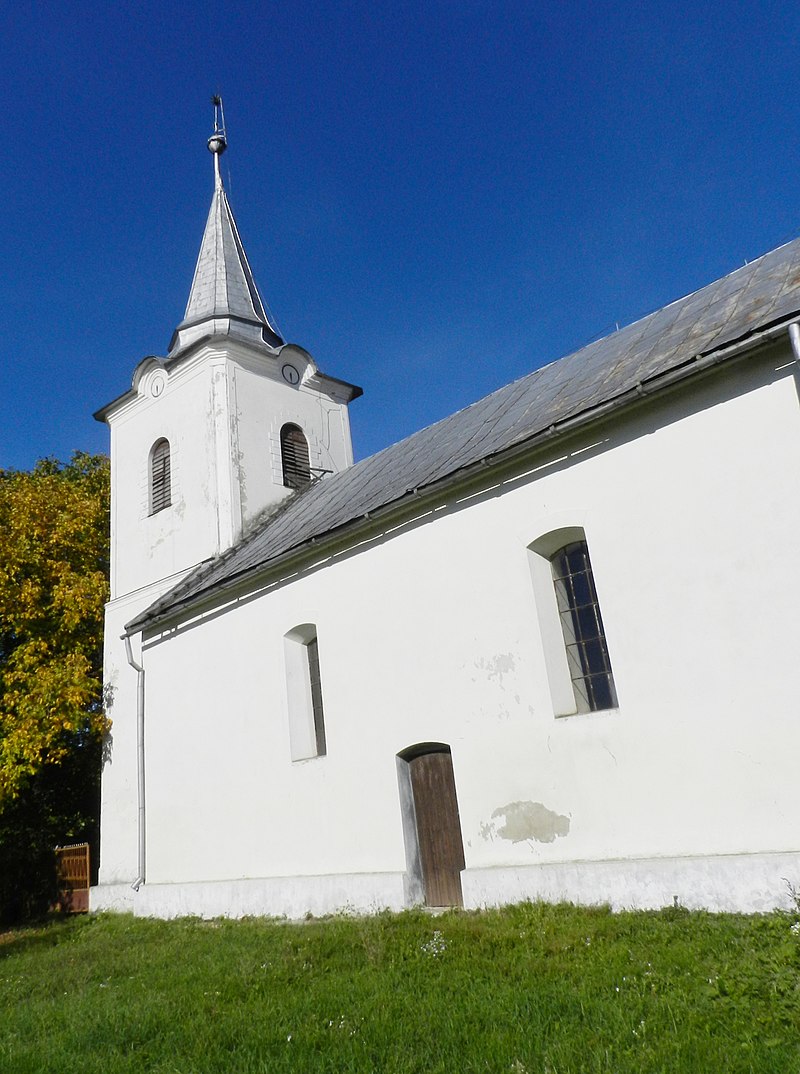
Just 4 km north of Dyida and you are in the village of Velyka Byihan, which in the 11th century became the property of the Begani family. Nearby is the Beigan Mountain, which is covered with vineyards. The village has a Reformed church, where you can see a unique fresco depicting St. Ilona, which dates back to the 15th century, although the church itself has been rebuilt and changed hands many times.
On the other side of the Reformed Church, not far from it, there is an interesting piece of industrial architecture - a grain storage facility built in 1908 and still in operation today. The granary belonged to the local landowner Istvan Nemes, and is now the collective property of several local families.
The manor house of Nemesh himself, built in the late 19th century, has been preserved almost opposite the granary. The manor house is located next to the large building of the House of Culture, built in the late 1980s. Today, it houses the village council, post office, library and dental clinic.
You can also find Roman and Greek Catholic churches in the village. There is also a small park area with a statue of Turul, a mystical bird, a symbol of the Motherland, which led the Hungarian people to the place of modern Hungary.
The village has many mansions where you can stay overnight, as it is located between two resort areas of Berehove district - Kosonnia and Dyida.
Koson
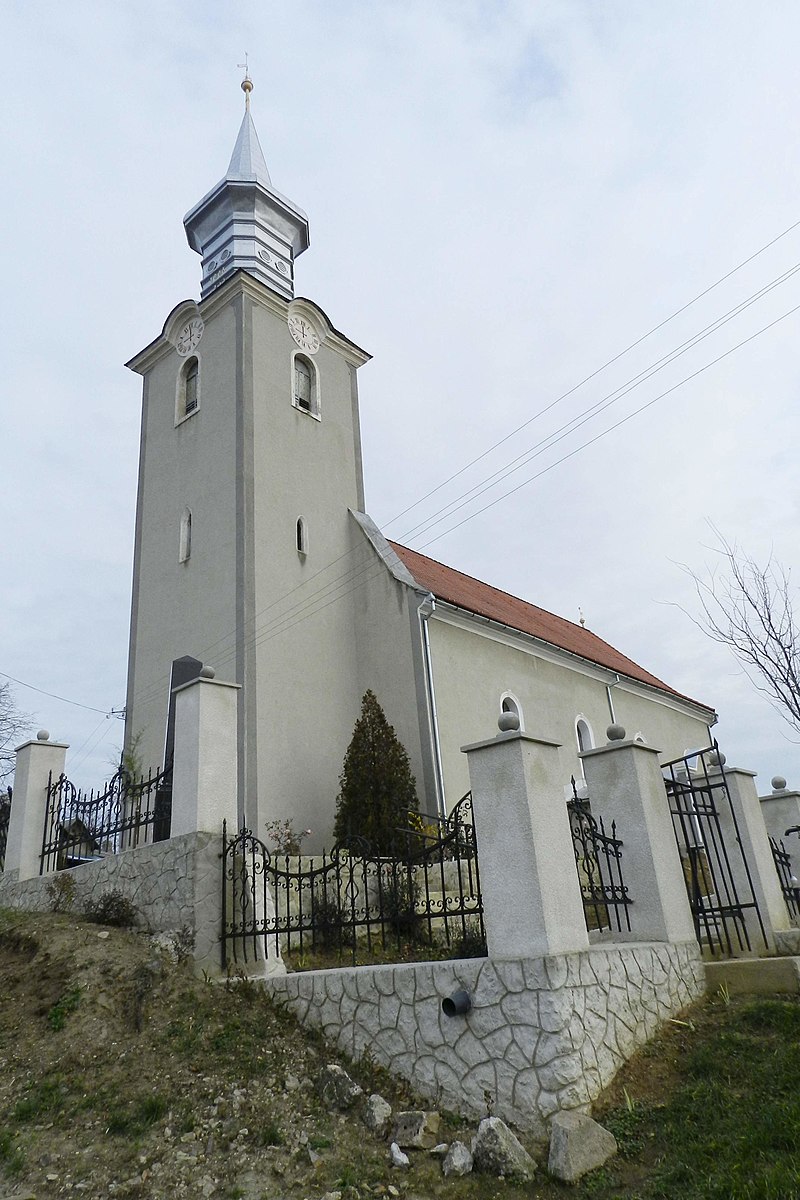
Koson is located near the Ukrainian-Hungarian border. It is believed that it was here that King Laszlo 1 the Holy of Hungary defeated the Polovtsian army in a difficult battle in 1086. At the site of the victory, a church was built, which is now used by the village's Reformed community and is located at 1 Kotolin Street. The church was built in honour of St. Catalina. Unfortunately, the appearance of the medieval church has changed many times as a result of reconstructions and additions, but even in its modern form, which was formed in 1902, the main tower of the church has retained its medieval style.
And on 2 St. Istvan Street stands the village's Roman Catholic church, inside which there is a Rieger organ made in Budapest.
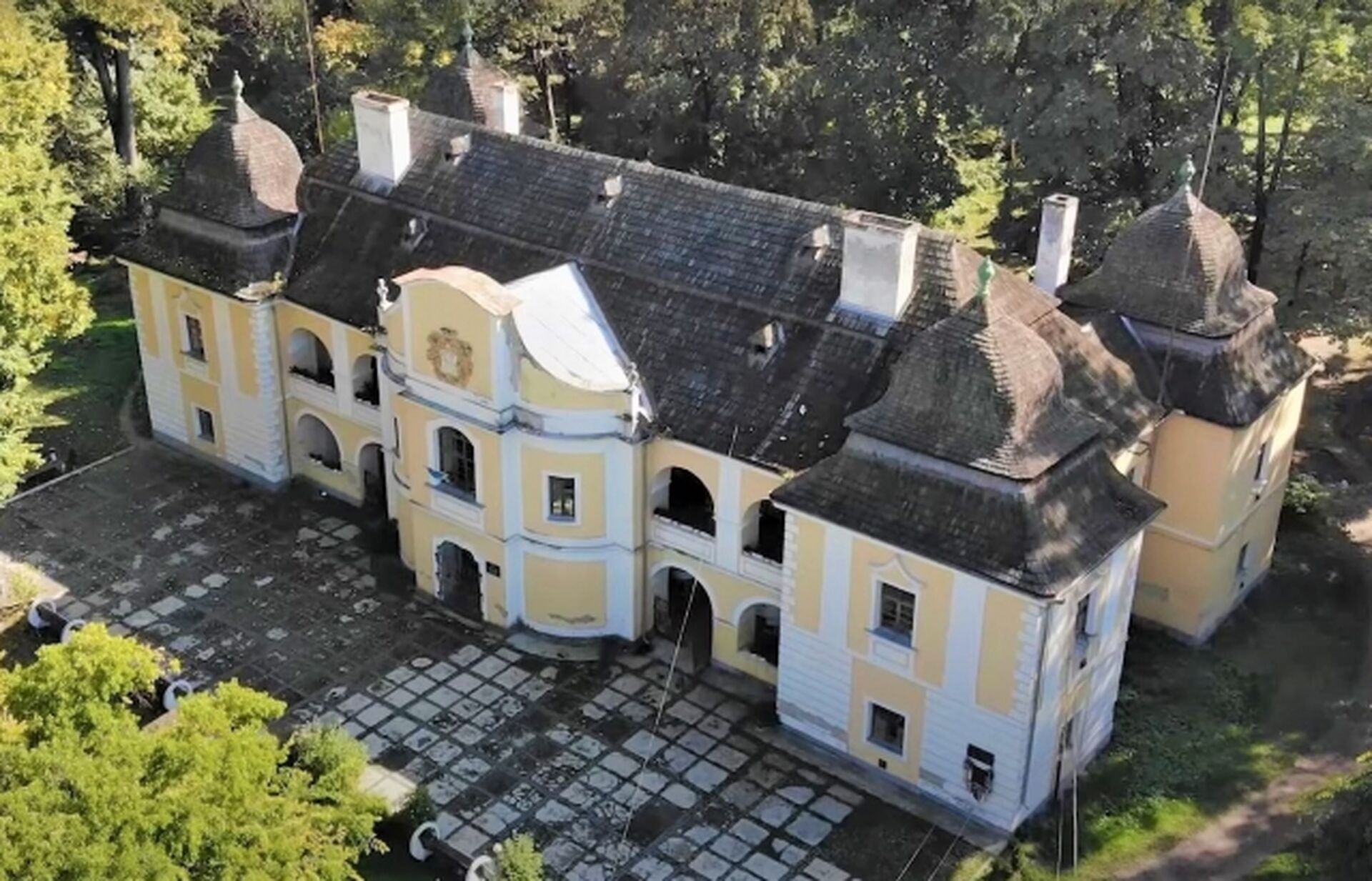
A very interesting building is the Etveshiv Palace, which lies under the hill next to the Catholic church. It is the oldest secular building in the village and one of the oldest examples of this architectural type not only in Berehove district, but also in Zakarpattia. The one-storey manor was built in 1703 by the Ratz family. The Ratz family coat of arms with the numbers "1768" is preserved on the back wall of the building.
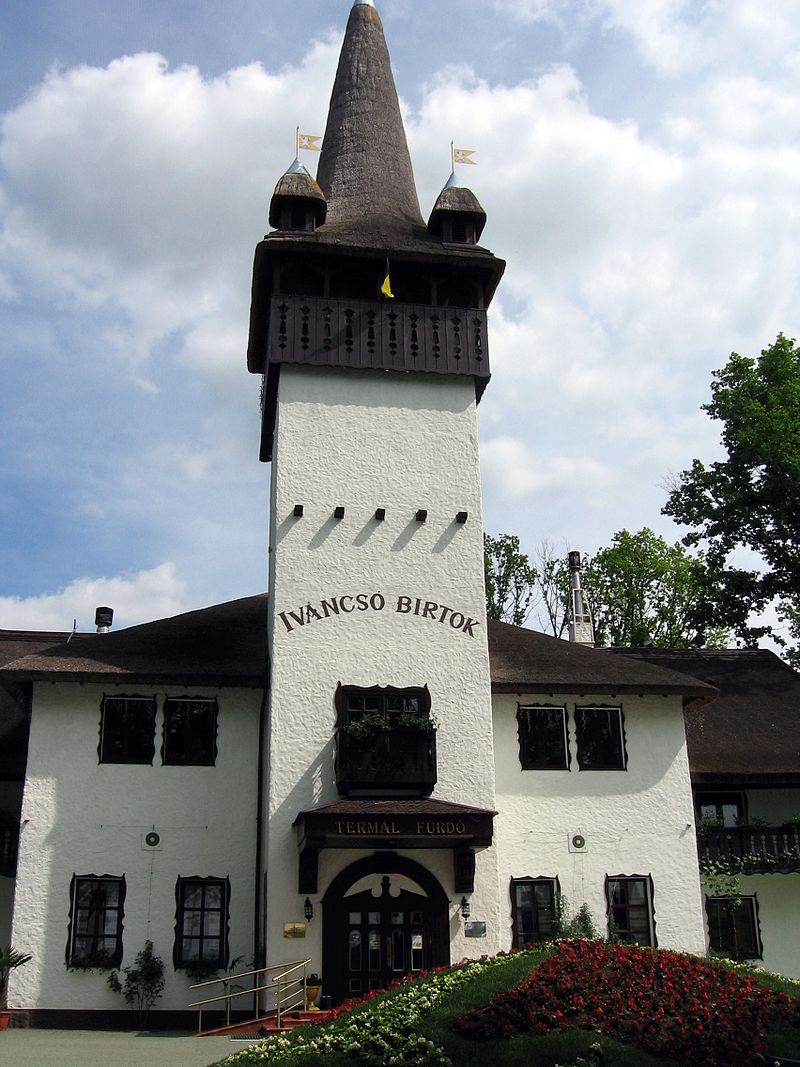
Tens of thousands of tourists annually visit the Kosyno thermal water complex, which is clearly visible from the main road. The resort's thermal water is filled with minerals, nutrients and trace elements from iron to magnesium.T The water itself is extracted from wells over 1,200 metres deep, and its outlet temperature is 42 degrees Celsius. Recovery here has a tonic effect on the skin and helps people with diseases of the cardiovascular, musculoskeletal and nervous systems. There is also a hotel, spa, restaurant and a modern water park on site.
Dyida
Our next stop is the village of Dyida. Dyida, or "Deda", was first mentioned in the 14th century. It is interesting that even then the village played an important role in the region and there was an earthen castle called To-var, which can be literally translated as a fortress on the lake. It is interesting that the fortification was also called "Várszég"The access to the fortress was provided by two wooden bridges on piles driven into the marshy soil. This made it possible to effectively defend the settlement from enemy attacks.
Today, it is an archaeological site that has been repeatedly studied by both researchers and treasure hunters.
At 147 Arpad Street you can find a medieval church from the 13th century, which is now a Reformed church. Although the church has been restored several times and partially rebuilt inside, the buttresses and Romanesque windows are still intact.
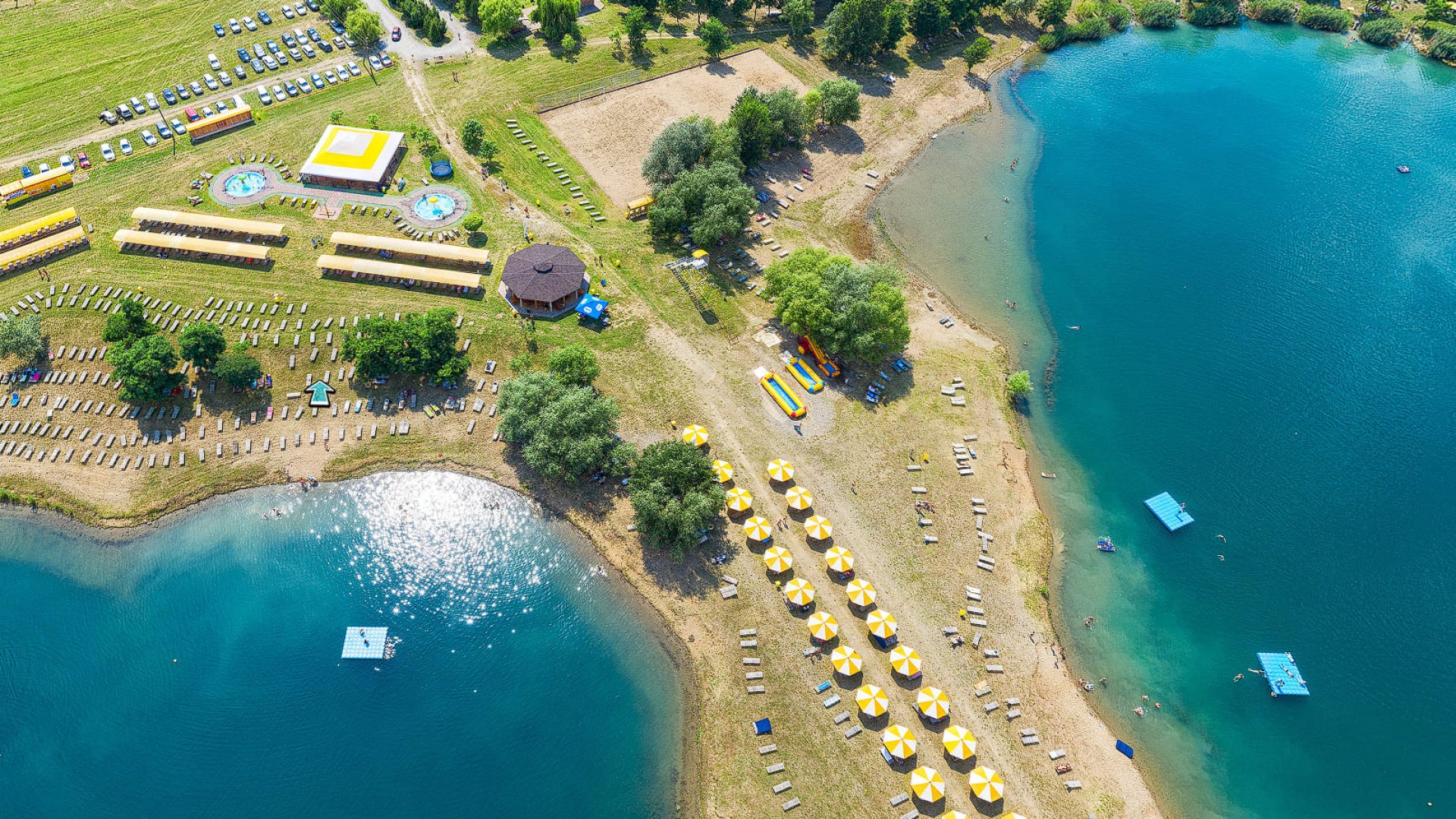
Today, the village is a popular tourist destination, as the old sand mine is home to Lake Dyida and the Boomerang resort area, which is equipped with a beach and boarding houses.
Beregovo
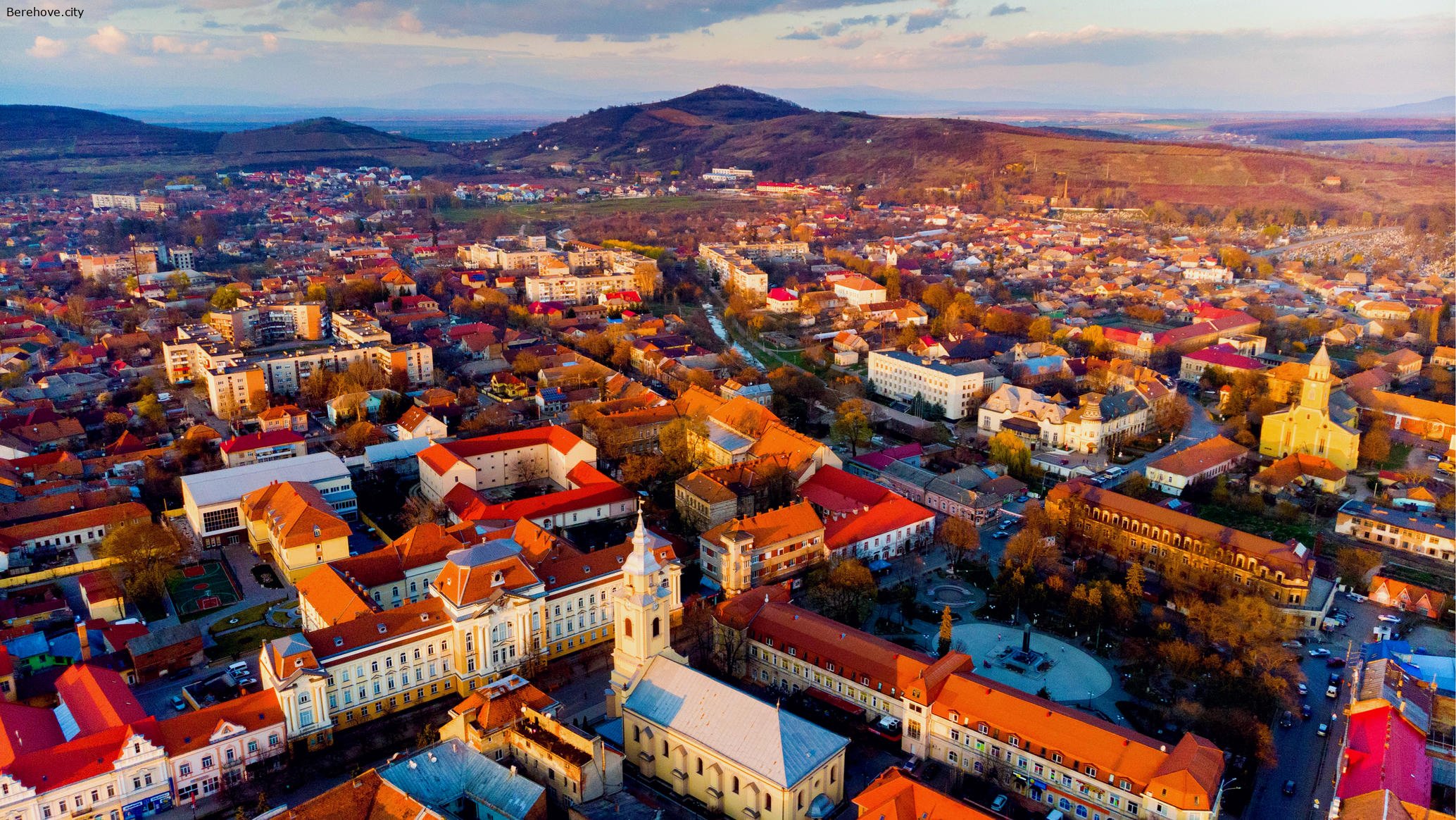
Berehove district was developed by mankind a long time ago. Just imagine, the remains of settlements that are more than 12 thousand years old have been found on the territory of the city. However, we are not going to go that deep into history. So let's talk about the foundation of the city in the 11th century and its further history.
Lampertgaza, or "Lampert's house", to put it literally. This is the name of the settlement founded by the son of the Hungarian king Bela I in 1063. Most of the Berehove district is low-lying, which was very convenient for living and developing agriculture, and the small hills of the Berehove lowlands are perfect for growing grapes. The good location also contributed to the city's important role in the region: In 1271, Berehove became the centre of the Bereh comitatus, an administrative unit in the Kingdom of Hungary. Later, the city became a significant trading centre with the right to hold fairs, and in 1342 it received the status of a royal city, which granted significant privileges for the development of the city and the development of crafts. Unfortunately, the city was repeatedly attacked by enemies: in the 13th century, Batu Khan, in the 16th century, the Tatars, and in the 17th century, the troops of the Polish king and the Austrian Habsburgs. In the early 18th century, the city actively participated in the national liberation uprising against Habsburg rule, and after its suppression, the lands of Berehove were transferred to the famous Schönborn family, which in the 18th and 19th centuries actively promoted the development of industry, agriculture and crafts in Transcarpathia.
The oldest secular building in the city can be seen at 1 Betlen Street. This is the palace of the Transylvanian prince and Hungarian king Gabor Betlen, which dates back to the 16th century. However, during the uprisings in the late 17th century, the building almost completely burned down. It is believed that the palace was rebuilt by Prince Ferenc Rákóczi II. The Baroque building is divided into economic and residential parts.
One of the oldest stone buildings in Transcarpathia is located very close by, at 3 Rakoczy Square. This is the Church of the Exaltation of the Holy Cross, which welcomed parishioners back in the 12th century. Of course, the church, built in the Romanesque style, looked completely different then, but since then, two embedded capitals decorated with a stylised man's head and a lion have been preserved in the North portal. The southern portal is more richly decorated and is probably the most sophisticated example of Gothic architecture in the region. In 1899, the church was enriched with an organ from the famous Budapest company of the Rieger brothers. At the entrance to the church there is a bust of the first Hungarian king, Istvan (Stephen) the Holy, and on the walls of the church there are plaques to Prince Lampert, King Béla 4, and priest Ferenc Pastor.
Opposite the Roman Catholic Church, there are two statues dedicated to the struggle of the Hungarian people against Austrian oppression - the leader of the peasant rebels Tomas Esse and the revolutionary poet Sandor Petőfi. The poet was impressed by the city: "Beregsas is a simple, cosy and small town, but what a great Gothic church it has, and the innkeeper is a Hungarian!"
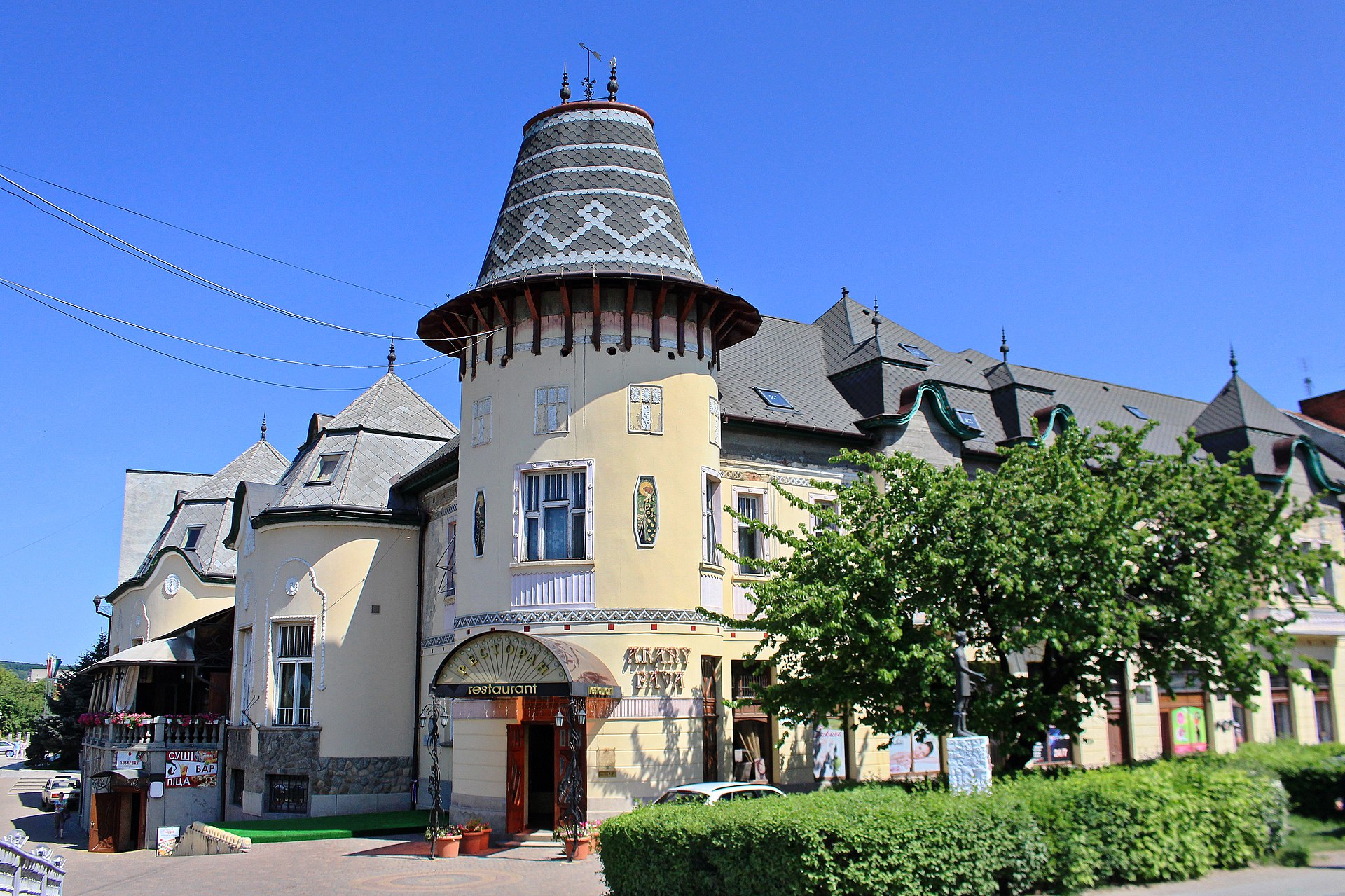
The Golden Pava, now a hotel and restaurant, is located near the humpbacked stone bridge and the Verke River at Rákóczi Square 1. At one time, it was home to the Hungarian national casino. It was not just a place where gamblers gathered. Citizens united by common interests, aristocracy and educators who wanted to develop their hometown gathered here. The participants often organised balls, classical music concerts, literary evenings, lectures and debates.
At the intersection of Mukachivska Street and Heroiv Square, you will see the building of the Oroslan Hotel, which was founded in the 17th century and became the first hotel in Berehove.
The building is characterised by the Baroque architectural style. Today, the building houses the Berehove Hungarian National Theatre named after Gyula Ijesz, which was founded by a bilateral agreement between the Ministries of Culture of Ukraine and Hungary in 1993.
The equestrian statue of Ferenc 2 Rákóczi welcomes guests and residents of Berehove in the Budapest Park. The bronze statue is placed on a 20-tonne pedestal made of lime stone and weighs more than one and a half tonnes. The total height of the monument is 6.3 metres. The authors of the masterpiece are sculptors Lajos and Adam Dierfi. The bronze casting was done by Imre Varga, and the stone carving was done by Lajos Bacsi. The outstanding commander Ferenc Rákóczi, sitting on his horse Pandur, symbolises the struggle for freedom. In May 1703, he rebelled against the ruling Habsburg dynasty, which imposed exorbitant taxes on the population and exerted military pressure on those who tried to oppose their will.
On Lajos Kossuth Square you will see the Reformed Church, which is the largest in the city and can accommodate 1100 parishioners at the same time. Inside is a beautiful organ by the Rieger brothers. Yes, you don't think so. In fact, almost half of the organs in Ukraine are located in the churches of Transcarpathia.
The real decoration of the city is the building of the former Komitat Court, located at Lajos Kossuth Square 6. The palace was built in 1909 by the architects Ferenc Jablonski, István and János Kopács. The palace was built in the Neo-Baroque style with elements of Renaissance architecture. The court house was the tallest and largest in the city, and a prison was also located in the back of the three-storey building.
Since 2002, the Transcarpathian Hungarian Institute named after Ferenc Rákóczi II has been located here.
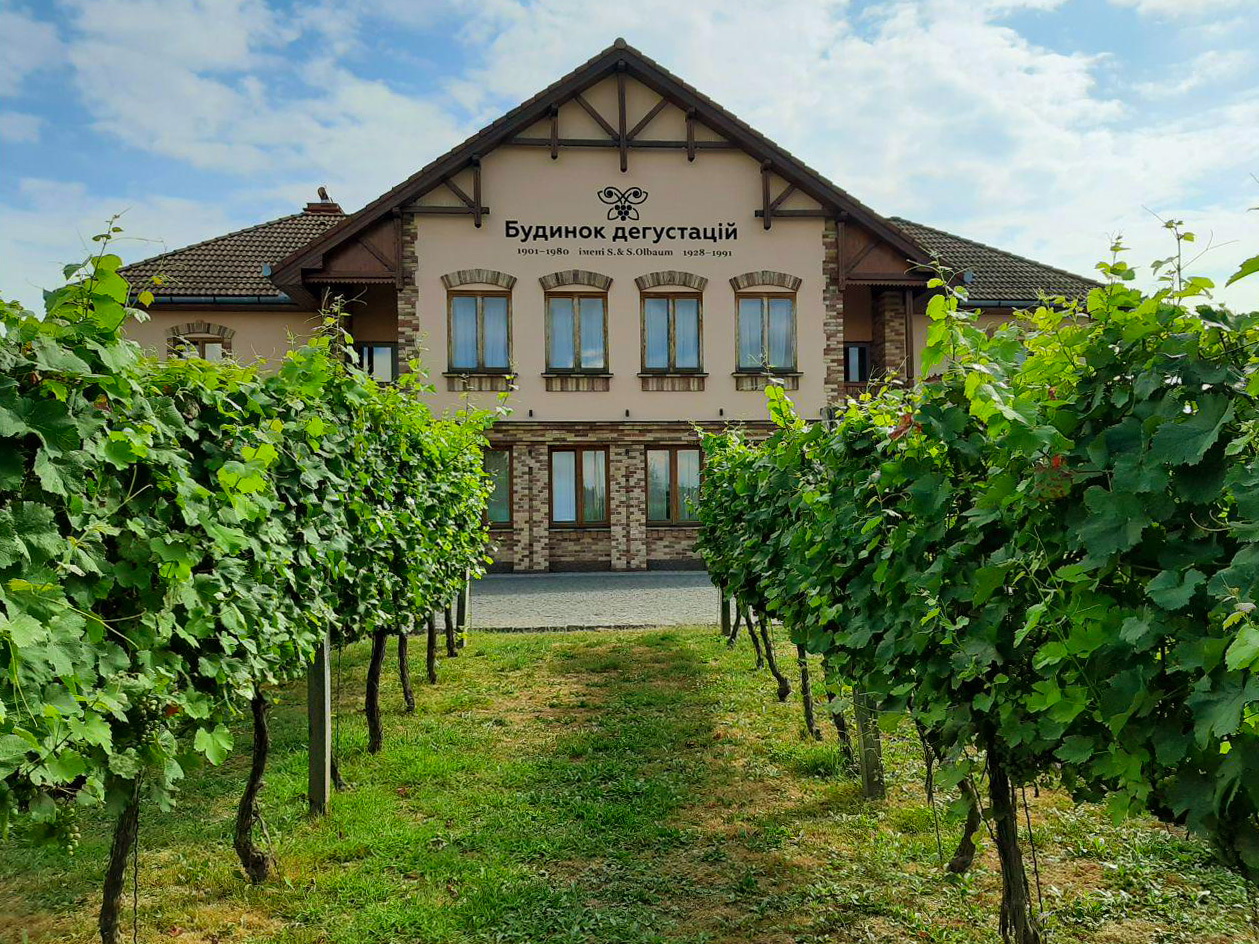
On Vynohradna Street, you can find a number of cellars where local winemakers store wine. Some of them have tasting rooms. Families here pass on the traditions of winemaking from generation to generation and always welcome guests.
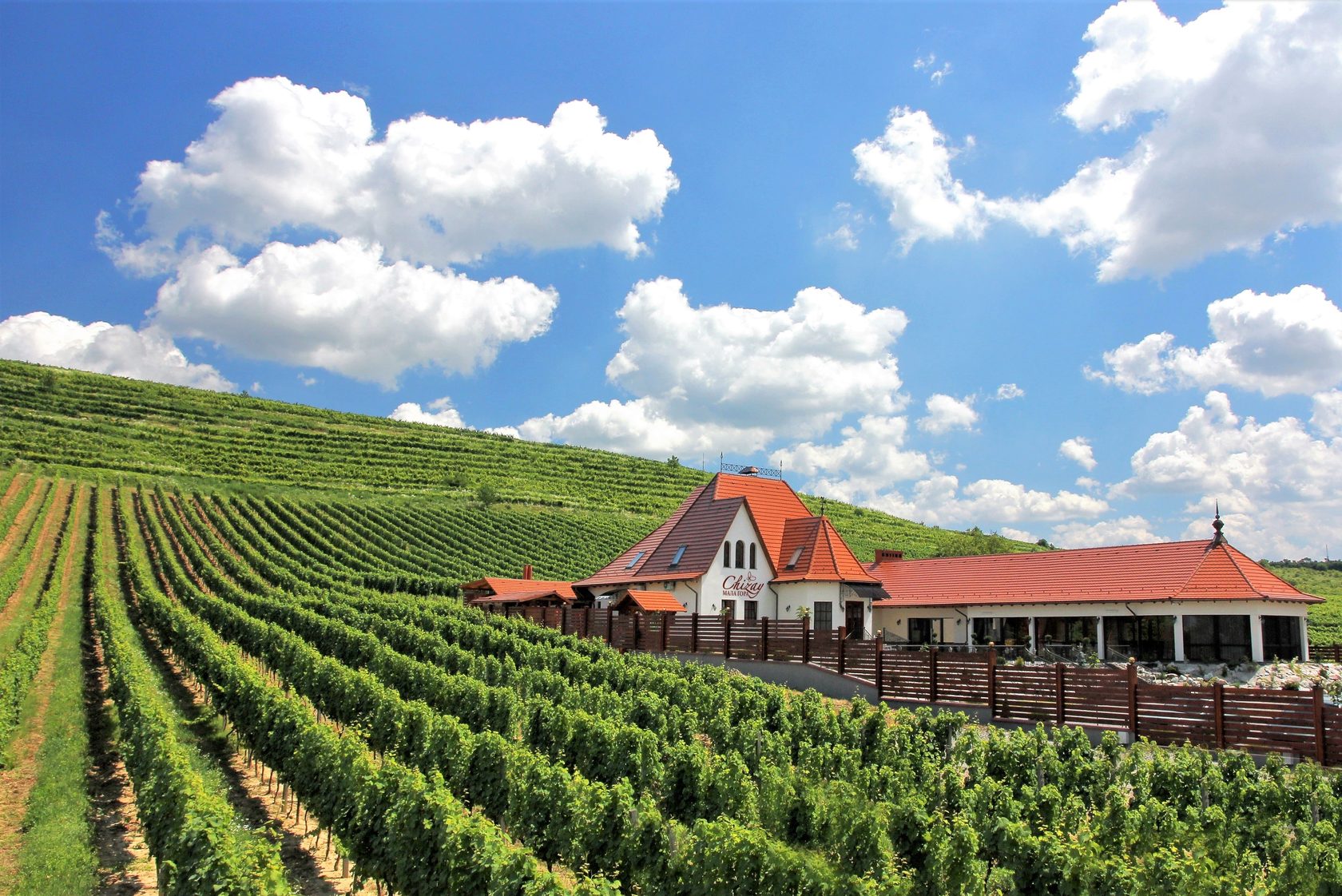
Chateau Chizay, Mala Gora
Chateau Chizay is located in the Chizay tract in Berehove.
As early as the 15th century, a country winery estate became a supplier of wine to the Mukachevo Palanok. Winemaking in the region gradually became an increasingly important sector of the economy, and the wines went beyond Austria-Hungary and became known throughout Europe. This lasted until the 19th century, when the phylloxera pest epidemic, followed by the World Wars and the Soviet period, changed the nature of winemaking in the region. After the anti-alcohol campaign of the 1980s and the cutting down of vineyards, winemaking in the region went through a crisis period.
Chizay was one of those who began to restore the culture in the region. In total, more than a million seedlings of 14 grape varieties are growing on 272 hectares.
On the estate, you can take a walk, arrange a photo shoot, get acquainted with the winemaking museum and, of course, taste and buy wine.
By the way, if you look carefully, you can find a mini-sculpture dedicated to the Salt Trade Route that once ran through Transcarpathia near the entrance. Since there were few other seasonings and they were brought from distant countries, salt was highly valued. It also helped to keep food fit for consumption for much longer. It is not surprising that whole villages were founded around salt production and castles were built.
If you want to complement your wine tasting with delicious dishes, the Mala Hora Chizay hotel and restaurant complex is located on Muzhayska Street, right in the middle of the vineyards. Due to its location and cosiness with incredible views of the vineyards, it quickly became popular among residents and visitors of the region. Especially before sunset.
Choma
The first written mention of the village of Choma dates back to 1211. The village was founded in 1327. At the beginning of its foundation, it belonged to Migai Buchui, who died without an heir.
In 1327, the Hungarian King Charles Robert granted the village of Ishpánu to the Bereg comitatus. At the beginning of the 15th century, a third of the surrounding land was donated to the city of Beregsas, or Beregovo. Later, the village belonged to the Sentivani, Kaidi and Karoi families, who owned nearby villages.
Interestingly, this area was home to some of the first settlements of the ancient Hungarians. The first excavations were carried out in the 19th century. A prominent local historian, Tyvodar Lehotskyi, described the results of the findings of the time - burial grounds in the area between the villages of Hecha and Choma - and their contents, including tools. The artefacts of the excavations are now kept in the Museum of Hungary in Budapest. In 1986, 26 traditional graves dating back to the 9th century were found. Interestingly, the burials were carried out together with horses, weapons and jewellery. In the 1990s, 78 more such graves were discovered, and in 2003, the remains of a nearby settlement were discovered.
That is why the main highlight of the village is the memorial park of the ancient Hungarians on the outskirts of the village, where a permanent exhibition tells about the distant past of the Hungarian people. Here you can find sculptures of the Hungarian leader Arpad and King Istvan the Holy.
Another feature of the village is the Christmas carol, which has its own local differences and is found only here.
The local "Betleham" combines a live nativity scene with a puppet one, in which the characters have puppet "doubles". The participants include an angel, 2 old shepherds, 2 young shepherds and King Herod. The old shepherds have leather masks on their faces, which they use to frighten people during the performance. King Herod, all dressed in black and with a sooty face, also acts as a puppeteer. The puppet show is performed in a nativity scene with the baby Jesus in the right corner. This theatrical performance is an "island" of folk traditions typical of Greek Catholic villages in a Reformed and Roman Catholic environment, which distinguished Chmia from the nearby settlements.
Stachowski
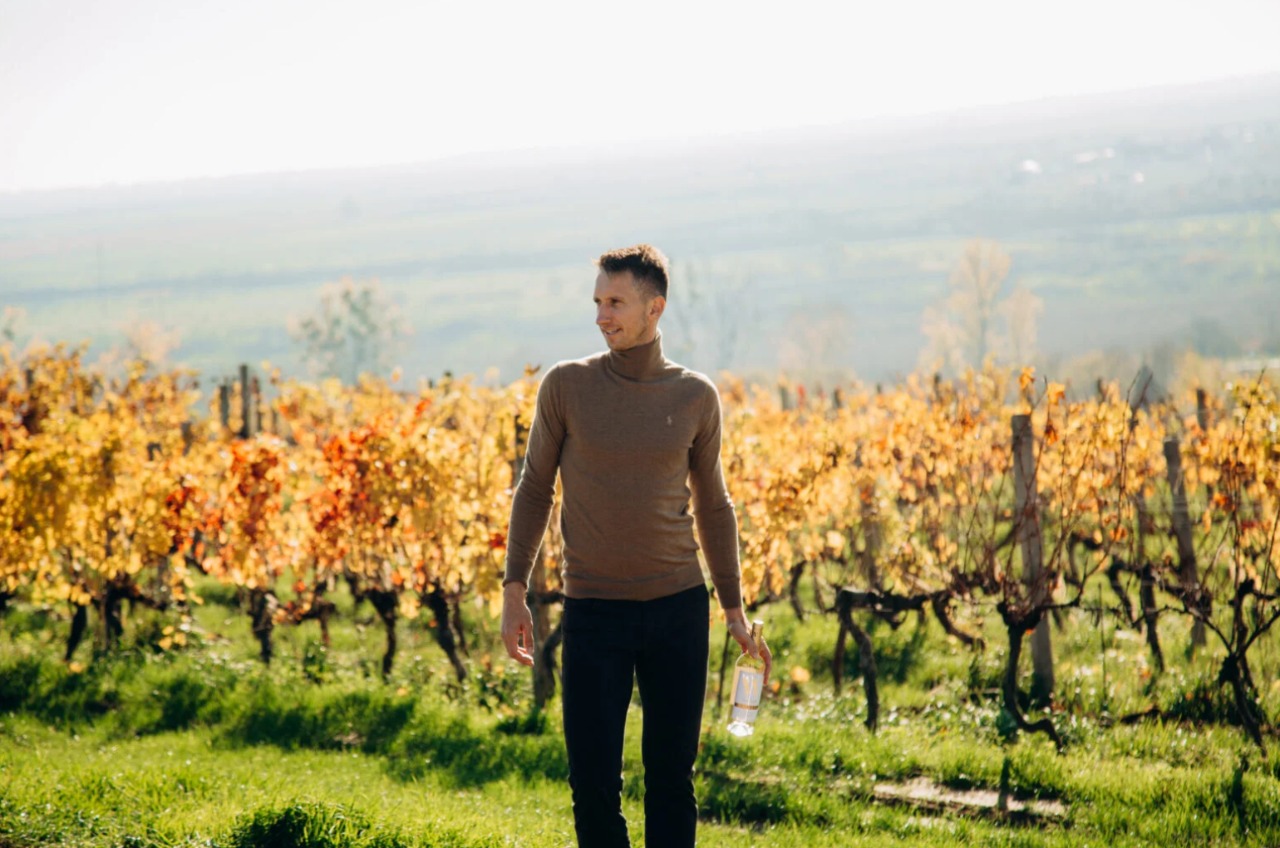
The village of Muzhiyevo is worth another stop. At 5 Fenveshi Street, you can visit a colourful winery and taste the extraordinary wine from the Stakhovsky Wines vineyards. Sergiy Stakhovsky is not only a legendary Ukrainian tennis player and defender of our country, but also an avid winemaker who has been in this business since 2015. The Ukrainian decided to master winemaking after a long work experience in France, namely in Bordeaux. Sergiy became interested in winemaking and wanted to develop it at home, in Ukraine. So the famous tennis player leased 20 hectares of land from the Kotnar winery (which, by the way, can also be visited in Muzhiyevo) and started growing merlot, sauvignon blanc and traminer rosé. The newly minted winemaker harvested his first crop 3 years later. The basis of the concept is the production of quality wines, which is why he chose a promising terroir in Zakarpattia. Saperavi, Merlot, Traminer, and Cabernet are grown here, among others. The first harvest was made in 2018, and the wine is aged in French barrels from the Bordeaux region. The winemaker himself considers the 2018 Saperavi to be his greatest pride.
Muzhievo
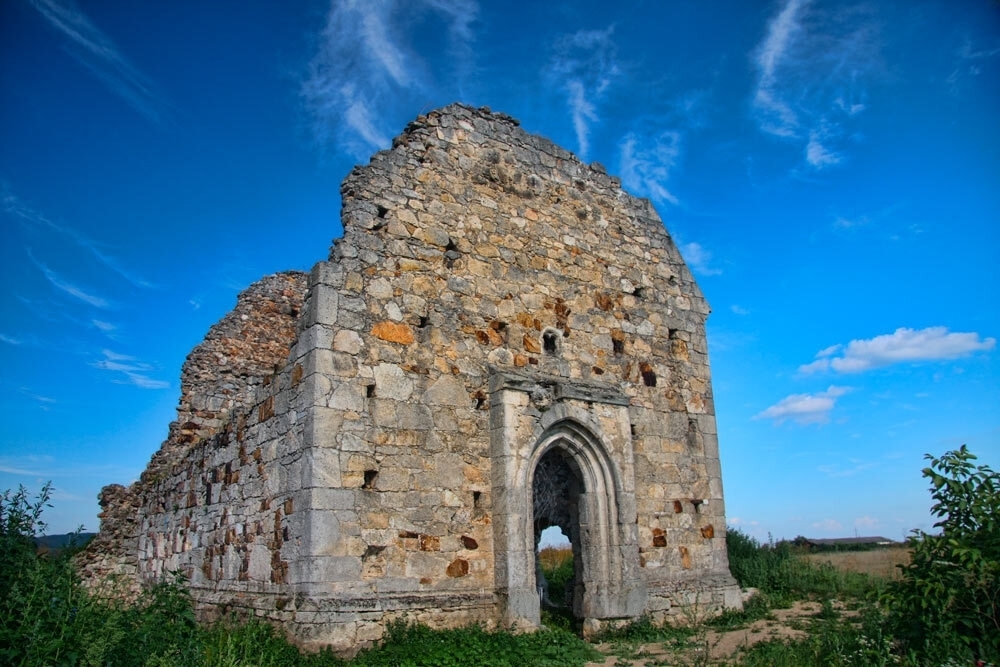
A settlement on the territory of modern Muzhiyevo was first mentioned in the 13th century. However, in the 17th century, the village was almost completely destroyed and devastated by the Polish army, so the inhabitants were forced to build a new settlement. The ruins of the old Gothic church of St John the Baptist, which stand in the middle of the field at the entrance to the village, remind us of these times. Nowadays, a Reformed church stands on a hill above Muzhiyeve, located at 7 Vuzka Street. It also has distinct Gothic features. Nearby is a wooden two-tiered bell tower that has been complementing the church since the 17th century.
Muzhiyevo has long been famous for its wine-making tradition. Wine is made in almost every household here, so you can see local vendors at the kapuri (i.e., near the gate) throughout the summer. At 2 Vuzka Street, you can visit the cellar of winemaker Istvan Beretsky and taste regional wines.
Interestingly, the village was also a well-known mining site. In the vicinity, they mined both stone, which was used to make millstones for mills, and kaolin. But it was the gold ore reserves, the largest in Ukraine, that made the village famous.
Ben
The next stop is the village of Bene, which stands on the right bank of the Borzhava River. The settlement played an important role in the region. Most likely, it was originally inhabited by foresters.
The village has been owned by the church, several local families, and even held the status of a town in the 16th century, which granted certain privileges.
Unfortunately, like most settlements in the region, it suffered from Tatar invasions in the 16th century, and in 1657 Prince Lubomirski took revenge on the owner of Palanok Castle, György II Rakoczy, for his encroachment on the Polish throne and burned the surrounding settlements to the ground.
The oldest monument is the church of 1458, which today belongs to the Reformers.
In the very centre of the village there are wooden sculptures of the Seven Pre-Hungarian Chieftains, the leaders who led the ancient Hungarian tribes to the territory of modern Hungary in the late 9th century.
Of course, you can also find good wine in the village. Many visitors go to the wine cellars of Ursta, Varga and Paraska, which are located on Ferenc Rákóczi II Street.
By the way, it is said that the prince, the owner of the Mukachevo Castle, loved to rest in the vicinity of the village, and that treasures of the Kurucs, Hungarian rebels, are hidden everywhere in the vicinity of the village.
Interestingly, the name of the hills on the north-eastern outskirts of the village - Kishvar and Nodvar - literally translates as small and large fortresses. So, perhaps, there was a castle here once.
Chetfalva
Another stop awaits us on the right bank of the Tysa River, on the right side of the road to Vynohradiv, in the village of Chetfalva. ЗAccording to historians, the name comes from the surname of the village's founders, the Cheta family.
The former Catholic and now Reformed church is a real landmark in the region. The sharp-angled tower at 91 Petofi Street can be seen from afar. Interestingly, the 14th-century church was built in such a way that the sun illuminates the nave and altar all day long, from sunrise to sunset. Inside, the unique coffered ceiling was made by Ferenc Landor Astalos. Light and dark square wooden caissons alternate on it like a chessboard, which were painted by the artist. The bell tower of the church with its four towers is one of the tallest structures of this type in Transcarpathia.
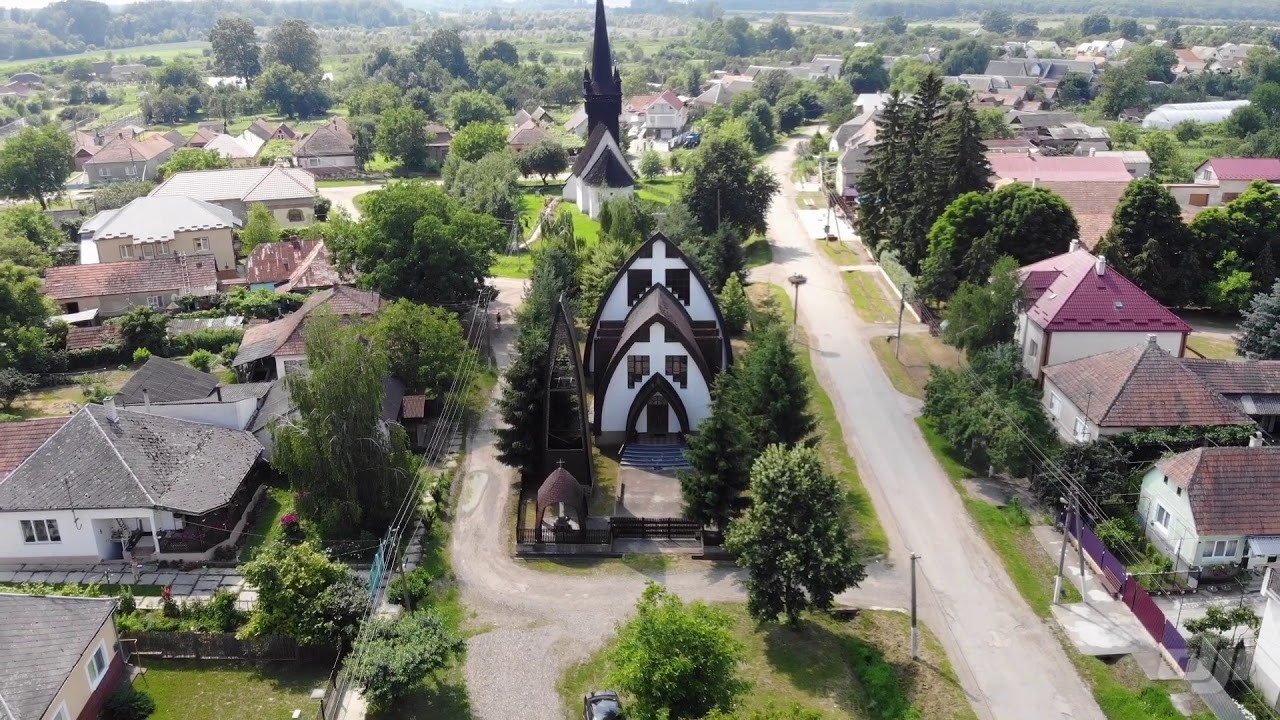
Another interesting church, although modern, immediately catches the eye. It was designed by the famous Hungarian architect Imre Makovets, and the church is used by both the Greek and Roman Catholic communities of the village. For this purpose, an interesting iconostasis in the form of a Spanish wall was created in the church, which is open during the Greek Catholic service, and vice versa during the Roman Catholic service.
Fork
Our next stop is the village of Vylok, located not far from the Ukrainian-Hungarian border on the right bank of the Tisza.
The first written mention of the settlement dates back to 1304. The first settlers lived on an island of the Tysa River named after St Ilona.
In the very centre of the village there is a Greek Catholic church built in 1806 in the style of classicism. Interestingly, the church tower also served as an observation tower for local firefighters.
The building of the former Salt House is located on Thomas Ese Square 2. As the village of Vylok has been a trading village for centuries, various goods, including salt, wine and timber, were actively transported through it.
The Main Street is decorated with a Roman Catholic church built in honour of St Ilona in the 18th century, and a chapel dedicated to St Jan Nepomuk.
Of course, you can also find a Reformed church in the village, which was built in the 19th century and is a landmark on Rakoczy 67. It is interesting that the building was based on a former salt warehouse. By the way, Rakoczy Street leads directly to the Hungarian border, and the village has an international checkpoint "Vylok-Tiszabecs".
In July 1703, near the village of Ferenc, Rakoczy 2 and the Kurucs rebels clashed with the Austrian emperor's army and won for the first time. In 1908, an 18-metre-high monument was erected at the site of the event with the national symbol, the turul, carrying a sword in its beak. According to legend, it was this bird that told Rakoczy about the approaching enemy and saved him when he lost his sword in the midst of the battle, bringing it back to the prince. It is said that the enemy was so frightened that he ran away and got stuck in the swamps where he died. The original turul stands on the territory of the castle in Uzhhorod, and in 1989 it was restored in Vylok.
Shalanki
In the sources of the 14th century, a settlement near the Borzhava River was first mentioned.
It is said that Prince Ferenc Rákóczi 2 was very thirsty while staying here. But there was no clean water around, as the area was heavily swampy and the supplies were almost gone. So Rakoczy sent his subjects to search for water. The prince's clerk, Kelemen Mikes, managed to find crystal clear and tasty water. Since then, the locals have called the hill next to the spring Mikeshev, and a well has been built on the site of the spring.
It was in Szalanky that the last meeting of the general assembly of the insurgents, led by Ferenc Rákóczi 2, took place. According to legend, the meetings of the state assembly were held on the triangular hill of Gemlivts. On the hill you can still see a rounded stone on which the prince wrote an address to the people. The Borkovci Palace once stood here, but in 1717 it was destroyed by the Tatar horde. Nowadays, only a wine cellar remains of the palace, located at 15 Fabrychna Street.
It is not surprising that the village has a memorial park where you can find monuments to Rákóczi, Mikes and the first Hungarian king, Saint István, as well as a number of memorials.
At 110 Holovna Street you can find a Gothic Reformed church that once belonged to the Roman Catholic community and was built in the 14th century.
On the same street, but at number 40, there is a 19th-century Greek Catholic church dedicated to the Archangel Michael.
The village was also famous for its cooperage workshops. Here they made oak barrels that were shipped far beyond the region. The raw material was the oak of the Velykyi Forest. Interestingly, the villagers also made double-chambered barrels, which could hold two drinks at the same time. Today, this tradition is preserved in Shalanky.
Antsya Kushnytska
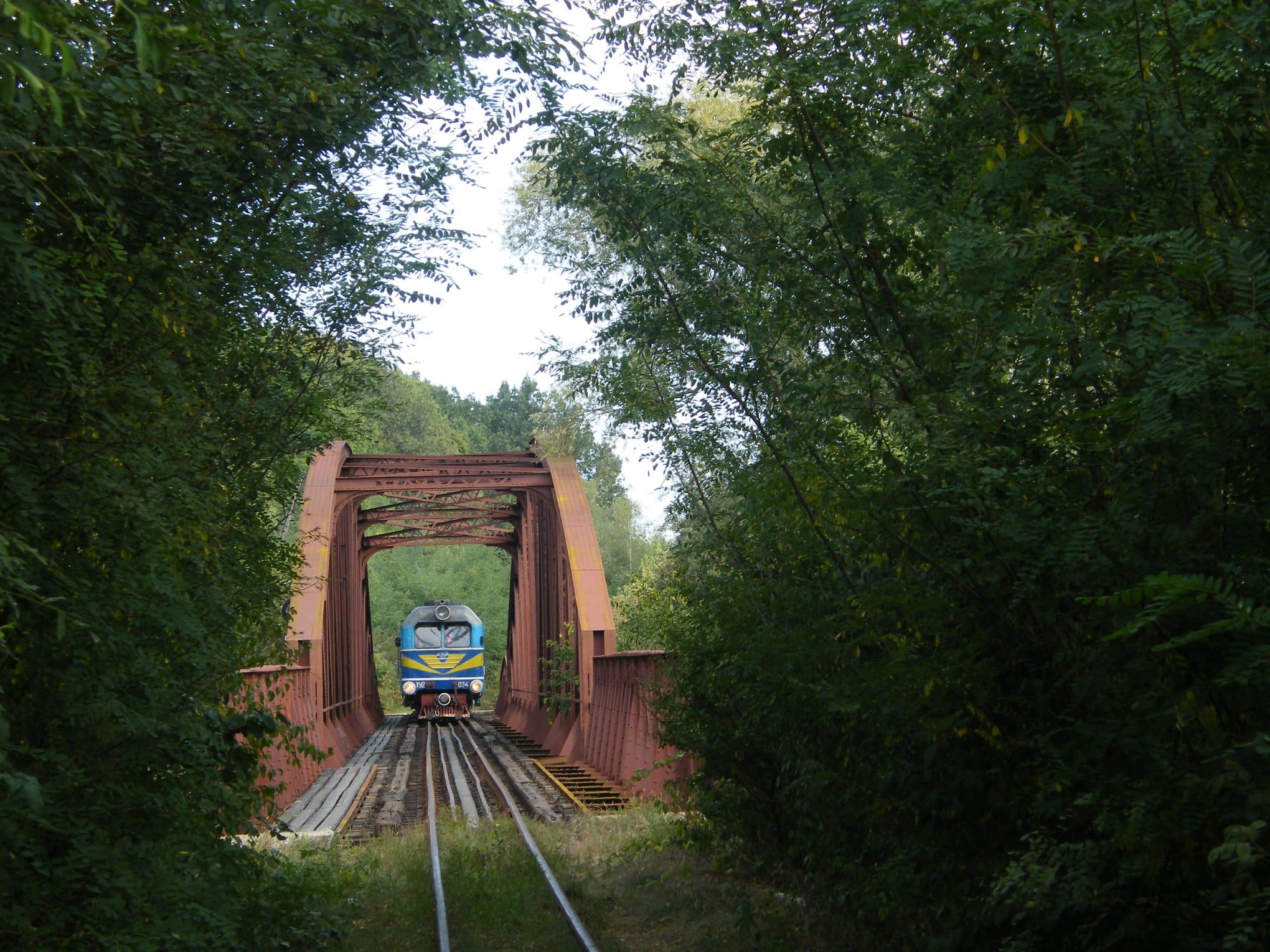
We are heading to the next stop on our route - one of the narrow-gauge railways in Ukraine that was still in operation until recently, called the Borzhavska. Although it is also popularly known as "Antsya Kushnytska". The name came about when the narrow-gauge railway went to the village of Kushnytsia, where more than one Anna lived. In fact, the narrow-gauge railway can be seen travelling through several villages in Berehove and Vynohradiv districts. In particular, in Shalanky or Khmilnyk. Its length is 123 km. The archives show that there were attempts to build an iron railway in the Borzhava river valley as early as the 19th century. However, the actual "birth" of the narrow-gauge railway can be considered February 1904, when money for construction appeared. It is difficult to overestimate the importance of the Antsya in the region, as it was perhaps the most important transport link in the region. Although it was mainly used for transporting timber, there was also a very active labour migration of the population. Thanks to the narrow-gauge railway, people from Verkhovyna could get to the fair in just 3 hours instead of a day and a half. The official beginning of its activity was in 1908. At first, it was privately owned and was a joint-stock company. During the Soviet era, the Borzhava narrow-gauge railway was also used to transport workers of the Irshava district. Not only timber was transported, but also materials from construction companies, furniture factories, machine-building plants, etc. The decline of the "Antsia Kushnytska" activity dates back to the 90s, when trade ties were lost with the collapse of the USSR, the Ukrainian railway began to operate independently, and the Borzhava narrow-gauge railway was perceived as a relic of the past. Later, with the help of concerned activists, the Borzhava narrow-gauge railway became an interesting element of local tourism, with enthusiastic people organising excursions from time to time. If you walk on foot along the tracks from Khmilnyk to Shalanky, you will meet abandoned old Polish Pafawag cars from 1960, which were still running on the tracks until 2010, and pass through an old railway bridge from 1884.
Vinogradov
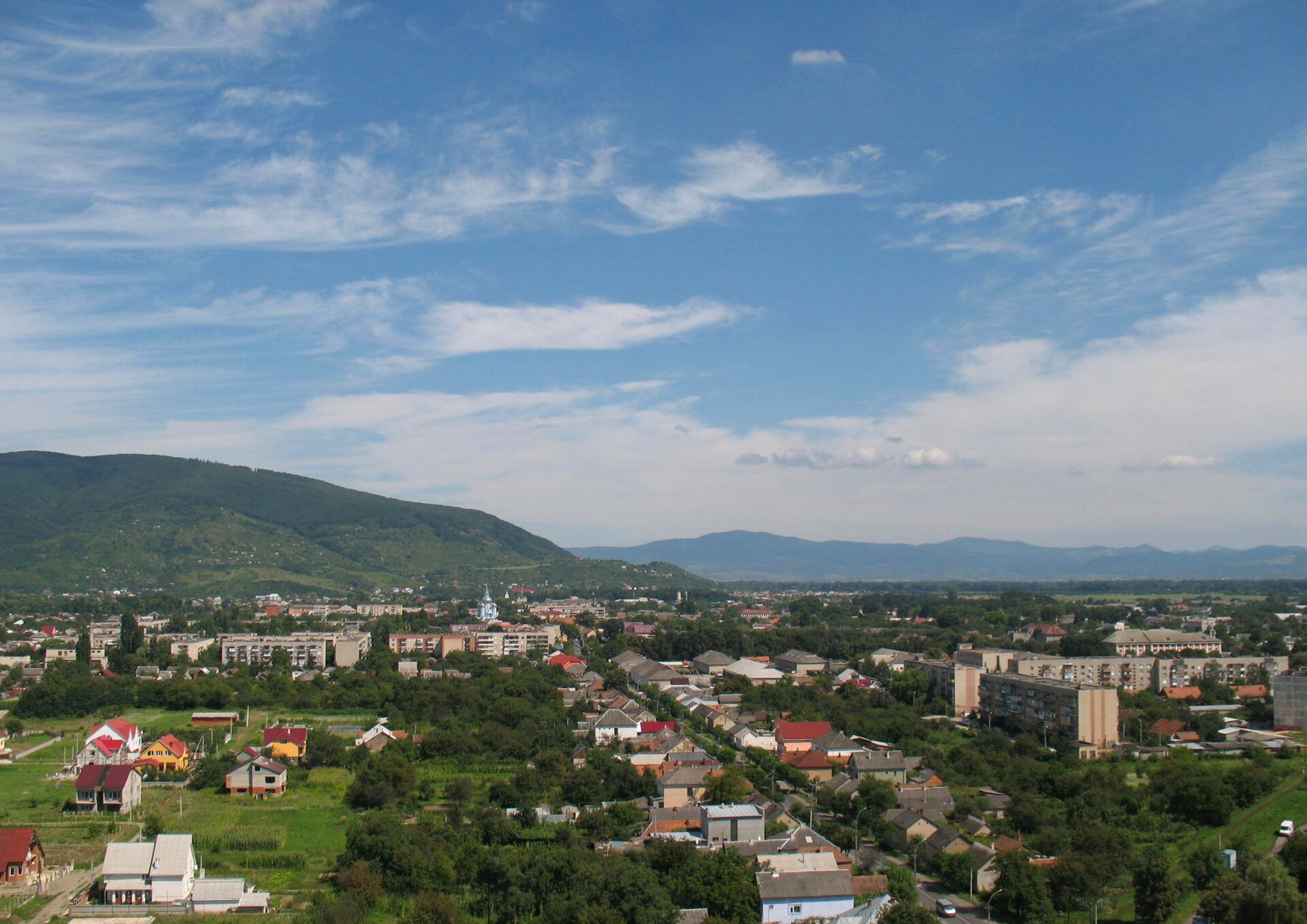
The main settlement in the region was the city of Vynohradiv. Until recently, it was also the district centre, but after decentralisation it became part of Berehove district.
One of the oldest settlements in the smallest county in the Kingdom of Hungary, Ugocsa. Interestingly, from the very beginning it had royal privileges, and the settlement was most likely inhabited by royal winemakers.
Let's start our walk from 51 Mira Street, where the local school is located, but at one time it was the building of the committee's administration. It was built in the Neo-Baroque style at the end of the 19th century. Nearby is a garden with monuments to famous Hungarians: Baron Zsigmond Pereni, who owned the city, and composer Bailey Bartók, who once made an expedition to preserve folk music, travelled around Zakarpattia and collected folk art.
Next, we move to the square that connects Myru and Shevchenko streets. In the middle of the square is an octagonal decorative fountain. On the sides there is information about the city. In the central part, there is a statue of a young girl trampling grapes barefoot - an ancient tradition of winemaking that is now followed at festivals.
Continuing our walk along Myr Street, we first see the 19th-century Reformed Church, and then come to one of the most important medieval monuments of Transcarpathia: the Roman Catholic Church of Vynohradiv at 2 Myr Street. The church dates back to the 13th century, although it was expanded and partially rebuilt over time. Inside the church is an organ made by Sandor Orság and his son, dating back to the 19th century, which is worth a listen.
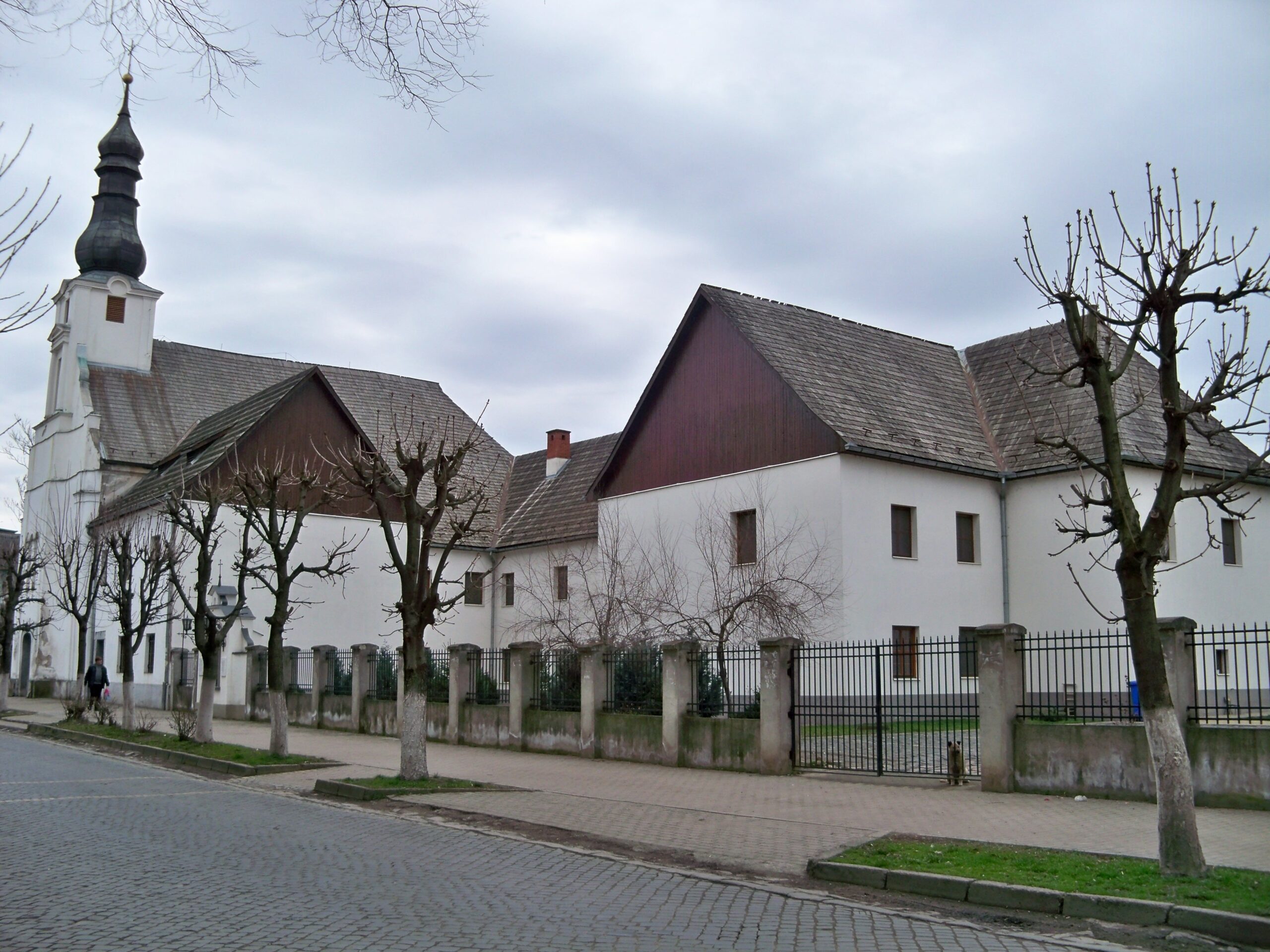
There is a Franciscan monastery and church right opposite the church. The monastery was built in the 18th century, and in the 19th century a church was built next to it. In 2013, a sculpture of St Francis of Assisi with his brother monk holding a vine was installed in a small chapel in front of the monastery building. The Franciscan monks received the first monastery in the city thanks to the Pereni family, who owned it at the time.
Then, Shevchenka and Myr streets reunite in the park. At 4 Shevchenka Street, there is a museum where you can learn more about the history of the Ugochansky Komitat.
Next to it is the building of the former Vynohradiv Royal Citizens' School, which still houses the educational institution, and to the left is the synagogue. Before the Second World War, the Jewish community of the city made up almost half of the population. They were the most active traders and craftsmen.
In the park area on Myr Square, you can take a break and admire various monuments. There is a statue of a winemaker squeezing grapes, a bust of Taras Shevchenko, and even a small mini-sculpture dedicated to the aforementioned Bailey Bartok.
Buffalo farm "Carpathian buffalo"
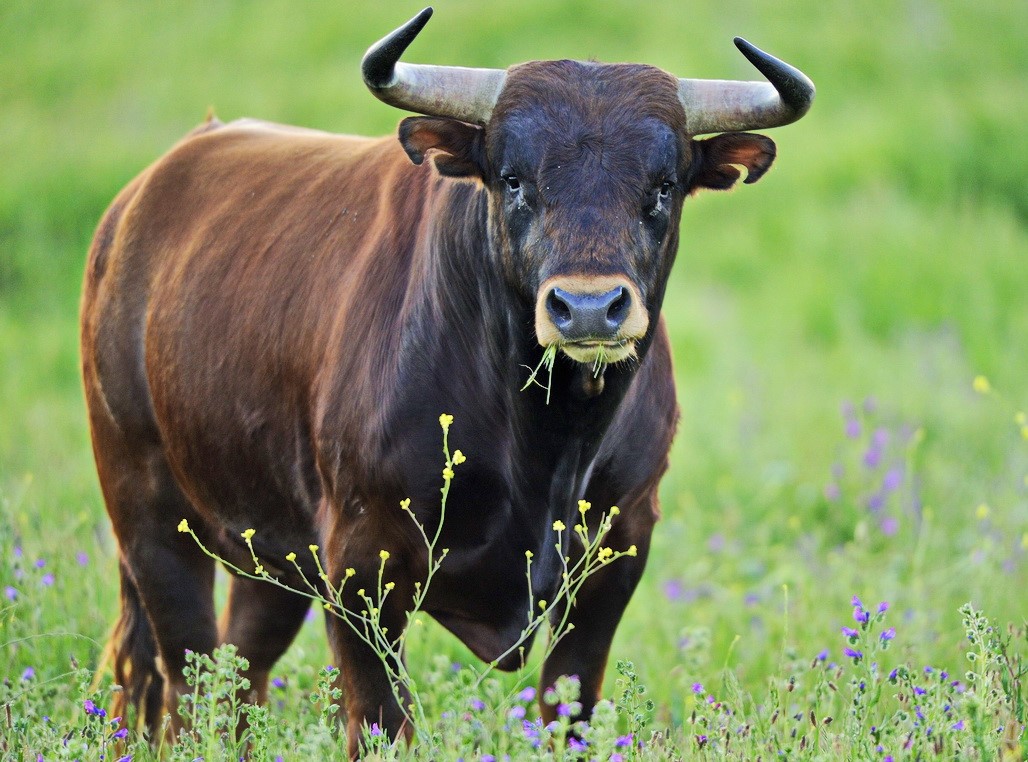
Our next stop is on Pershotravneva Street in Vynohradiv. This is a unique farm called Carpathian Buffalo. It is unique because it not only produces delicious eco-products that can be tasted and purchased here, but, above all, its activities are aimed at preserving and restoring the population of the Carpathian buffalo.
It is very simple. Unfortunately, human activity has a direct impact on the ecology and the natural environment in which we live. Deforestation in the Carpathians, urban and rural sprawl, industry and land reclamation have pushed many rare species to the brink of extinction. The fact that not everyone today is able and willing to run a private farm is also contributing to the decline in the number of Carpathian buffalo.
These majestic and calm animals used to be used in every household. Buffaloes were used as a powerful labour force, and buffalo milk was used to make cottage cheese and sour cream. The animal's milk is very healthy and easy to digest. Here you can not only admire the majestic and cute buffaloes, but also get acquainted with the process of dairy production. And most importantly, you will support the population of the endangered species.
Kanky Castle and Pereni Palace
Continuing our walk in Vynohradiv, we move towards the Black Mountain. At 10 Kopanska Street, we see the Baroque palace of the Pereni family built in the 16th century. Initially, the building was one-storey, but in the 17th century there was a need for expansion, so a second floor was added. The family coat of arms will greet you at the entrance. This family has been known since the 13th century, and its representatives had significant estates in the counties of Ung, Bereg, Ugocea and Maramaros, that is, throughout the present-day Transcarpathia and beyond.
In the 14th century, the Hungarian King Zsigmond was the first to give Sevlius to Baron Peter Pereni for his help in the fight against the Turks.
Among the famous representatives of the family, Zsigmond Pereni stands out, who was a prominent Hungarian figure and politician, one of the fighters for the rights of the Hungarian people. During the Hungarian War of Independence of 1848-1849, he was elected president of the upper house of the Hungarian parliament, and in April 1849 signed the declaration of independence of Hungary from the Habsburgs. In October of the same year, after suppressing the uprising, the Austrians executed the baron.
It is said that the last time he was at home, he asked his servants not to close the big iron gate until he returned home. The wrought-iron gate at the entrance to the palace still preserves this tragic story.
Today, the building is used by the education department; unfortunately, only the park area around the building remains of the former garden of more than 12 hectares.
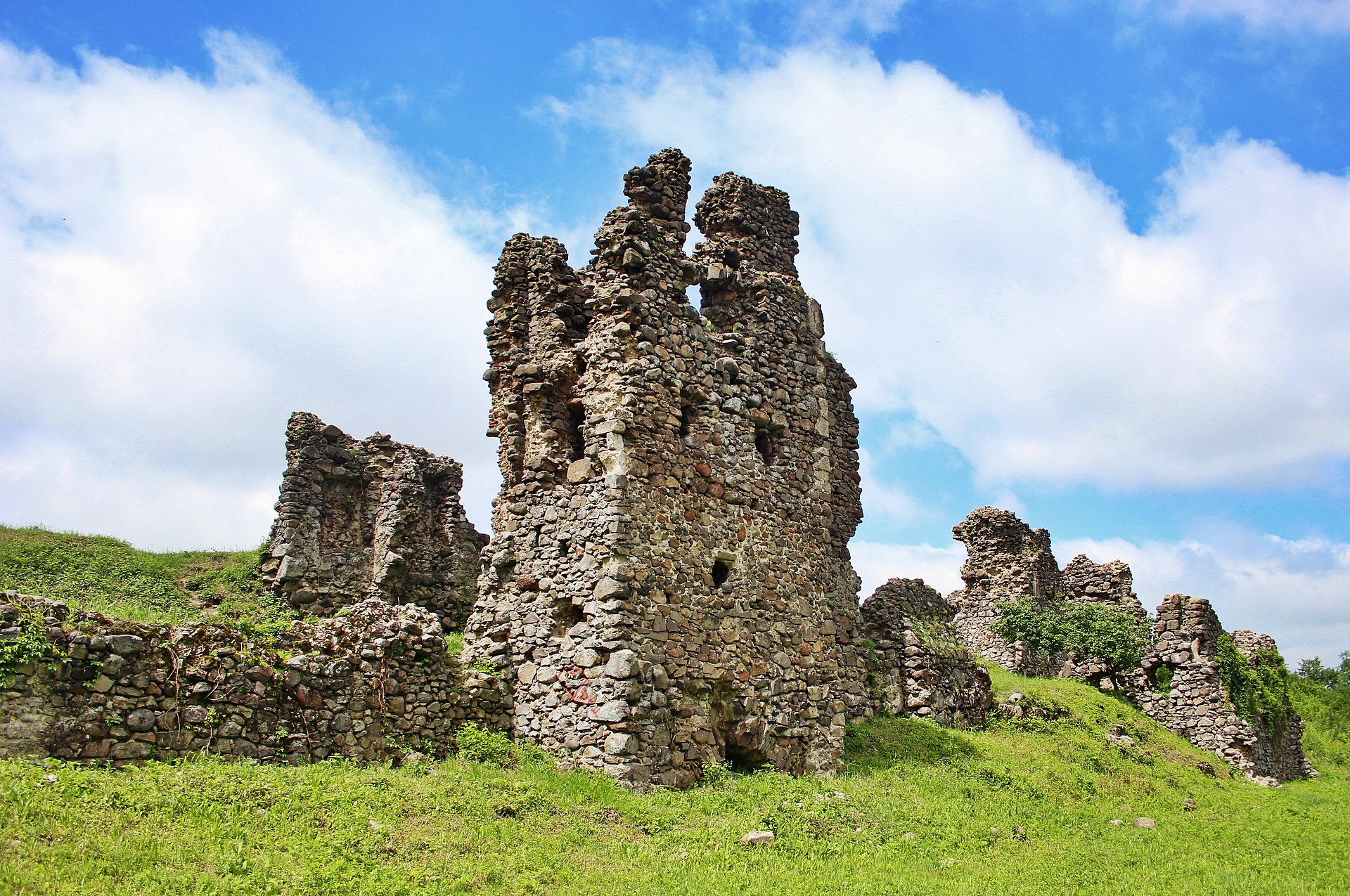
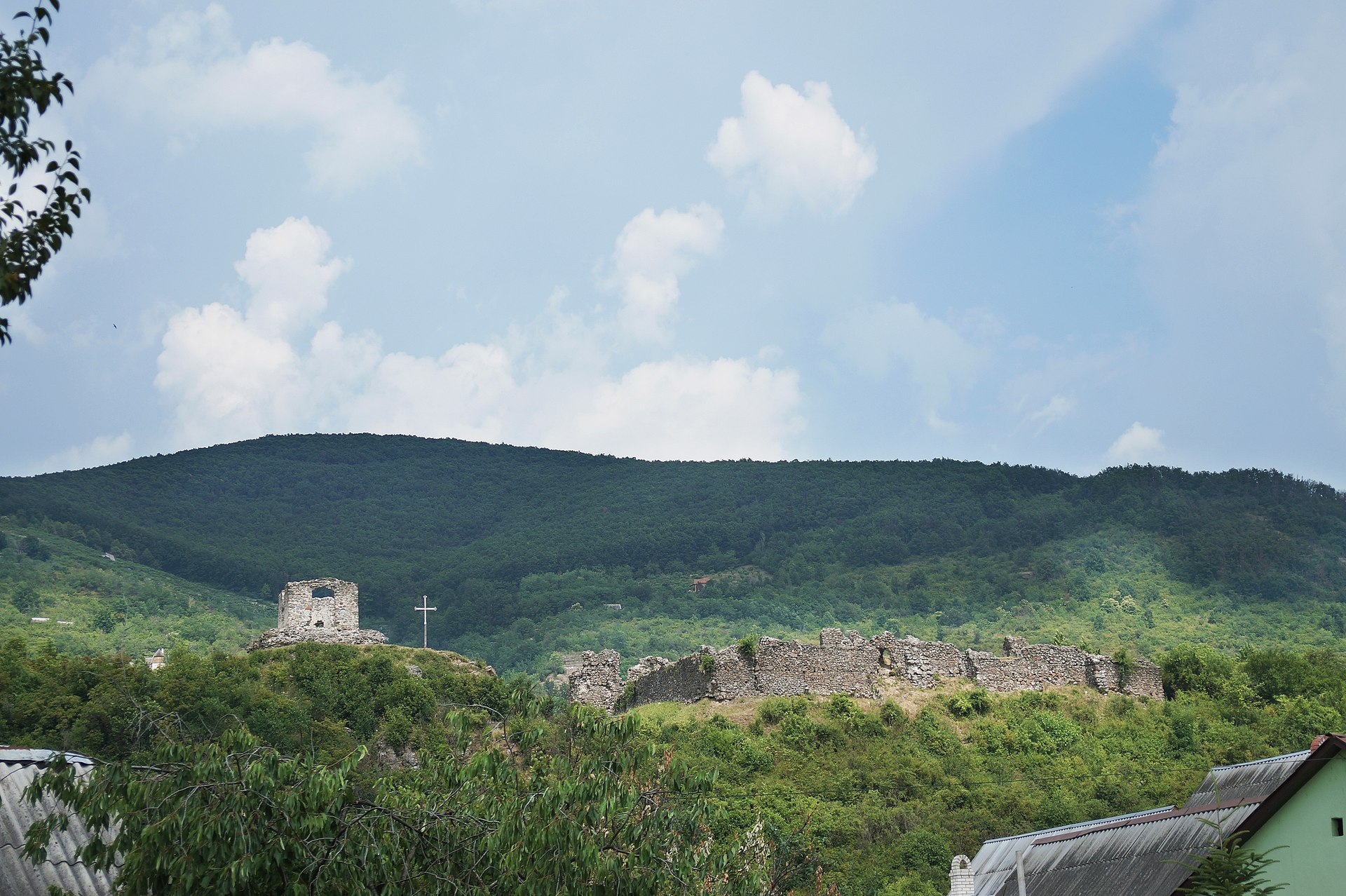
Continuing our tour, we will visit the Kankiv Castle, which is a pearl of Vynohradiv's historical heritage. To do this, from Kopanska Street we will go to the path that leads to the Black Mountain. Only ruins remain of the old grandeur of the fortress. This castle performed an important function - it controlled the trade route along the right bank of the Tisza River and the bridge across it. Previously, the castle was called Ugocha, but when it fell into the hands of Franciscan monks who wore outerwear made of wool called kanko, it received the name that has survived to this day.
A wooden castle already stood on this site in the 13th century and was first mentioned as the property of the Barsha family. However, after their rebellion against King Charles Robert, it was destroyed, and the stone castle was restored by the Pereni family in the 15th century.
The fortress had a rectangular shape and was protected by bastions and a watchtower.
It was originally used by monks, but in the 16th century the Pereni converted to the Protestant faith and expelled the Franciscans, fortifying and rebuilding it into a knightly castle. When the family supports the Transylvanian prince Janos Zsigmond and goes against King Ferdinand I, he orders his soldiers to occupy the castle and destroy it. It has been standing there since 1558.
Black Mountain
Between Vynohradiv and the village of Mala Kopanya, there is the Black Mountain Botanical Reserve, which is part of the Carpathian Biosphere Reserve and is popular with those who enjoy easy hiking in the wooded area.
The mountain of the same name, the volcanic remnant of which is Chorna Hora (568 m), is located within the reserve. The mountain belongs to the so-called island mountains, i.e. it is not part of any mountain range and is surrounded on three sides by the Transcarpathian lowland, and only its northern slopes turn into a gentle hilly rise that extends to the north-east to the Tupy massif. The Tisa River flows along the eastern slopes of the mountain, which in several places has formed high rocky cliffs.
The volcanic rocks of the mountain formed brown soils of varying fertility. The trees here are mainly oak and beech. In addition, the only remaining stands of white-flowered ash in Ukraine have been preserved here. In total, about 400 species of higher plants grow on the territory of the reserve.
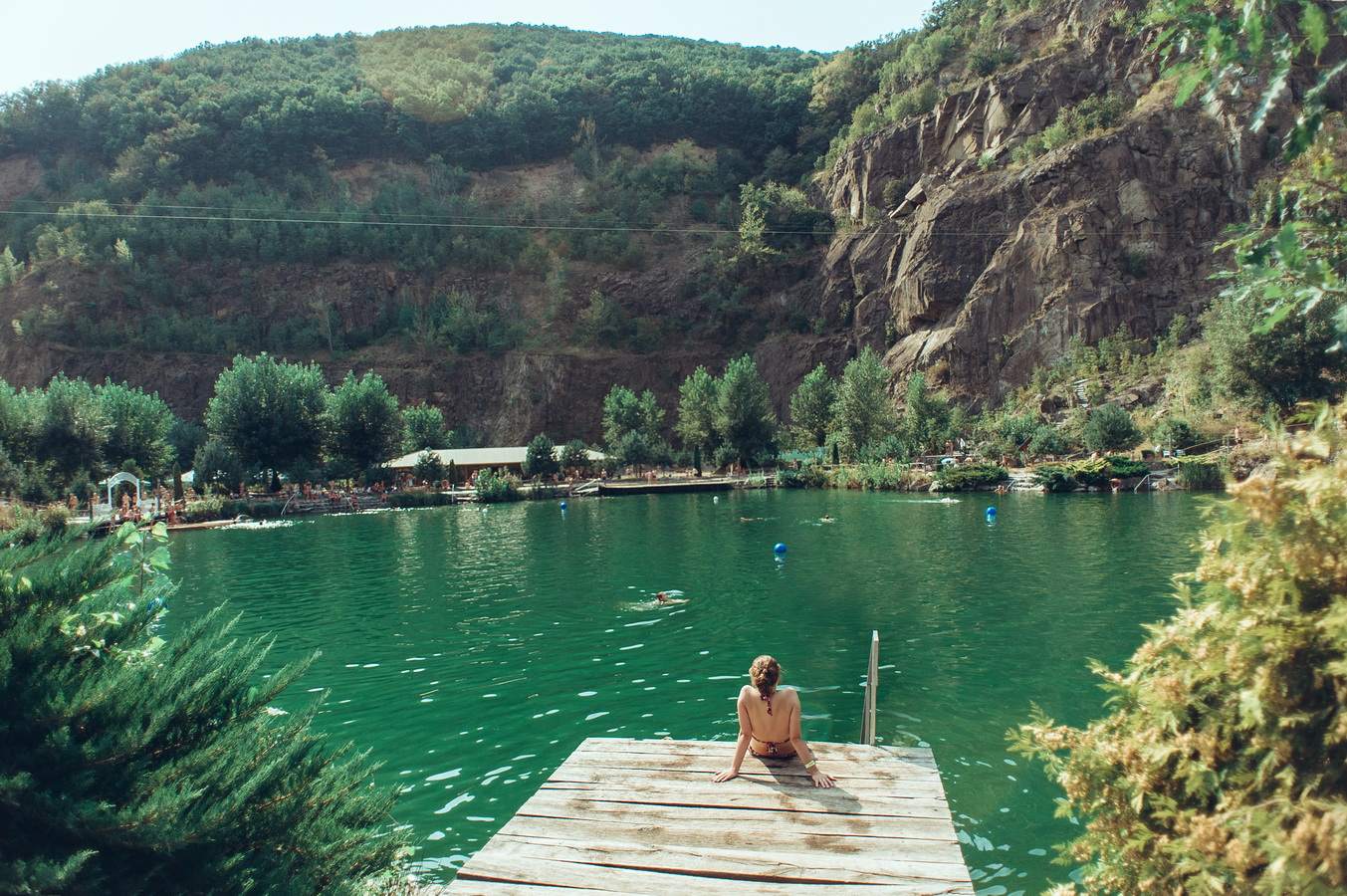
At the foot of the mountain is the resort area of the Vynnychky tract and the Black Mountain hotel and entertainment complex. The lake located here is a popular holiday destination.
Interestingly, in addition to nature lovers, Chorna Hora also attracts mysticism and adventurers: witches are said to have gathered here since ancient times, and the caves of the mountain contain treasures of both the Templars and local robbers.
Big and Small Kopani
You have probably already heard about our next stop.
The history of the two neighbouring villages is a story of human struggle, primarily with large, impassable forests. Settlers, having chosen a piece of forest suitable for agricultural production, cut down trees. The cut down area was called an "apiary". The dried tree trunks were taken to the farmsteads, and the rest were burned.
The area cleared of forest was called "spal" or "pogar". It was dug up, cleared of stumps and roots, and made suitable for agricultural use and was called "kopanya". This is where the names of the Big and Small Kopani come from.
The village was first mentioned in the 15th century. And an interesting legend about the foundation of the village has come down to our time: not far from where Velyka Kopanya is now, a feudal lord lived on a high mountain. He had a very beautiful daughter. The girl fell in love with a simple village boy, when her father wanted to marry her off to someone titled. He said he would marry her off to whomever she wanted, but only if she dug up a big mountain in front of their estate with her bare hands. They say she dug up the whole mountain. The father was angry but had to give his daughter in marriage to a commoner. They settled right where the girl dug up the mountain. That's how the village appeared.
However, Kopanya became famous for its interesting statistics. Every second family in the village has twins, so the village was included in the Ukrainian Book of Records and is called the Ukrainian capital of twins. Most of the twins were born in the 1990s, even though twins have been appearing in the village since 1941. The record was set in 2004, when the population increased by three twins in June.
The villagers attribute this number of twins to the miraculous water of one spring. Behind the Kopansky Ridge, geologists have discovered a huge underground lake that feeds local springs. Year after year, twins are born in the village, and the spring itself has become popular among those who want to have twins.
The Queen
The next stop is on the left bank of the Tisza River. There is a unique settlement 9 km from Vynohradiv - Korolevo. The population here is at least ten thousand, of which more than 93% are Ukrainians.
The first mention dates back to 1262. The town got its name as the centre of the royal forestry holdings between the Avash and Chorna mountains. Accordingly, a hunting lodge was built here, where the Hungarian King Stephen 5 Arpad used to come to hunt.
To the northwest of Korolevo, you can see the famous Khust Gate, a unique natural phenomenon. It is about 3 kilometres wide. It is from here that the plain begins, which after 100 km turns into the Great Hungarian Lowland. Here, on the top of the mountain, the remains of a Neanderthal settlement were found. This is the oldest human settlement in Central and Eastern Europe - the Royal Site, which is currently destroyed by a local crushed stone plant. Stone tools dating back 1.4 million years were found in the village, which turned out to be the oldest in Europe. These are knives, scrapers, chopping tools, spearheads made of andesite and flint. And in the Kruty Lany tract, on the southern outskirts of the village, an early Iron Age settlement was discovered, where bronze objects over 2,500 years old were found.
What else will surprise you in the royal settlement? It was here that the Royal Gospel was written - a manuscript of 1401, written on 176 sheets, decorated with various miniatures, which is considered one of the oldest books written in Transcarpathia that has survived to this day. The book is a valuable source of history, a landmark of manuscript art and Ukrainian literature. The original is kept in the Transcarpathian Museum of Local Lore.
And of course, the Royal Castle, where the book was written. But let's talk about it separately.
Nyalab Castle
As we have already mentioned, the surroundings of Korolevo were a favourite place for Hungarian King Istvan V to hunt wild animals: wild boars, bears and bison. In order to have a place to stop for a break, a hunting lodge was already built in 1262.
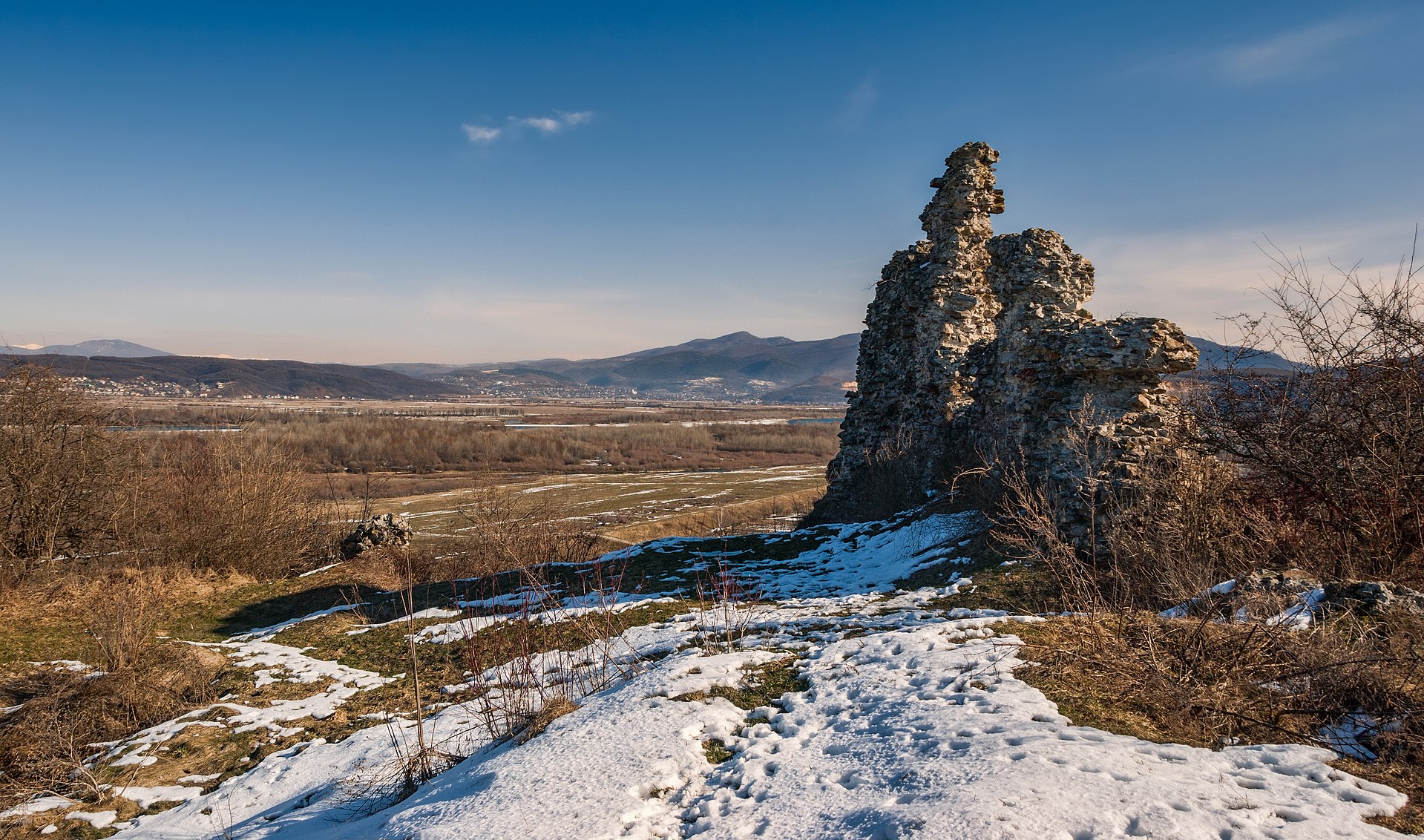
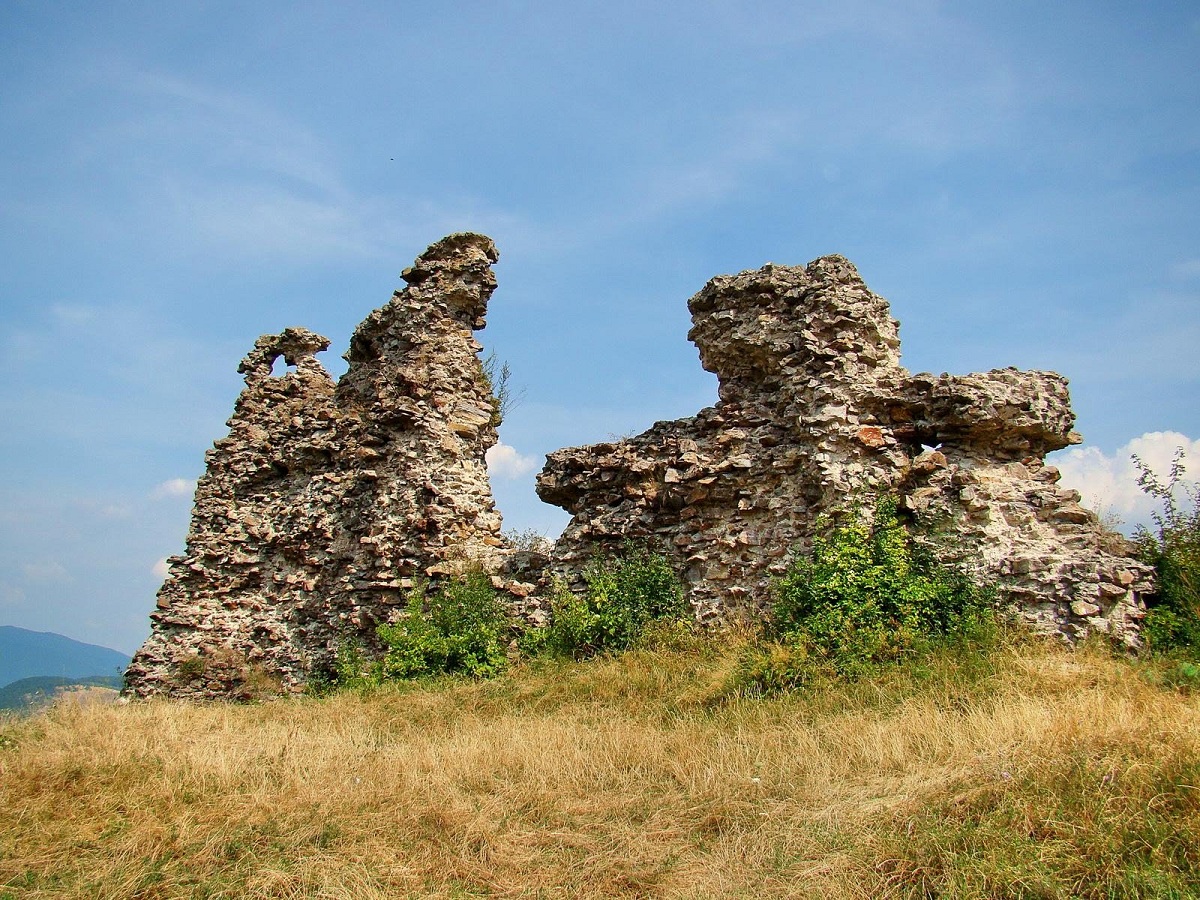
Later, in 1272-1315, stone fortifications were built and the castle served as a customs and watchpost on the salt route from Maramoroshchyna.
The castle was located on a 52-metre-high hill at a distance of 300 metres from the Tisza River. The central part of the fortress had an oval shape and was additionally protected by outer walls.
The interesting name of the castle, according to legend, comes from the name of the Hungarian robber Nyalab, who captured the castle in the late 13th century and owned it for some time. A kind of Robin Hood who robbed the rich but was noble. However, there is another version of the origin of the name associated with the translation of the word Nyalab, which means "bundle", as some part of the goods had to be left here as a tax for passing the post and using the road.
As the Royal Castle of Nyalab was the residence of the king, important cultural events also took place at the court. We already know about the King's Gospel, which was copied here, but it was also the place where the Bible was translated and the letters of the Apostle Paul were translated into Hungarian for the first time. The Hungarian lutenist and ballad writer Péter Szelmés Ilosvály created almost the entire vocal epic within the walls of Nyalab Castle. Therefore, although with the development of Khust Castle in the 14th century, the castle gradually lost its leading defensive role, its importance for the region still remains important.
In 1405, the king granted the request of the already well-known Baron Peter Pereni to transfer Nyalab to his ownership. At that time, Pereni had already owned the neighbouring Vynohradiv Castle for 6 years and helped the king in the fight against the contenders for the Hungarian throne. Nyalab became Pereni's main residence.
In the second half of the 15th century, the castle's fortifications were reconstructed, which, according to some historians, was carried out by the famous Italian architect Aristotle Fioravanti. At the same time, a chapel was built, where King Vladislav II of Hungary bequeathed himself to be buried.
In 1661, the Turks robbed Korolevo. However, despite their considerable numerical superiority, they did not dare to storm the castle itself. Unfortunately, its history did not last long...
In 1672, King Leopold ordered the castle to be blown up, probably fearing the growing influence of local magnates. The building was never restored, and soon only the ruins of the castle stood on the hill.
In the 19th century, the castle became a popular location for archaeological research.
Veriaca and the rock of Maria Theresa
Now we are waiting for Veriatsya.
The first mention of the village is in 1355 and it is connected with the granting of the royal charter to Korolev, Sasov, Chernotisov and Veriaka. It is most likely that the main population of the village is hired from the Nyalab castle, which rises above the settlement.
The main trades in the village were weaving and forestry. Of course, there is also an 18th-century church here. But it is famous because at one time the first Transcarpathian lighthouse operated here.
The fact is that since ancient times, brave bokorash loggers have been floating their bokor rafts all the way to the mouth of the Danube. This dangerous work was performed only by daredevils who knew the peculiarities and treachery of high-speed mountain rivers, where they were waiting for sharp turns and rapids. Not far from the village there is a rock, popularly called Kip. The Tisza hit it with great force, creating a whirlpool. Accidents with bokorash, who were fusing salt and wood, often occurred here. The relatives of the victims asked to see and tell about the place of the tragedy, and they were pointed to the river and told: "v vyryachovi!", i.e. in the whirlpool. Hence, they say, the name of the village of Veriatsia.
The rock on which the bokorashi hit was called "Maria Teresia", and the following legend has come down to us: when the water on the Tisza rose due to rain, the bokorashi did not see the sharp rock and fell to their deaths. This is what happened to Maria Teresia's husband. They lived in Khust, and after her husband's death, she came to the village of Veriatsia and settled on the Kip rock. She dug a cave in it with her own hands, made a table and a bed out of stone, and when a storm was rising on the river, she would light a torch on a long stick, hold a tree with one hand and give a sign to the bokorash with the other. The bokorashi from far away would direct their bokoras to the middle of the river and sail safely past the rocks. Nowadays, many people visit this rock. Even a table, a bed and some other things from that time have been preserved.
Botar
We cannot ignore the small village of Botar either. It was first mentioned in the 13th century.
The village is predominantly populated by Greek Catholics, but on Holovna Street you can see both Greek Catholic and Reformed churches.
The highlight of the village is the Tighesh farm, which is famous for its juices, syrups and other products. But it's the lekvarium, or museum and tasting room, located on Petőfi Street 2, that attracts the most attention.
Lekvar is a traditional Transcarpathian jam made from Hungarian plums or bystrytska plums (bystrytsia plums), which can reach the size of a kiwi, or the local Nemtudom variety. Depending on the variety of plums, lekvar has a more pronounced sweet or sour taste. It has been known since the beginning of the XIX century, due to the spread of orchards in peasant farms in the region. Lekvar was of great importance in everyday life, as plums grew in every yard and were very popular in cooking. It was consumed as a separate product, a dessert, and also for preparing a number of dishes: piknytsia (homemade sausages), gombovtsi, shutymyny (local delicacies), and a sauce for meat dishes. No sugar is added to traditional lekvar, and the finished product has a very thick consistency. Since 2022, it has been classified as an intangible cultural heritage of Ukraine.
The name comes from the Hungarian word lekvár, which means "jam" or "jam" made from various fruits. Nowadays, in addition to the traditional one, you can try apricot, raspberry, strawberry, blueberry, chokeberry and other jams.