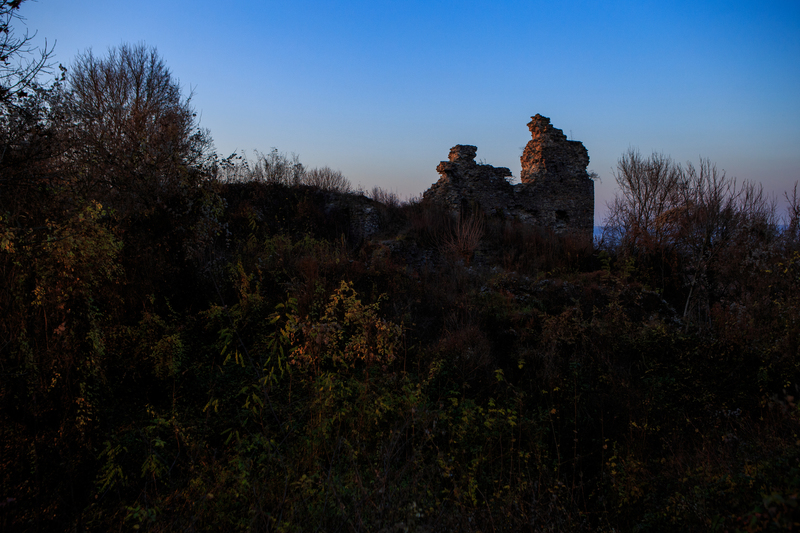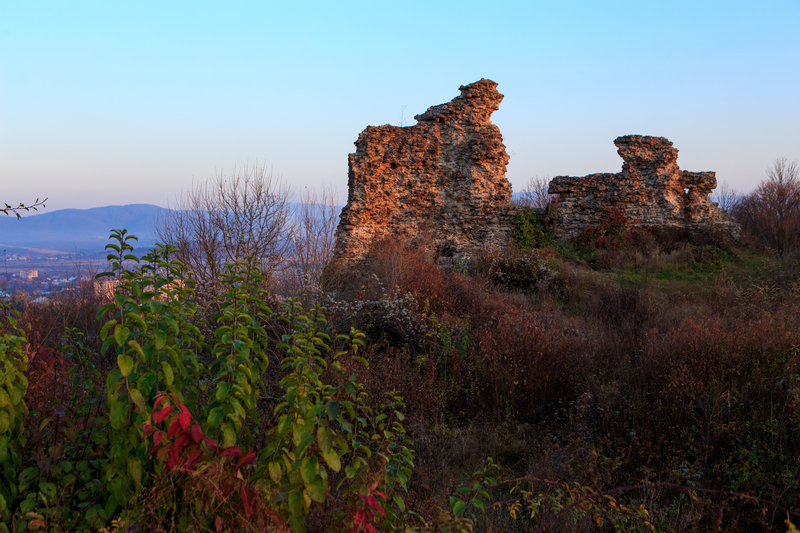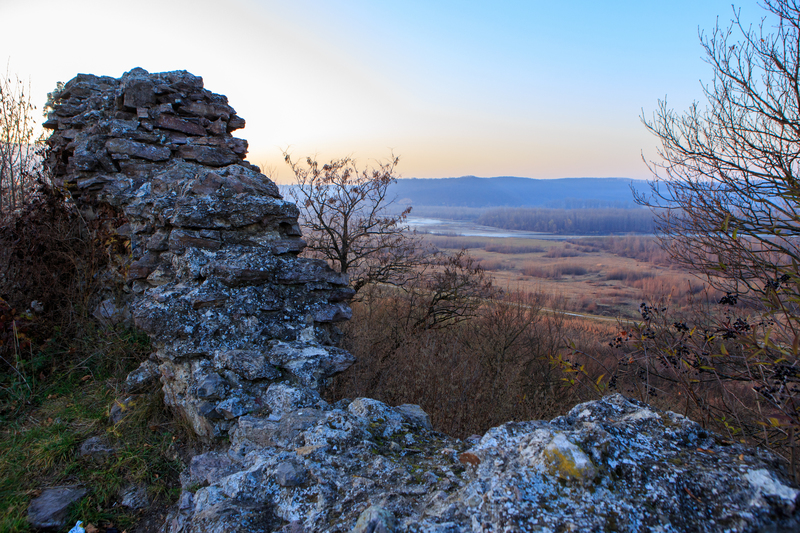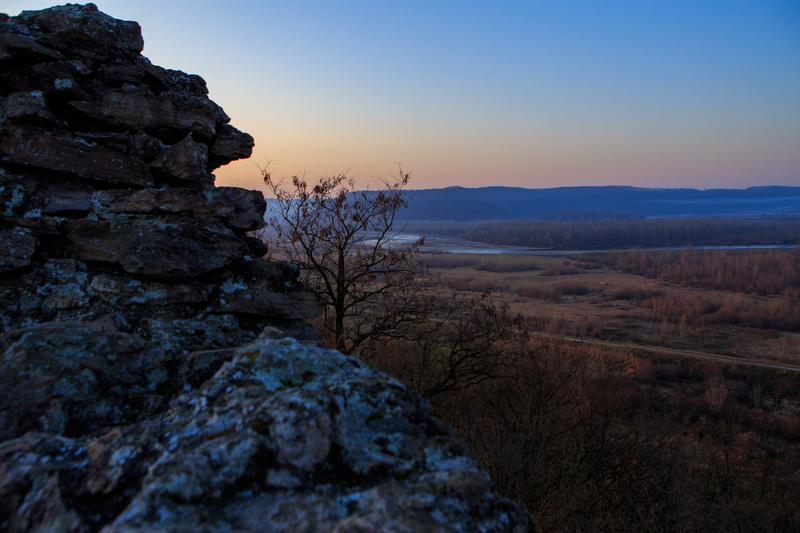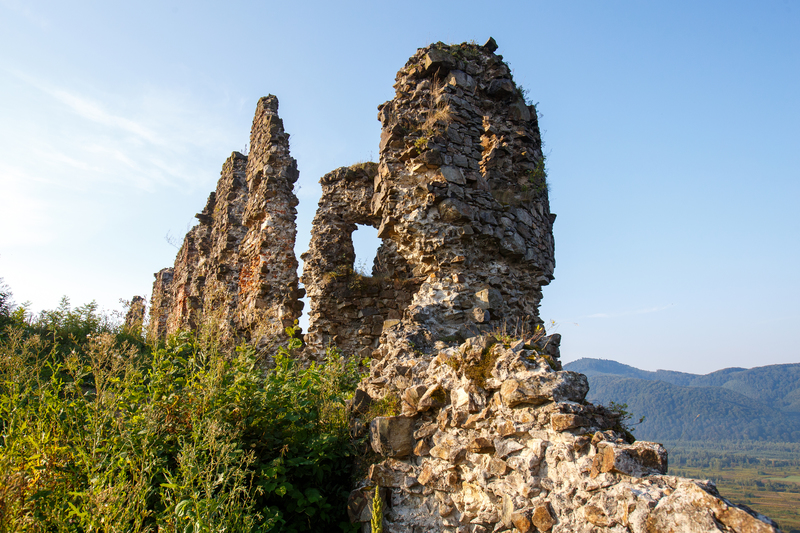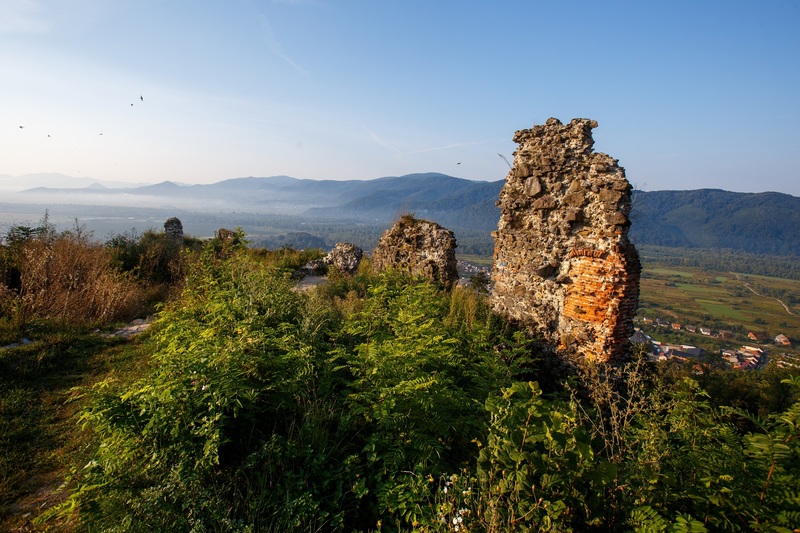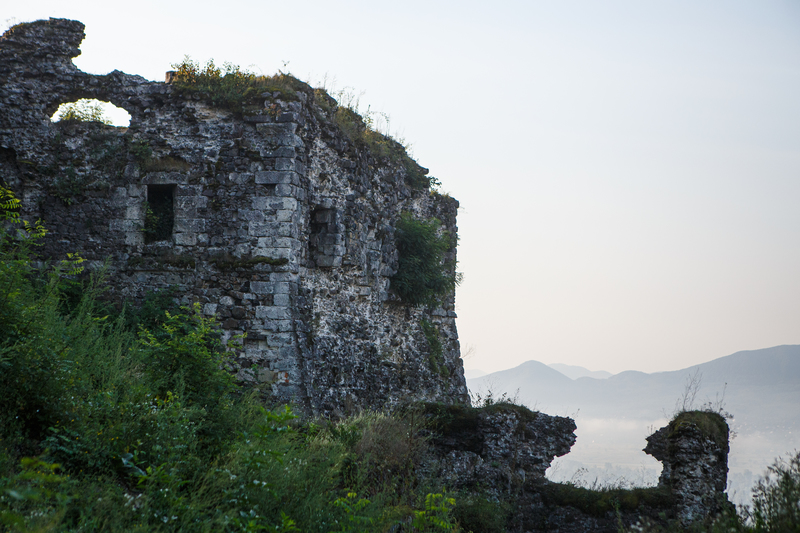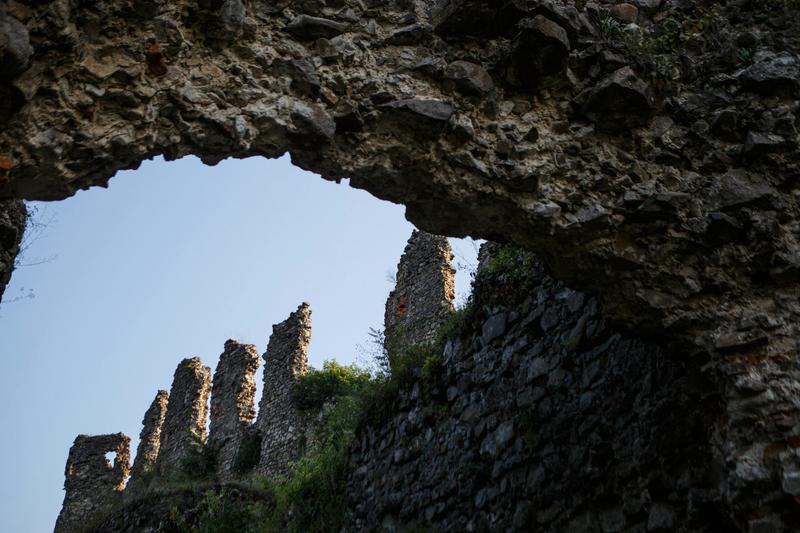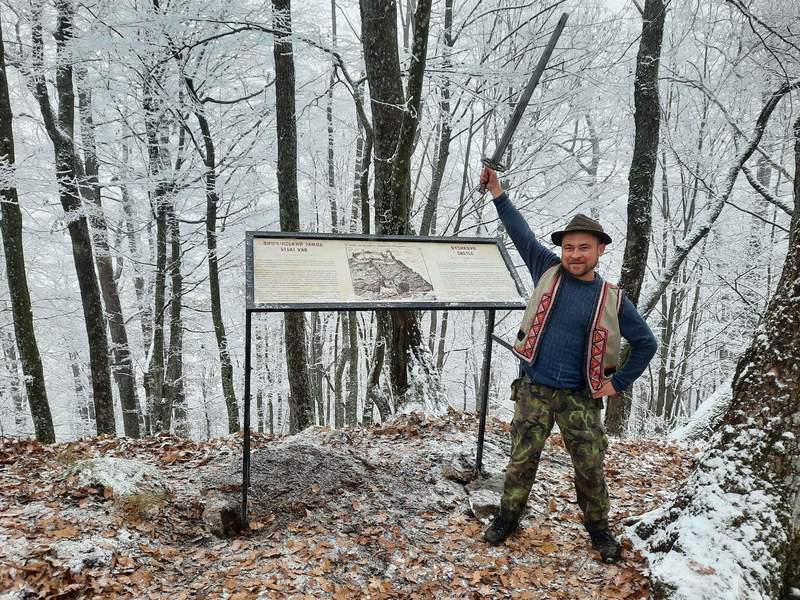


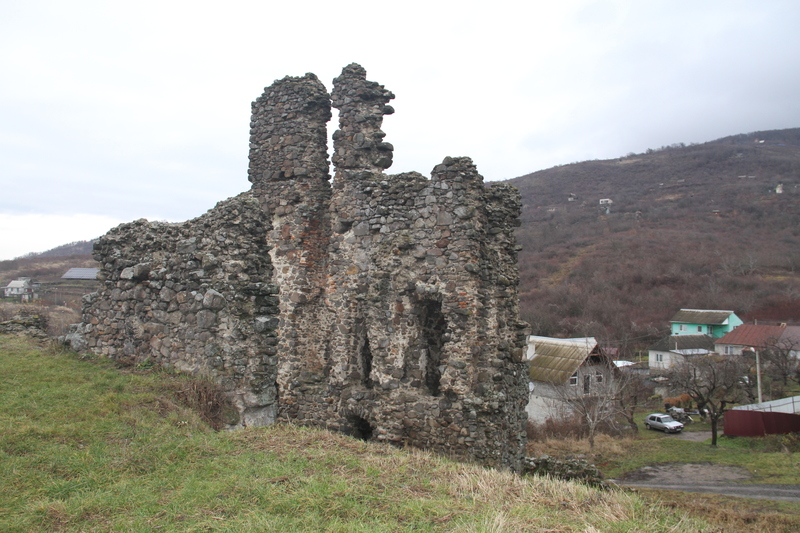
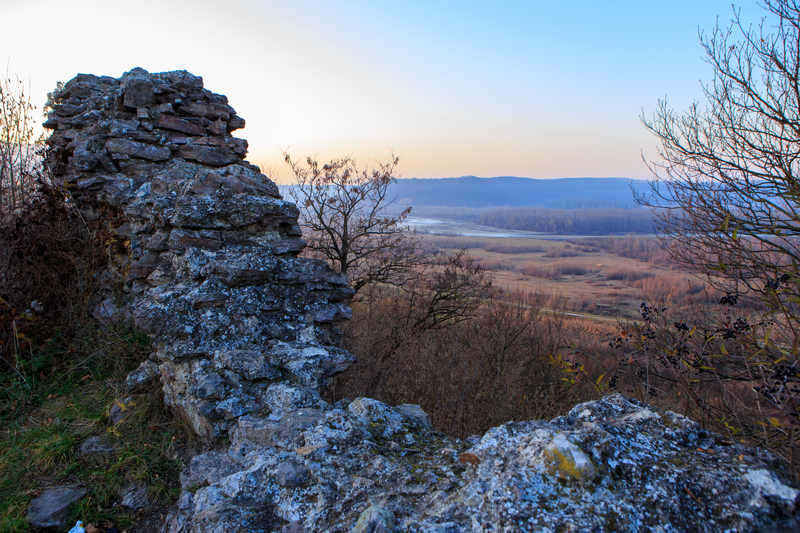
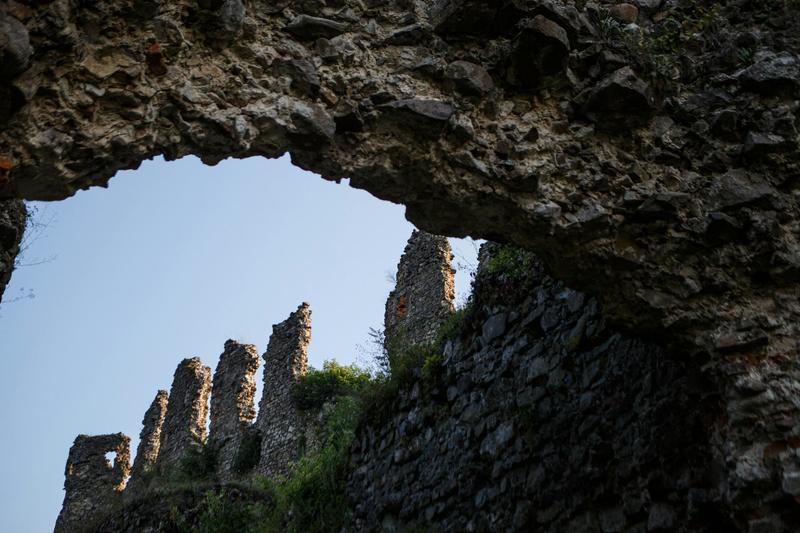
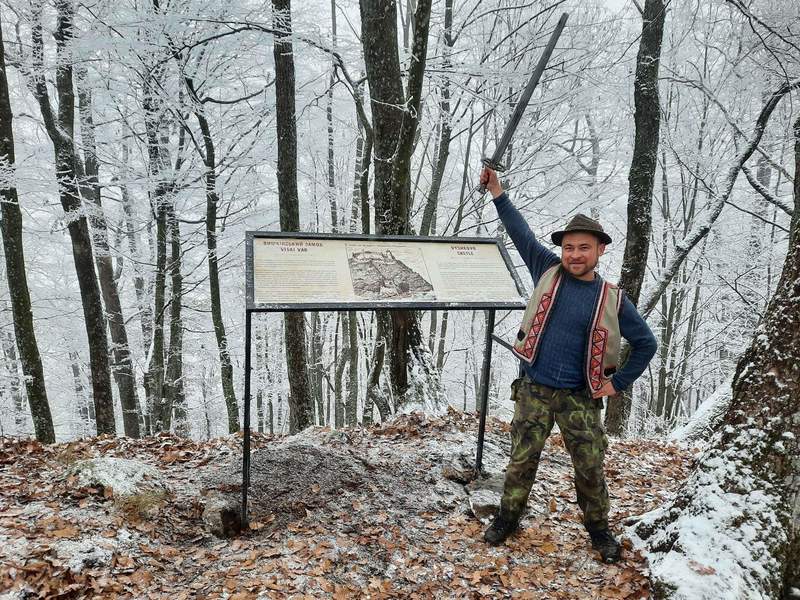

Nevytske Castle
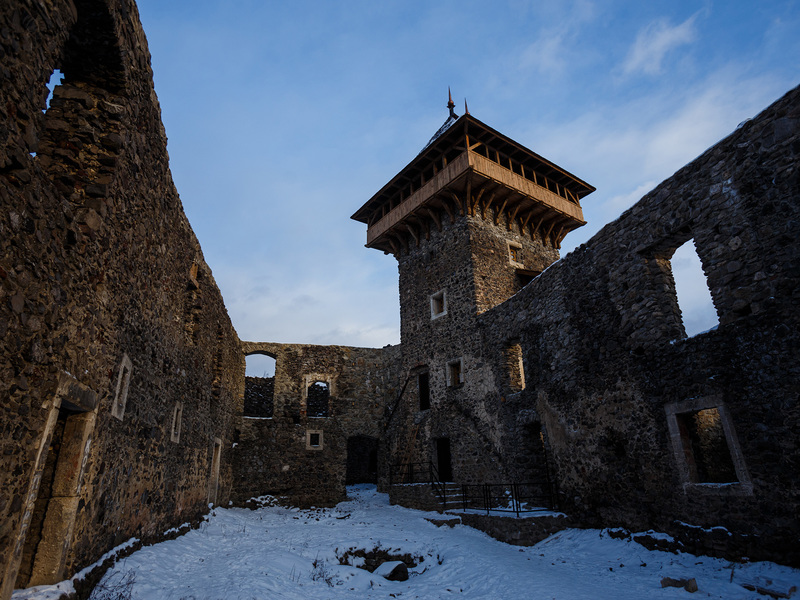
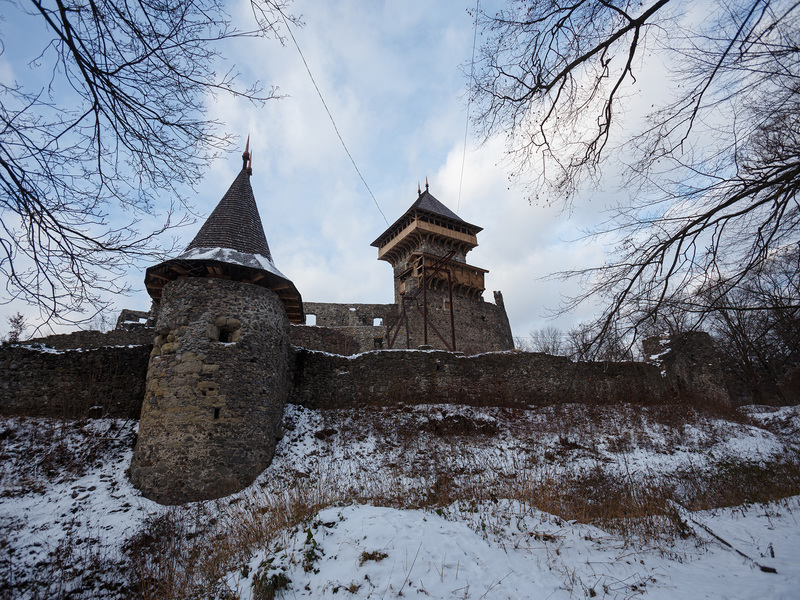
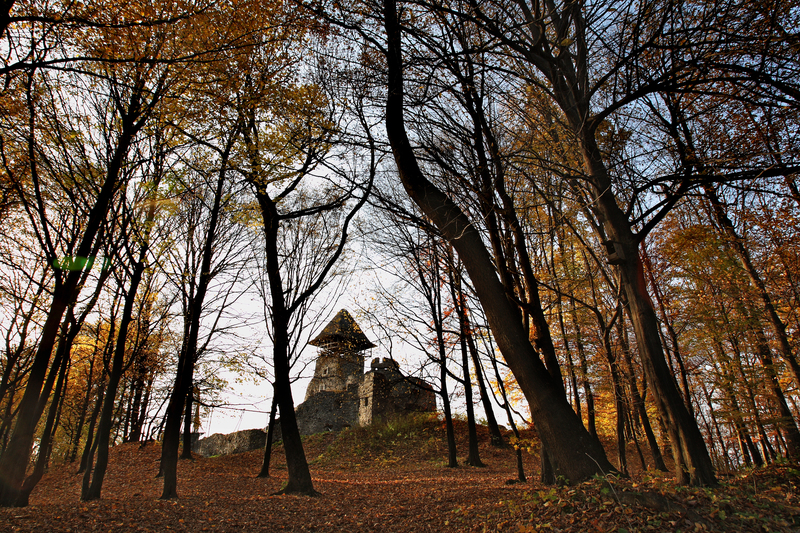
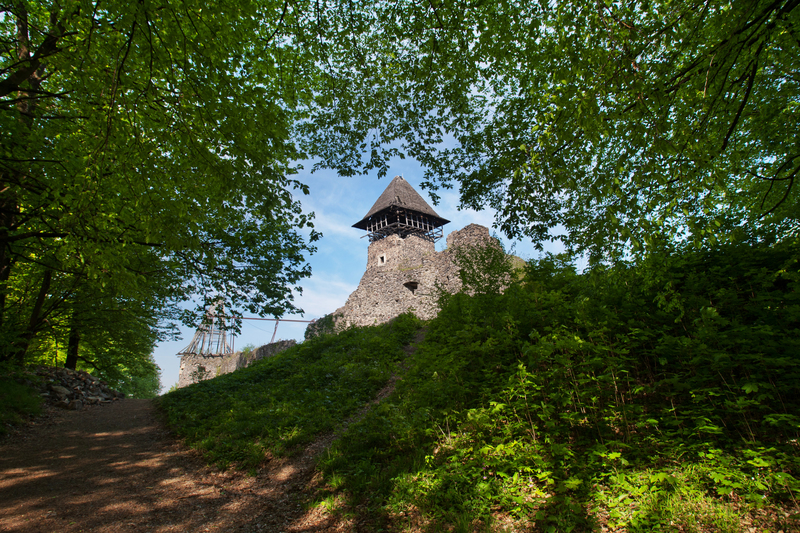
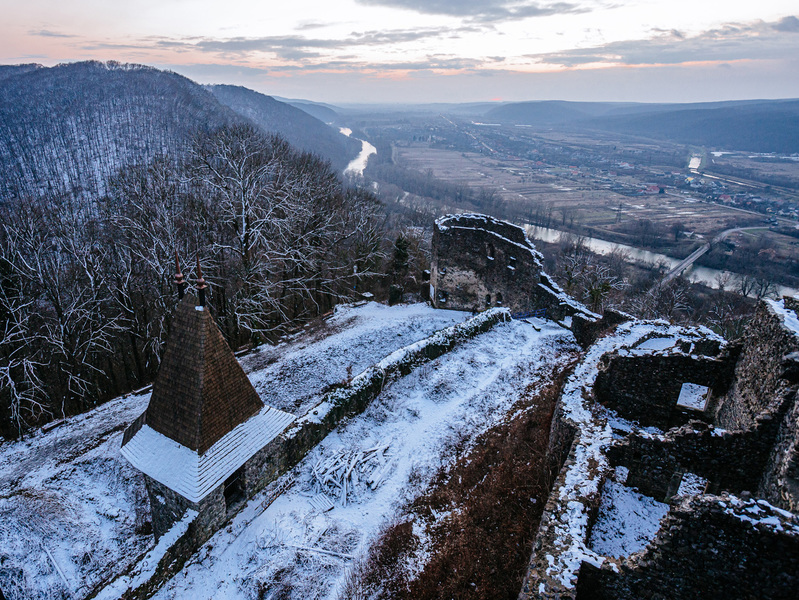
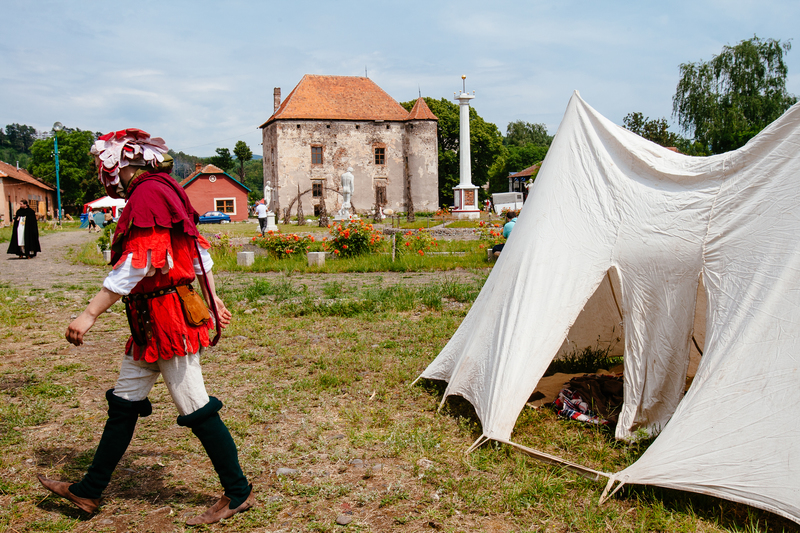
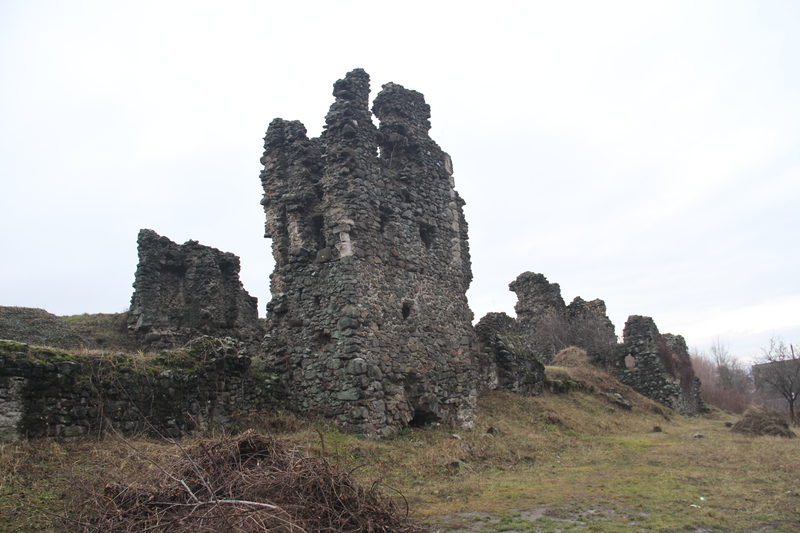
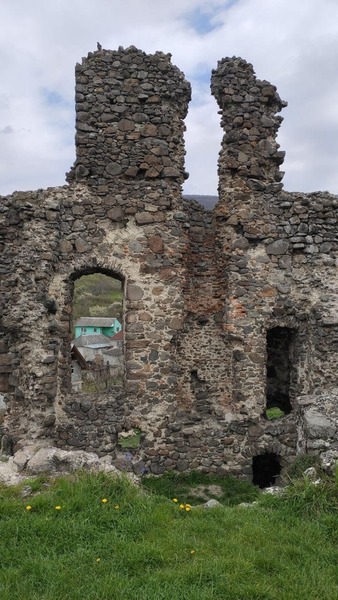
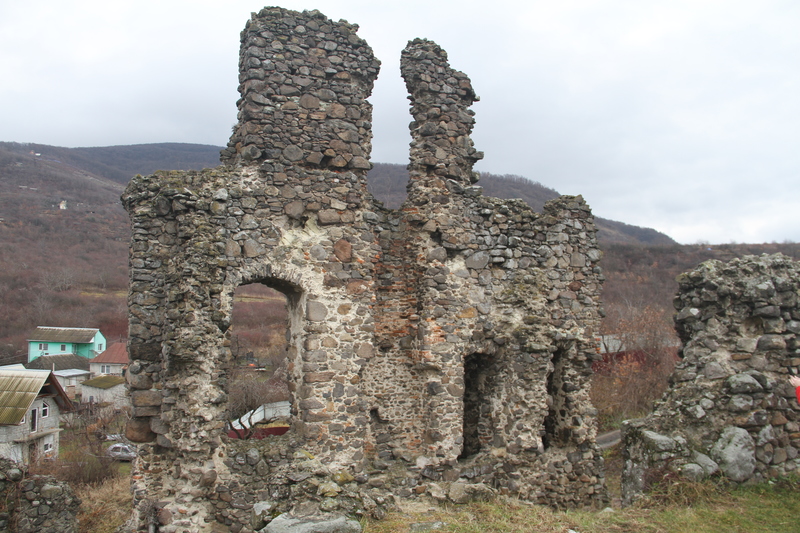
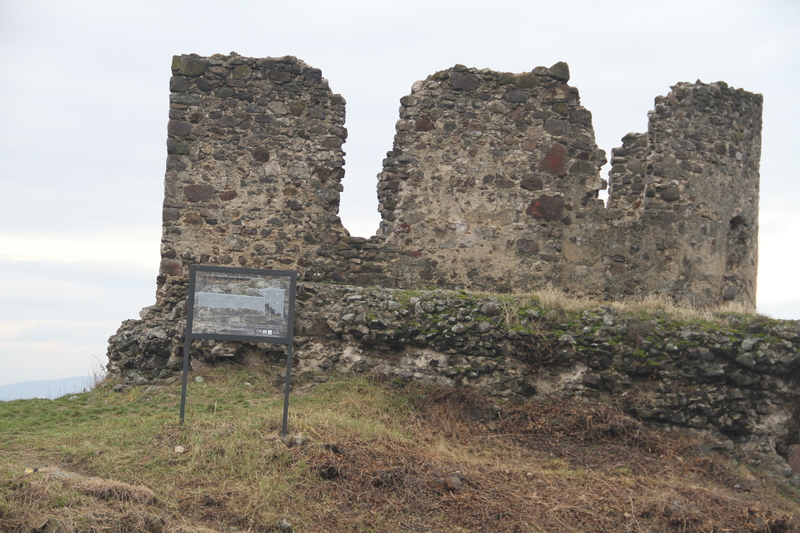
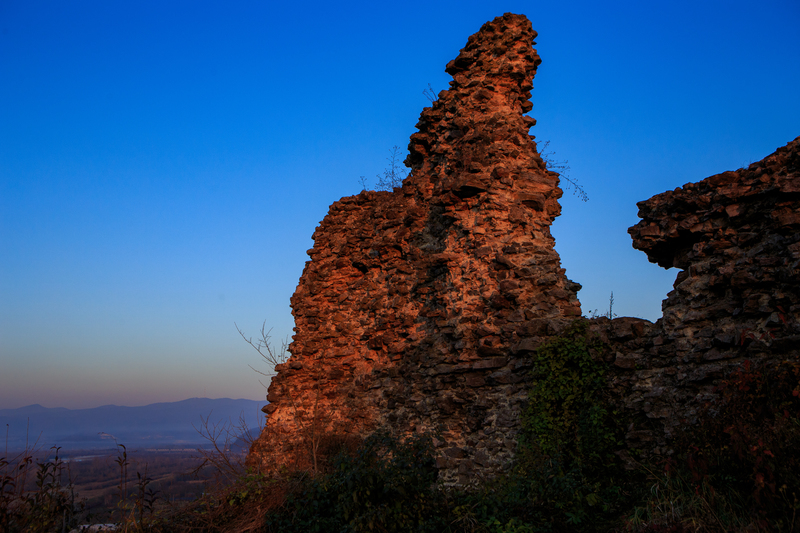
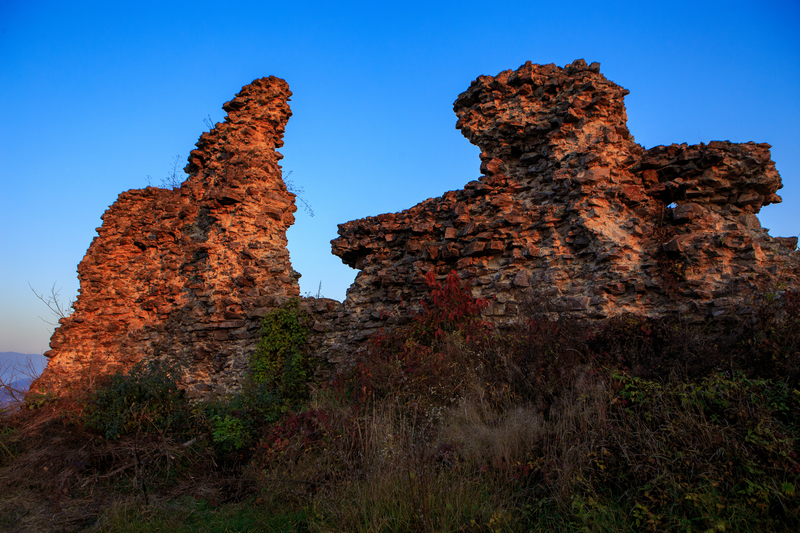
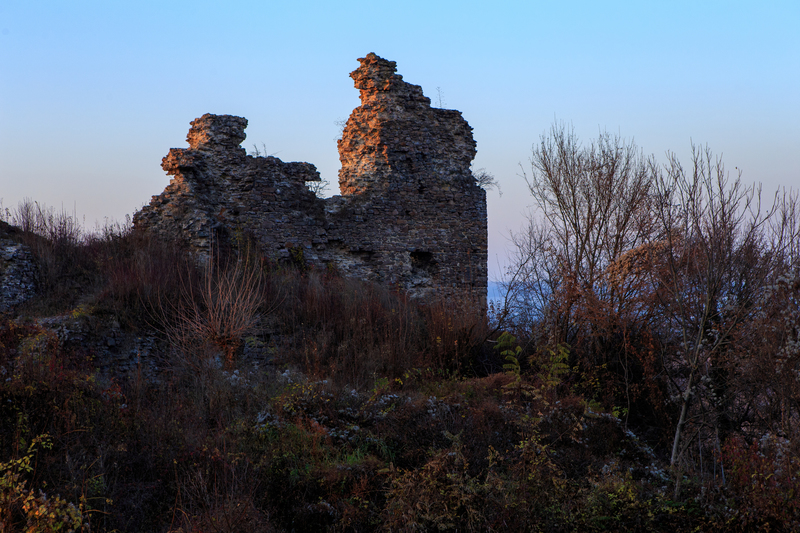
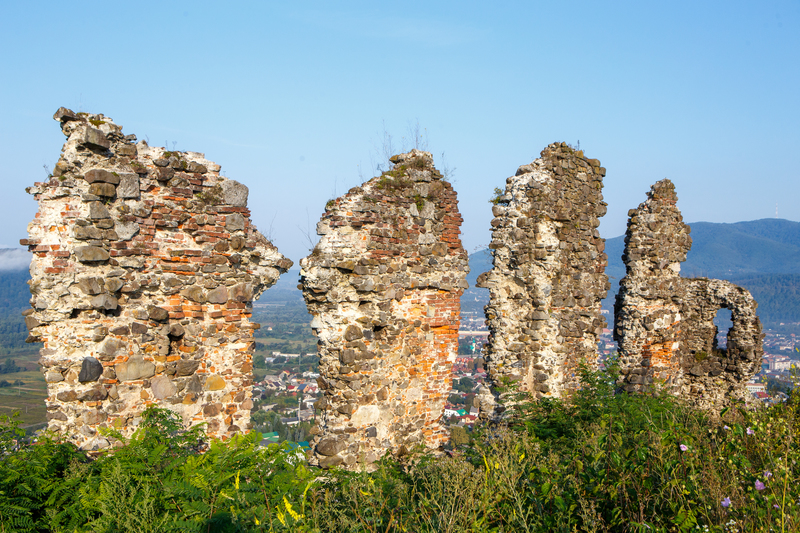
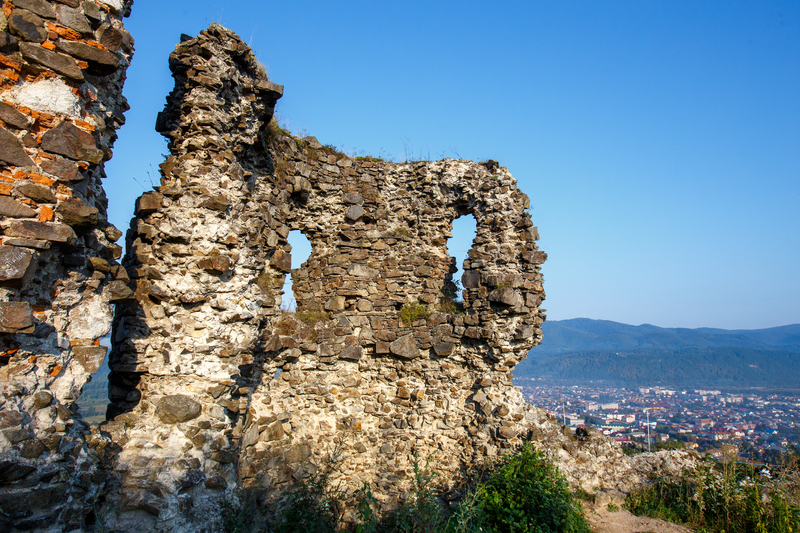
The history of Nevytske Castle begins as far back as the 12th century. At that time there was a small earthen hillfort, protected by ramparts and moats. Destroyed during the Mongol-Tatar invasion in 1241, the fortification was rebuilt in the second half of the 13th century.
In the 14th century, the flags of the new ruler, Carl-Robert Anjou, who defended his rights to the Hungarian throne with blood, iron and intrigues, were hoisted over the castle. In 1328, Anjou passed the castle and the surrounding lands to his faithful ally, Janos Druget. From that time until the ruination of the fortress in the middle of the 17th century, it was the Drugets family who owned the castle.
Throughout its history, being located on the border, the fortress controlled the route from Uzhok Pass. On the territory of the palisade, in addition to collecting the bevies, active trade was taking place. Its international scale can be evidenced by the found trade seal from Flanders – this is modern northern Belgium today.
After passing the palisade, you can see the moat dug in the middle of the 15th century. Water was supplied to it from a nearby mountain under natural pressure through wooden underground pipes. Interestingly, the moat was used not only for defense but also for fish breeding.
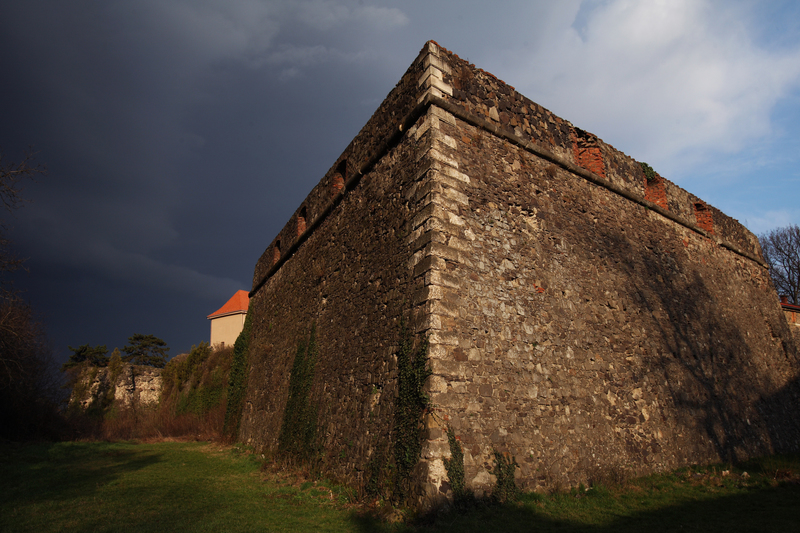
The wall in front of the moat was erected in the middle of the 15th century and was lower than similar buildings in previous epochs due to the fact that firearms began to be used.
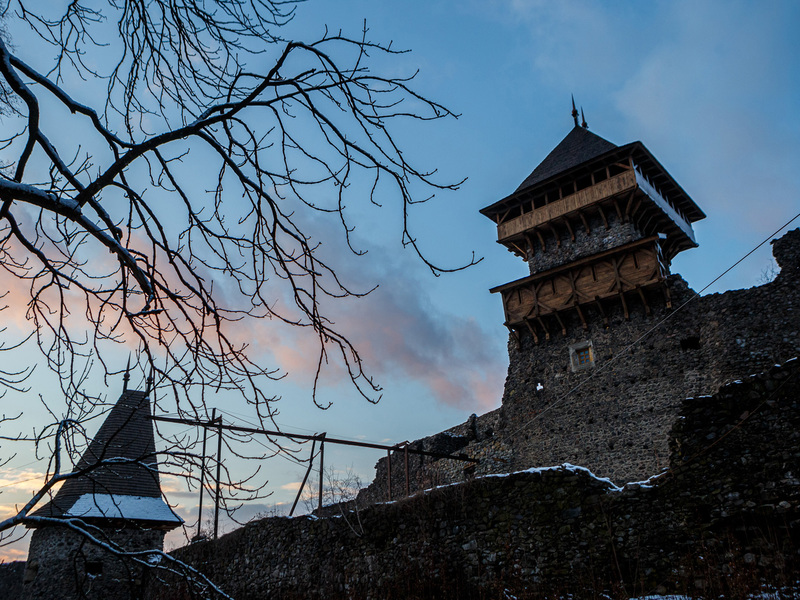
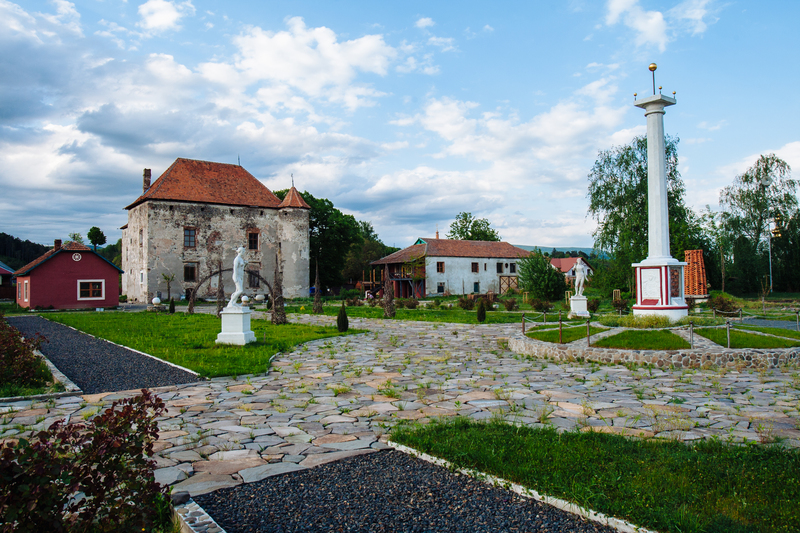
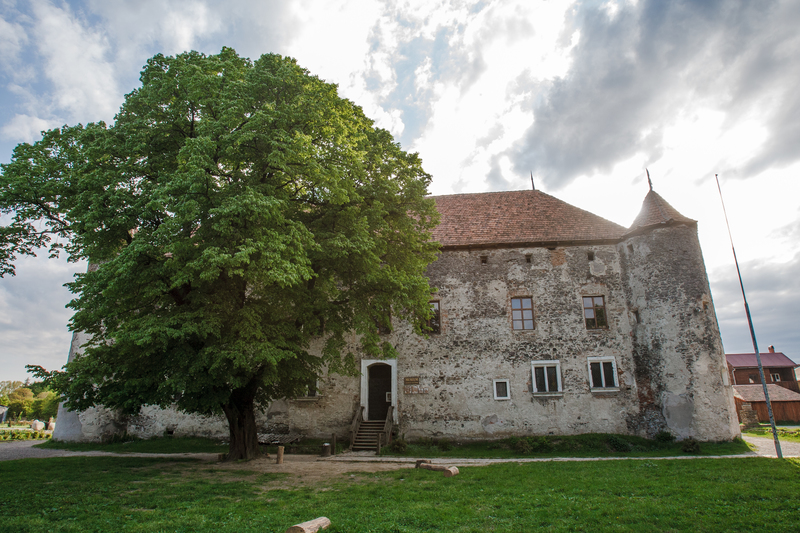
In the courtyard of the castle you can see the remains of the well reservoir and two donjons – the main towers of the fortress. In general, there were three towers like these in Nevytske Castle: in the second half of the 13th century a round tower was erected, which is not visible any longer, in the middle of the 14th century – a rectangular one, whose outline can be seen even now, in the middle of the 15th century the main tower was constructed, and it still stands there.
The history of the castle is connected with a bloody legend about the Evil Maiden. The princess ordered to take away breast milk from mothers and add it to the mortar to strengthen the walls. When the young children began to die, cries, fear and hatred swept across the area, a young man who lived in the nearby village, gathered a large army and finally defeated the Maiden.
In 1644, the Transylvanian army stormed the fortress and blew it up. Nevytske Fortress was not rebuilt since then.
Only at the end of the 19th century the ruins began to arouse interest. Here a lime alley was planted and a fountain was built. The park was dedicated to the famous Hungarian forestry scientist Carl Wagner. At the same time, the first restoration attempts were made, however, they were prevented by the First World War.
During the Czechoslovak period, the roof of the main tower was modified. Several attempts to fortify the ruins were made during the Soviet era.
In the 90s the fortress was explored by a volunteer expedition led by Oleksandr Dzembas. This archaeologist from Uzhhorod can rightly be considered the last knight of Nevytske Castle, as he has been working for a long time to preserve the historical heritage of the site.
The restoration of the main and outer towers began a few years ago. Now the panoramic site of Nevytske donjon is ready to receive guests again.
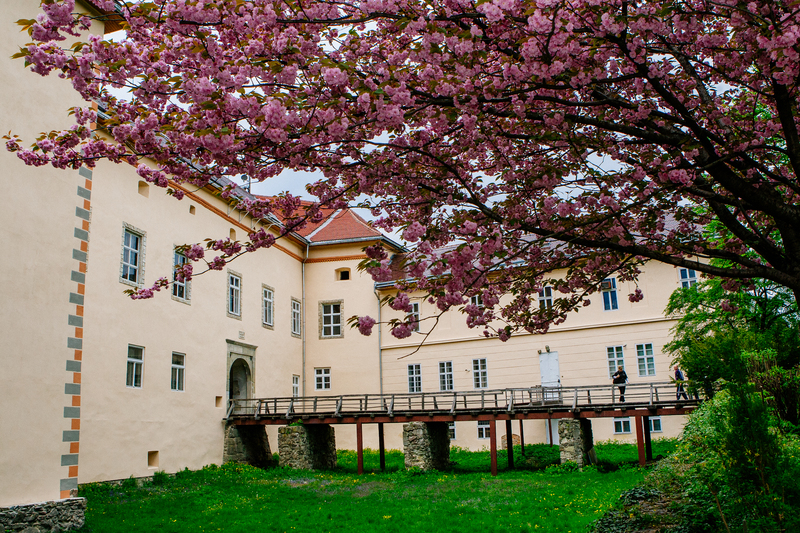
Uzhhorod Castle
The history of Uzhhorod is closely connected with the castle which you are contemplating now. The first mention of Uzhhorod Castle appears at the end of the 9th century.
As evidenced by the Hungarian chronicles of the late 12th century recorded by an unknown author, on the site of modern Uzhhorod at that time there already existed the Fortress of Hung, which was ruled by Prince Laborets. It was he who led the first armed resistance against the Hungarian tribes, who nevertheless captured the fortress. After that the Hungarian prince Almos transferred power to his son Arpad, who pursued the policy of further seizure of Pannonia.
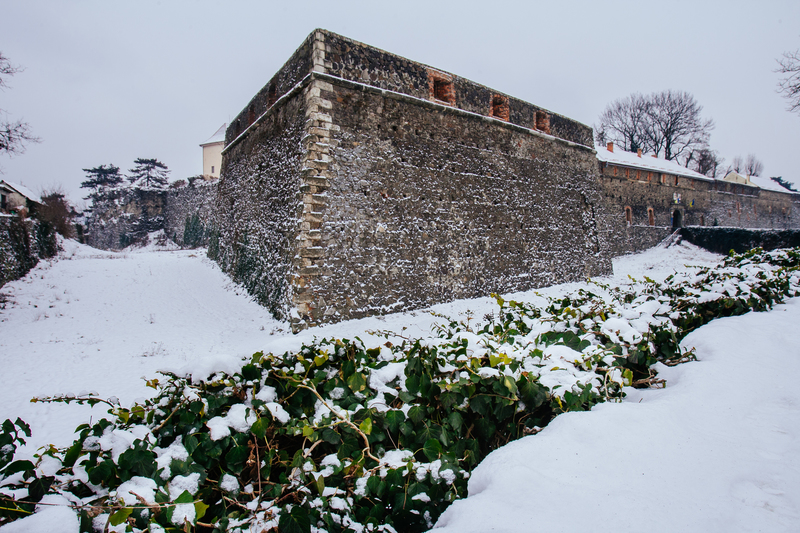
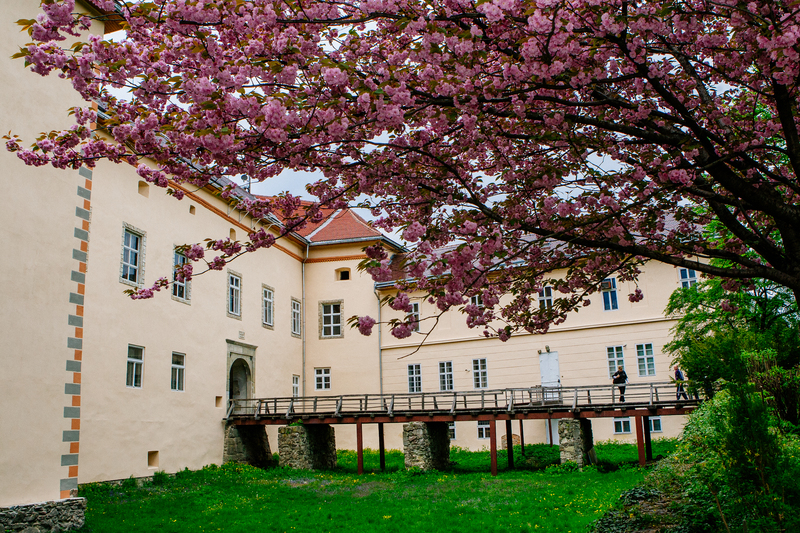
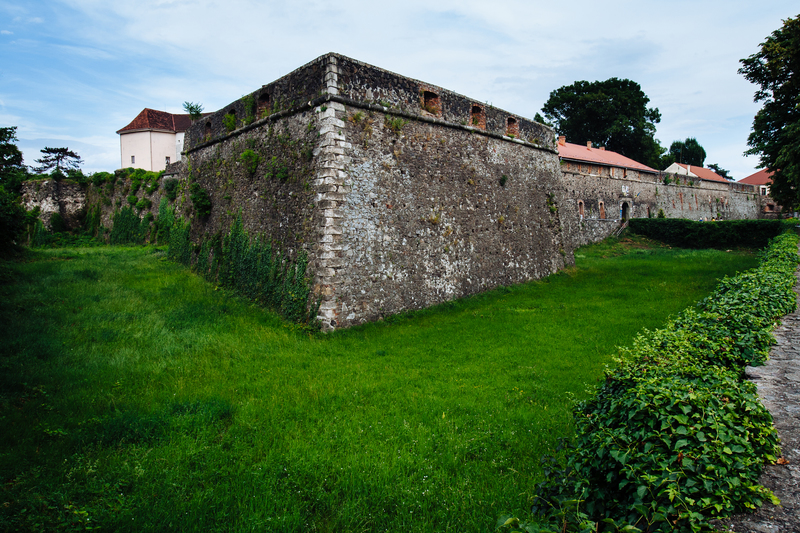
In written sources, Uzhhorod Castle was first mentioned in the 13th century, however, neither its size nor the appearance were described there at the time. The castle complex began to be actively rebuilt in the 16-17th century, and this is due to the wars between the Habsburg and Transylvanian parts of Hungary. In the middle of the 17th century, external defensive walls were built here, a dry moat was dug around the castle and a bridge to the gate was built. Uzhhorod Castle acquired its modern look at the end of the 18th century, when it lost its defensive significance.
It is a square-shaped castle with elongated corner bastions. On the first floor there were store chambers and barns, on the second – the chambers of the castle owners, a hall for banquets and receptions, on the third – guest chambers. On three sides the fortress was surrounded by a dry moat, and a drawbridge enabled one to reach the entrance gate. Another part of the castle ends with an abyss which protected it from attacks. The wall thickness here reaches 2.5-3 meters.
Above the entrance arch of the castle you can see a bas-relief with four blackbirds – part of the Druget family coat of arms. The inscription Anno Domini 1598, placed to the right, is obviously the date of one of the palace’s reconstructions.
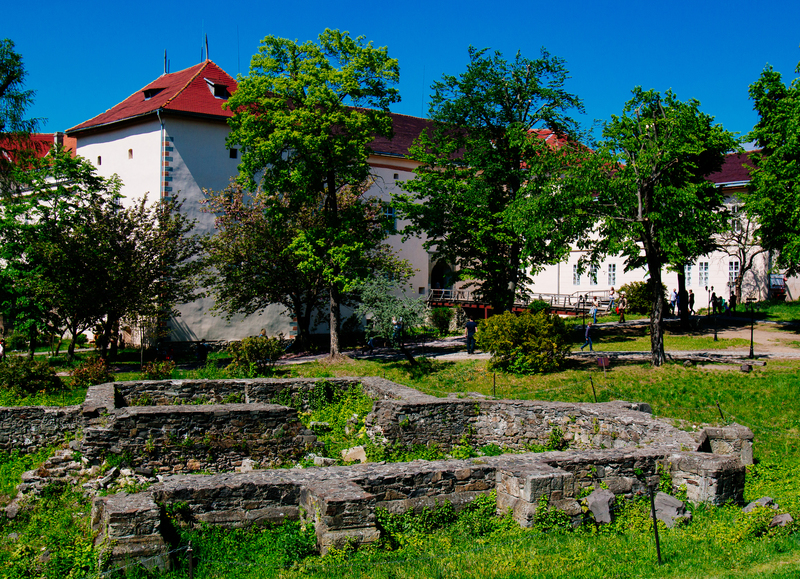
Entering the courtyard of the castle, you will see the ruins of St. George’s Church, which is one of the oldest stone monuments in Uzhhorod. The first mention of the monument dates back to 1248 and since 1284 some information about a local priest named Stefan is mentioned. There is a legend connected with the church. It tells us that during the Middle Ages there was the Witch Pit not far from it, the area where women accused of witchcraft were burned. On April 24, 1646, a great historical event took place in the church: when the Uzhhorod Church Union was signed, the Greek Catholic Church was established on the territory of modern Slovakia, Romania, Hungary and Zakarpattia. In 1728, it was destroyed by a terrible fire, its remaining parts were dismantled, and the rest was covered up with dirt.
The most prosperous period of Uzhhorod Castle occurrred at the end of the 17th century, when Count Miklos Berceni and his wife Krisztina Csaky ruled here. On the slopes and at the foot of the Castle Hill numerous parks and gardens were laid out, where the spouses used to arrange social receptions and official celebrations. One of those parks that has survived to this day is «The Menagerie», which is visible from the bastion behind the Museum of Folk Architecture and Life. The park was founded with the aim of breeding wild animals for the count’s hunting. The oldest tree in Uzhhorod, the plane tree, has been growing on the territory of the park since the days of the Drugets.
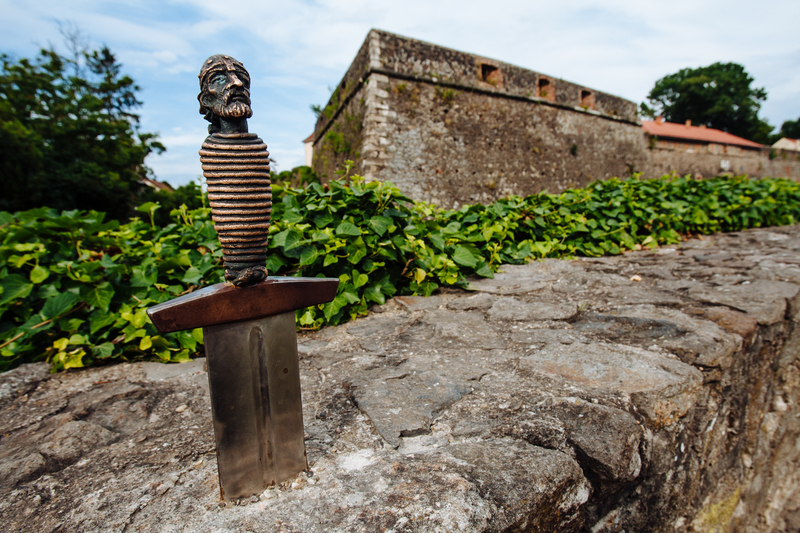
In the inner courtyard of the castle you can find a well whose depth is about 40 meters. It was hollowed out in the rock on which the castle was erected, approximately in the 16th century. However, this is not the only source of water in the fortress, another one is situated in the castle dungeons. The entrance to the dungeons is located in one of the corners of the courtyard. Today the torture chamber exposition, which in ancient times was arranged in this part of the castle, functions there. In 2012-2013, the busts of Count Miklos Berceni and Countess Krisztina Csaky, the last prominent owners of the castle, were installed in the courtyard.
At the beginning of the 18th century, after the defeat of the anti-Habsburg uprising of the Hungarians, the spouses Berceni and Csaky were forced to flee abroad. With their departure, Uzhhorod Castle became the property of the Austrian Crown.
Since 1947 the castle has been used as the local history museum and remains one of the most visited tourist attractions in Uzhhorod and Ukraine.
Serednie Castle
Serednie Castle, whose remains you can contemplate now, is still referred to by many as «the only castle of Templars in Ukraine». This legend appeared owing to the Zakarpatian historian and ethnographer Petro Sova, who misinterpreted the term «red brothers» from the Hungarian chronicles. This is how both the Templars and the Pauline monks were called in the Kingdom of Hungary during the existence of Serednie Castle. There could be no Templars in Zakarpattia, in fact, the Order was dissolved in 1312, whereas Serednie Castle was built much later. Yet, according to historians, the Pauline monks built a monastery in the village of Vovkove in the 15th century. They are, apparently, these «red brothers» mentioned in the ancient chronicles.
Serednie Castle had a rectangular shape, once there was also a tower 20 meters high. Looking inside, you can see the ceiling of the basement where there were 2 chambers connected by a small passage. Above the basement there was a large hall with narrow windows with the entrance to it on the east side of the building. The roof was covered with wooden tiles. In the northeast corner you can find the entrance to the cellar. However, we do not recommend going inside because the fortress is waiting for its conservation.
Several outbuildings were located in the courtyard of the fortress. Stone walls protected Serednie Castle. Around the estate there were built several defensive lines of earthen ramparts and moats, which were filled with water from the Vela river. The total perimeter of the fortification reached 200 by 200 meters. Historians believe, in order to construct the castle there were used the stones mined in the process of building the wine cellars, which Serednie is famous for.
Serednie Castle was built in the 15th century by the Palochi Dynasty. When the last member of this family was killed in the battle of Mohacs in 1526, the fortress, together with the surrounding lands, passed into the possession of the Dobo family. Its most famous representative, Istvan, being among the winners of the Battle of Eger, was enjoying his glory. A hero on the battlefield, he was a real bandit in ordinary life. He resorted to the looting and arson of estates, traded with Poland bypassing the royal customs, smuggled wine to Poland, committed violence against competitors, which provoked a conflict with another powerful family – the Pereni family. Istvan Dobo was imprisoned on charges of treason, and most of his possessions were confiscated. Returning from prison to Serednie, he died in 1572.
In the 17th century, the Rakoczi family owned Serednie Castle and the surrounding lands. The estate survived several attacks by the Carpathian robbers known as opryshky. During Ferenc II Rakoczi’s war against the Austrian monarchs, the fortress was badly damaged.
In the 18th century, the locals began dismantling the once majestic building to construct their own houses. Only the ruins of Serednie Castle can be seen today.
Chynadiievo Castle
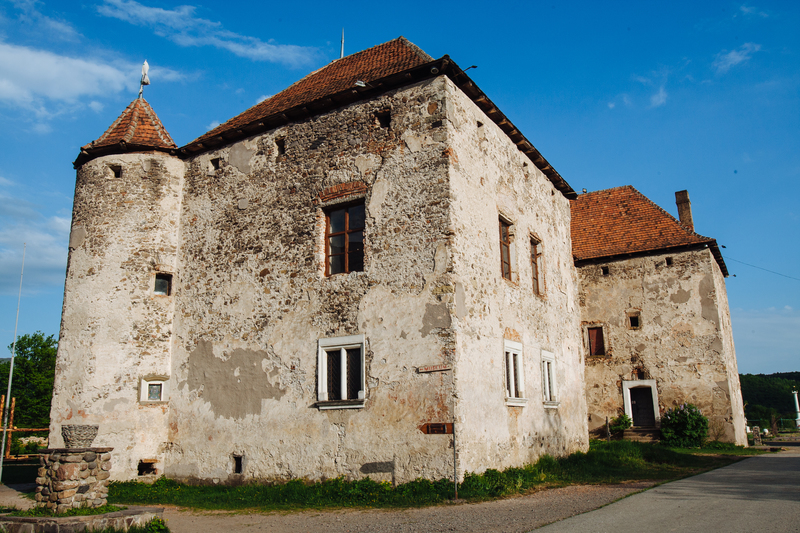
Chynadiievo Castle is also known as «St. Miklos Castle». The history of the palace goes back to as early as the 15th century. «Szent Miklos» is translated from the Hungarian language as «Saint Nicholas», and this is how the village, which would then turn into Chynadiievo, was called at the time of constructing the castle.
Founded by Baron Pereni, the castle was once the heart of St. Miklos dominion. It served to protect not only the local settlement, but also «Ruski Vorota» Pass which was located nearby. The two-storey building with the walls 1 metre thick, window embrasures and two mighty towers was well protected by ramparts and moats, and the ramified system of deep cellars and secret passages between double walls has survived to this day.
St. Miklos Castle has never been a family estate of the same dynasty, and in different periods of history it belonged to different owners, which was reflected in the style and interior of the castle.
In 1657, the fortress was badly damaged by Polish troops. It is the time when the castle started to gradually lose its strategic value as a defensive structure.
In 1682, the romantic love story of Ilona Zrini and Count Imre Tekeli began within the walls of the castle. She is a charming Hungarian countess, in fact the leader of the anti-Habsburg Hungarian liberation movement. Count Imre Tekeli is 14 years younger than the countess. He is a Transylvanian aristocrat, the leader of the Kuruz rebel movement. All Europe was watching their love with bated breath. Until, in the liberation wars with the Austrians, Imre Tekeli left for Turkey, and later, after conducting a relentless defense, but finally being defeated, his beloved Ilona Zrini joined him.
The fortress lost its strategic defensive significance in the early 18th century. After the defeat of the Hungarians in the Anti-Habsburg War, the castle was taken in possession by the Austrian noble family of Schönborn. The new owners razed the fortification to the ground and founded a park here, thus converting the once strategic castle into a palace.
During World War II, German occupants set up a prison in Chynadiievo Castle. In the Soviet period, the village council, the local forestry administration, the military unit and the motor depot were located here in turn.
In 2001, the Zakarpatian painter Yosyp Bartosh, became the new owner of the castle. He takes care of the the estate to this day. Chynadiievo Castle is the only one in Ukraine, which was under concession, and the new owner obtained it at the cost of huge efforts. Before Yosyp Bartosh started to rent the castle, he lived abroad, where he learned four languages. During the first months of managing the estate, he first rented an apartment in Chynadiievo, getting to the castle every day on foot. Later he moved to the palace, where he and his wife lived for a long time without water and heat. Indeed, there were no basic living conditions in the castle of the 15th century, which until then was of no use to anyone. These were Yosyp Bartosh along with his wife Tatiana and those of like mind who actually saved Chynadiievo Castle from decay and destruction breathing new life into it.
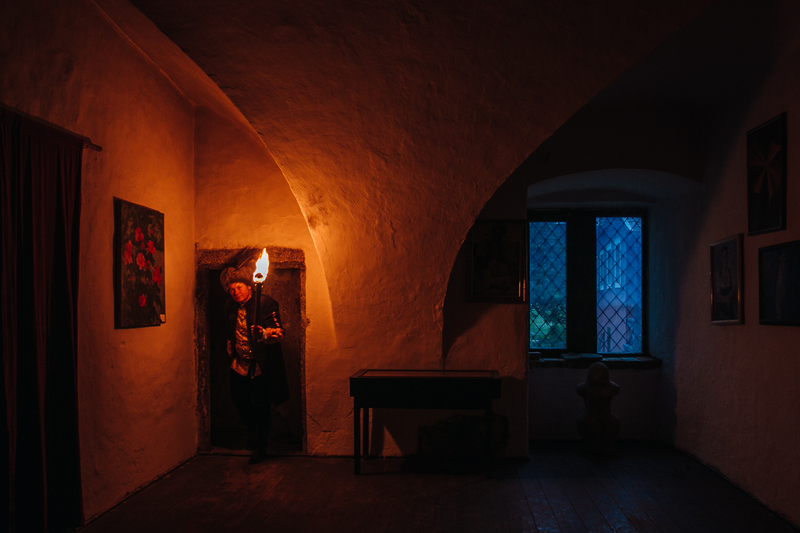
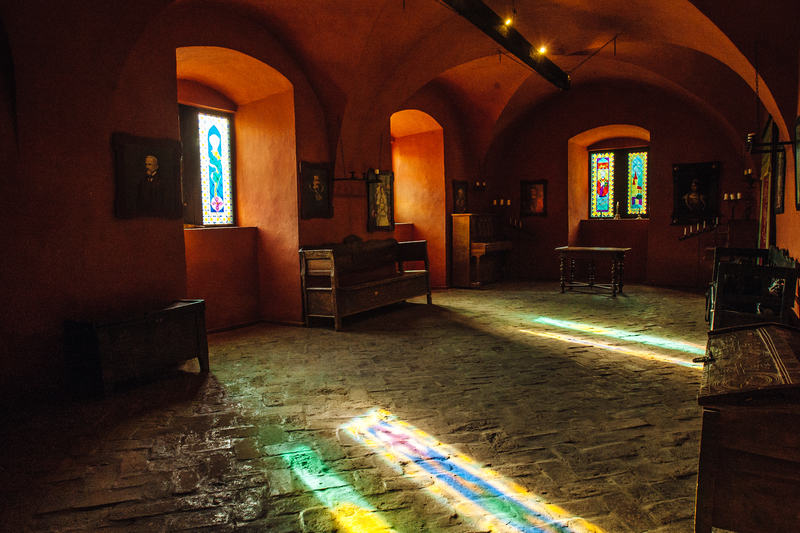
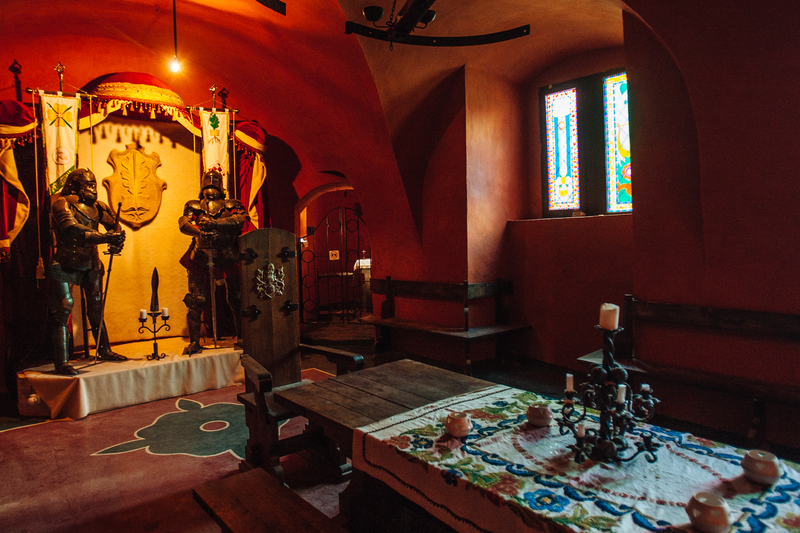
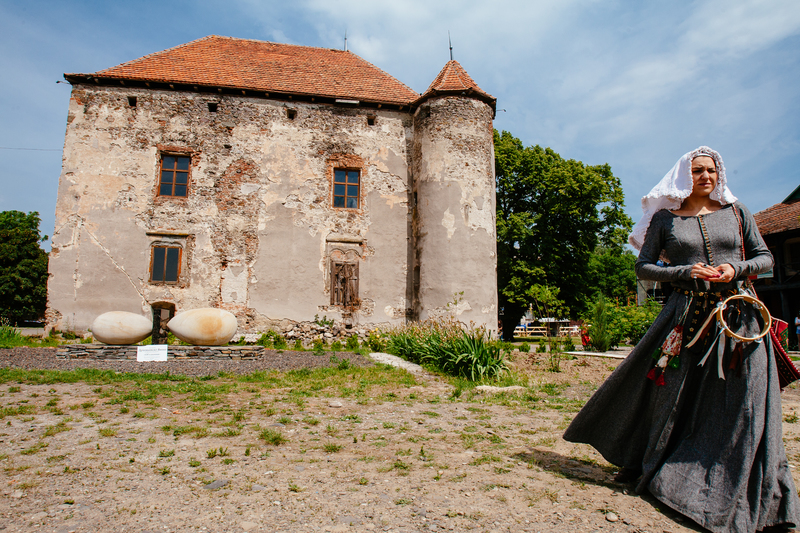
Guests in Saint Miklos Castle today are greeted by a portrait of the legendary Ilona Zrini, with whom the history of this castle of love is inextricably connected. The portrait was painted by Yosyp Bartosh himself. The large knights’ hall houses exhibitions of Scythian and Celtic cultures, and the walls are decorated with portraits of the owners of the castle from different eras. Here you can also see an exhibition of shkriabanky (dyed eggs on which various patterns are created by scratching with a sharp object) made by the mistress of the castle, the wife of Yosyp Bartosh – Tatiana Bartosh. There also functions a library in the castle, where there are books from the collection of Count Schönborn. The second floor has not been restored yet. Therefore, visitors are asked to behave carefully and quietly here, so that bricks on the edges of the masonry, which can be seen through holes in the plaster, do not crumble.
Tours of the castle are held annually and cost symbolic money, which is then used to reconstruct the estate. During the tours, guests are told, among other things, about the skeleton found in the wall during the reconstruction. This find is explained by the medieval tradition of immuring a person alive in one of the walls after the construction of the fortress, which seemed to improve the defensive capacity of the building.
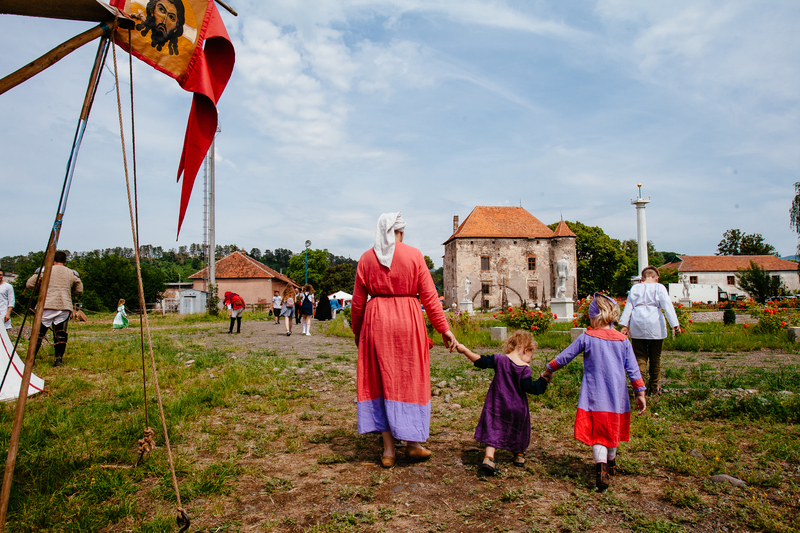
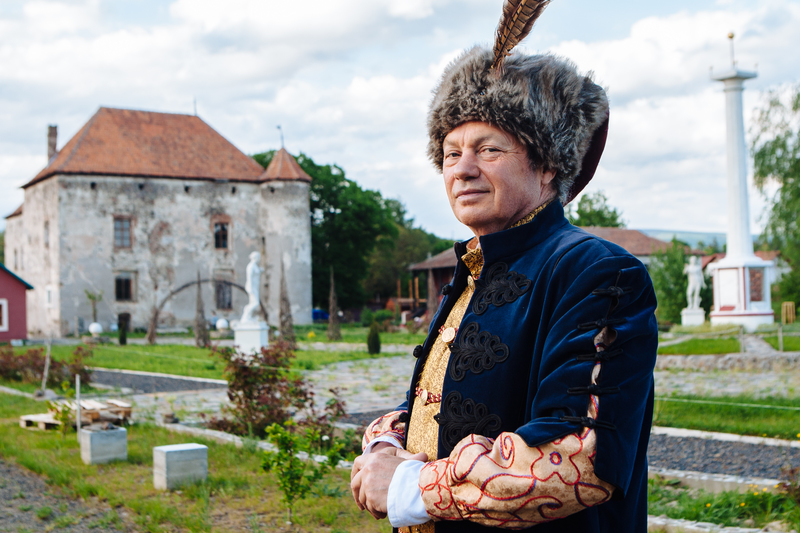
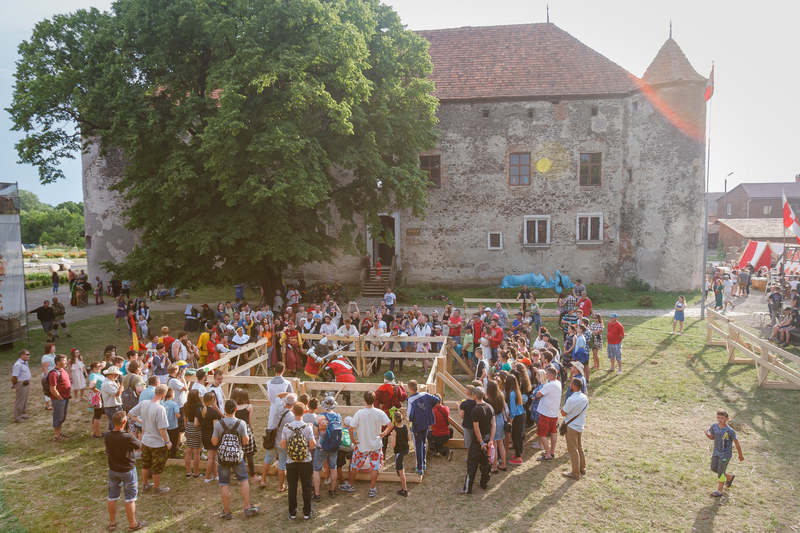
Whatever happened in Chynadiievo Castle in the Middle Ages, today this elegant historical estate, which has the status of an architectural monument, is a real center of cultural and artistic events. Admittedly, on the territory of the castle a large-scale festival of medieval culture «Silver Tatosh» has been held for a few years. During several days of the festival, knightly duels and buhurts, a medieval fair and atmospheric performances of musicians and dancers are taking place here.
In spring, Chynadiievo Castle turns into the «flower kingdom»: florists from all over Ukraine gather here for the festival «Love in Saint Miklos», where they create a variety of flower arrangements. Floristic installations during these days are everywhere in the castle: in chambers, basements, outdoors.
In winter, it has become a good tradition to arrange «St. Nicholas Residence» in the estate. During the period of Christmas and New Year, children can either talk to Saint Nicholas or take pictures with him, or leave their letters of wishes in the box.
However, the cultural and artistic life of the castle flourishes all year round, regardless of the season. Literary and musical evenings as well as festivals, art plein-airs and various art master classes are constantly held here. And yet the castle is a favorite place for lovers to hold wedding ceremonies. It is not surprising, though: marked by the great love of Ilona Zrini and Imre Tekeli, this place with its long history seems to bless lovers for a happy and long married life.
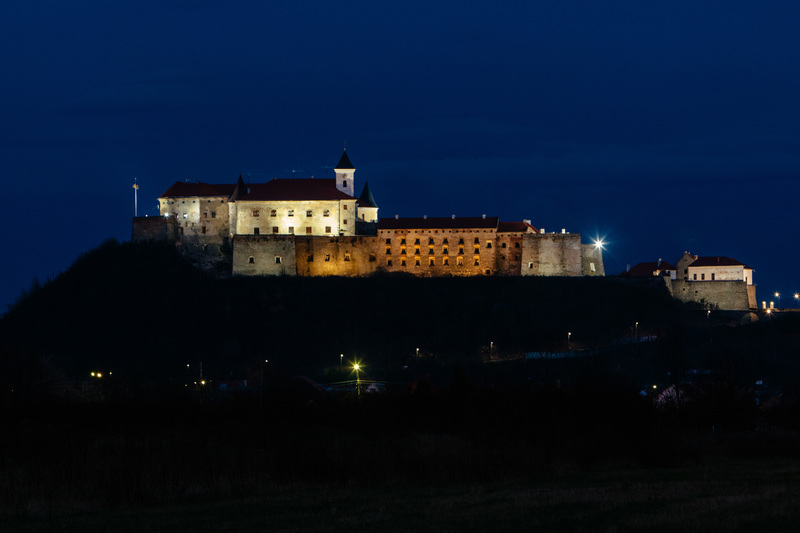
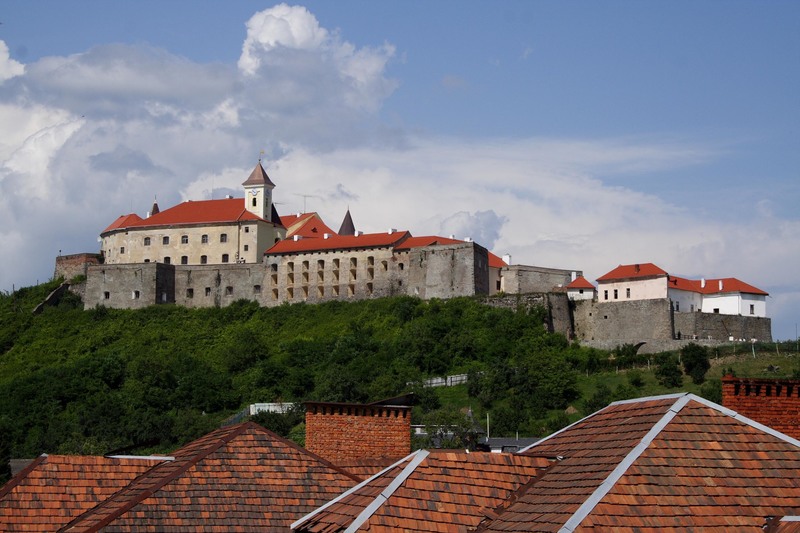
Mukachevo Castle
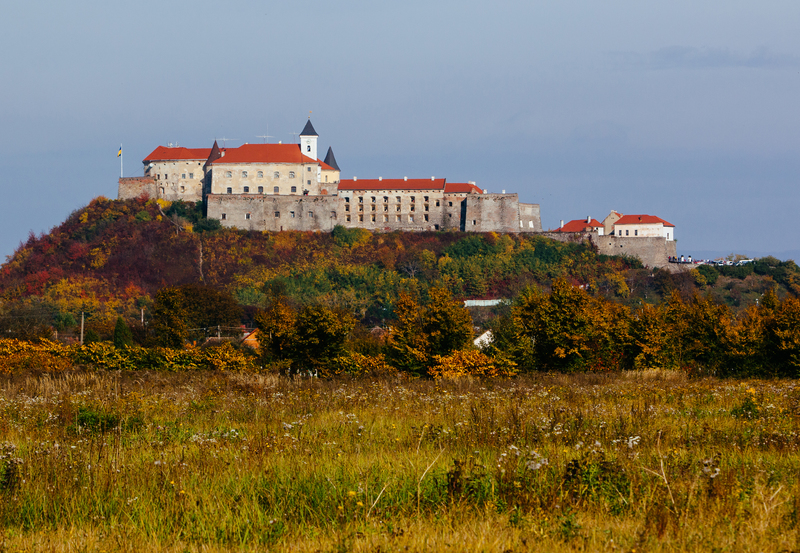
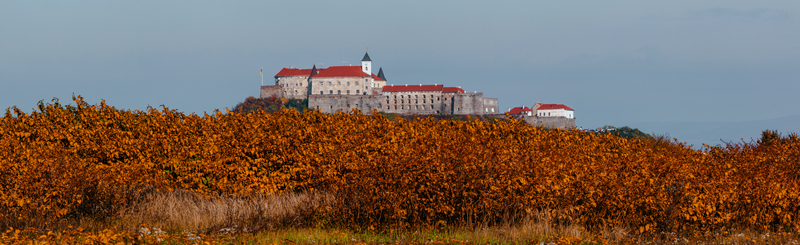
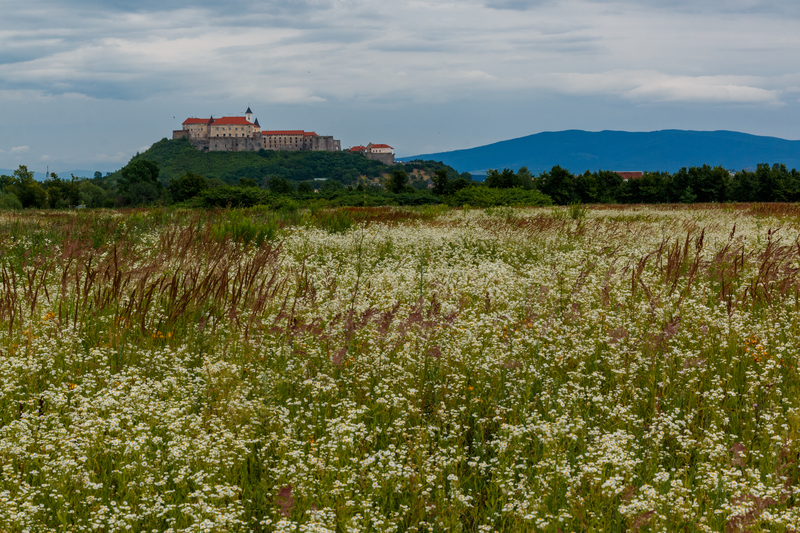
Mukachevo Castle is one of the most powerful and beautiful fortresses in Ukraine. An architectural gem of Zakarpattia, the castle has lived through several historical eras and today attracts many thousands of tourists every year.
Another name by which Mukachevo Castle is known is “Palanok”. This name began to be used only in the 1920s, during the Czechoslovak period. It came from the village of Várpalánka, which literally means “Castle Palanok”, or simply “Palanok”.
Mukachevo Castle was built on a hill that is an extinct volcano. The first mention of the fortress dates back to the 14th century. In 1311, after the murder of the magnate Amadeus Aba in Košice, the Hungarian king Charles Robert of Anjou confiscated a number of his possessions, including the castle in Mukachevo.
Until the end of the 14th century, the fortress remained in the possession of the crown. Later, its owners included Fedir Koriatovych, the Serbian despots Stefan Lazarević and Đurađ Branković, as well as the Hunyadi family. From the end of the 15th century, the fortress once again returned to the possession of the crown.
In 1528, János Zápolya became the new owner of the estate and appointed Mihály Büdy as captain and governor of Bereg County. During Büdy’s captaincy, the most famous counterfeiter of the 16th century, Master Miklós, worked in the castle for some time.
Over the following century, Mukachevo Castle changed owners several times. Eventually, in 1633, the fortress passed to the Rákóczi family. Under the rule of the Rákóczis, the castle was expanded and transformed: a moat was dug around its foot, and a protected settlement appeared near the castle. Some time later, a member of the Rákóczi family, Ferenc I, married Ilona Zrínyi, the daughter of a Croatian ruler. It is with her name that the most heroic pages in the history of Mukachevo Castle are associated.
When Ferenc Rákóczi I died, Ilona Zrínyi continued her husband’s liberation struggle against the Austrian crown, leading the anti-Habsburg movement. In 1682, she married for the second time — to the Hungarian count Imre Thököly, who was 14 years younger than her. The wedding was celebrated in Mukachevo Castle for eight days. In 1685, Austrian troops began a siege of the fortress, which lasted for 2.5 years. In 1703–1711, the fortress in Mukachevo was one of the centers of the national liberation war led by Ferenc II Rákóczi, the son of Ilona Zrínyi.
After the defeat of the anti-Habsburg movement, Mukachevo Castle passed into the possession of the Austrian crown. During this period, the fortress underwent significant modernization: some of the towers were dismantled, and bastions and semi-bastions were built in their place. These structures have survived to the present day.
In 1722, after the First Partition of the Polish-Lithuanian Commonwealth, with the expansion of Austrian power and the shifting of the border, the fortress in Mukachevo lost its strategic importance. In 1787, most of the cannons were removed from the castle, and a few years later the first prisoners appeared there. From 1782, the fortress housed a political prison of the Austrian monarchy, where all those who dared to oppose the will of the crown were sent. The prison in the castle was closed in 1896 in honor of the arrival of the Hungarians in Europe.
In June 1834, a major fire in the castle destroyed the utility buildings and the interior decoration of the chapel. At the insistence of the governor of Košice, the fortress was repaired after the fire.
On 29 April 1915, the first public Shevchenko celebration in Zakarpattia took place on the terrace of Palanok. Around one thousand Sich Riflemen, as well as many guests from Mukachevo and the surrounding area, gathered for the event.
During the Soviet period, starting in 1973, a barbaric restoration began in the castle, during which the commandant’s house was dismantled and the upper rooms were looted.
After Ukraine gained independence, a monument to Fedir Koriatovych was installed in Palanok in 1996. In 2006, a sculpture of Ilona Zrínyi with her son Ferenc and a clock on the tower appeared there. In 2008, speleologists cleaned the well and installed the Turul.
By the way, make sure to stop by the monument to Fedir Koriatovych and, holding his finger, make a wish. It is said that the bronze prince will fulfill even the most secret wish within a year, so do not miss this opportunity.
Borzhava Castle
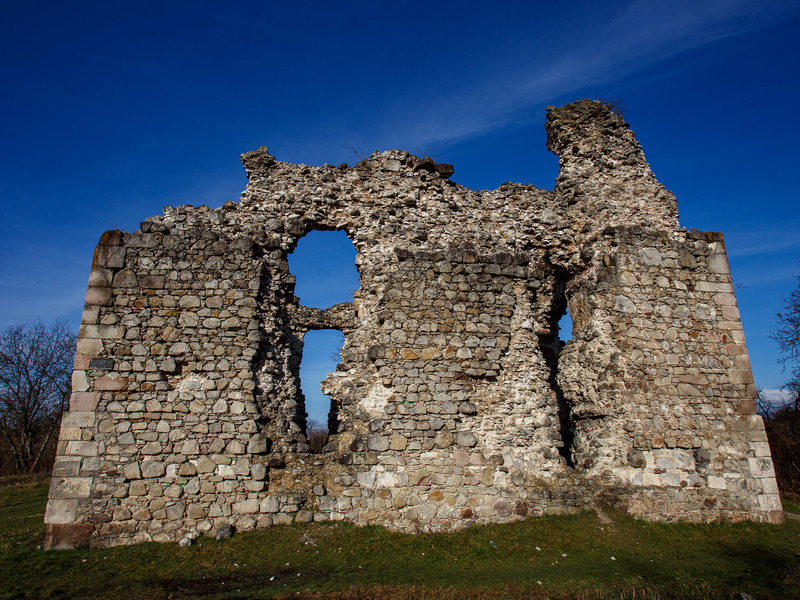
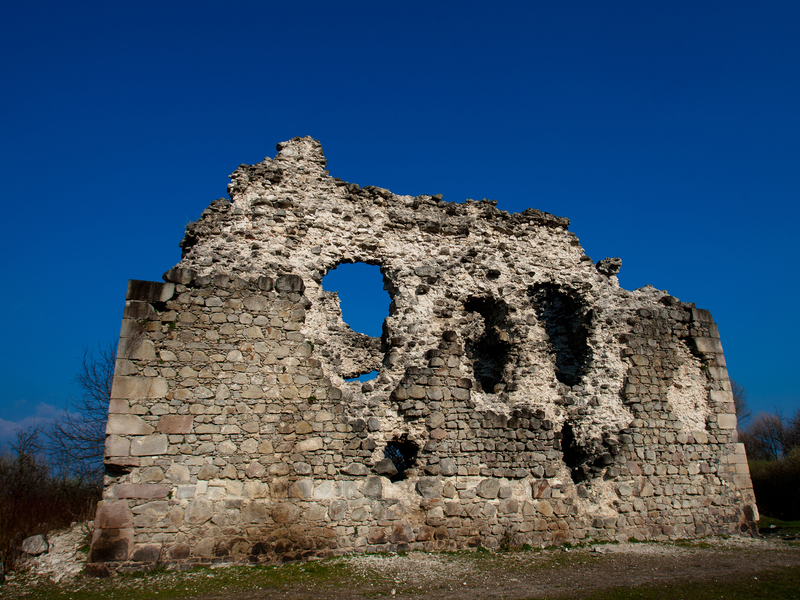
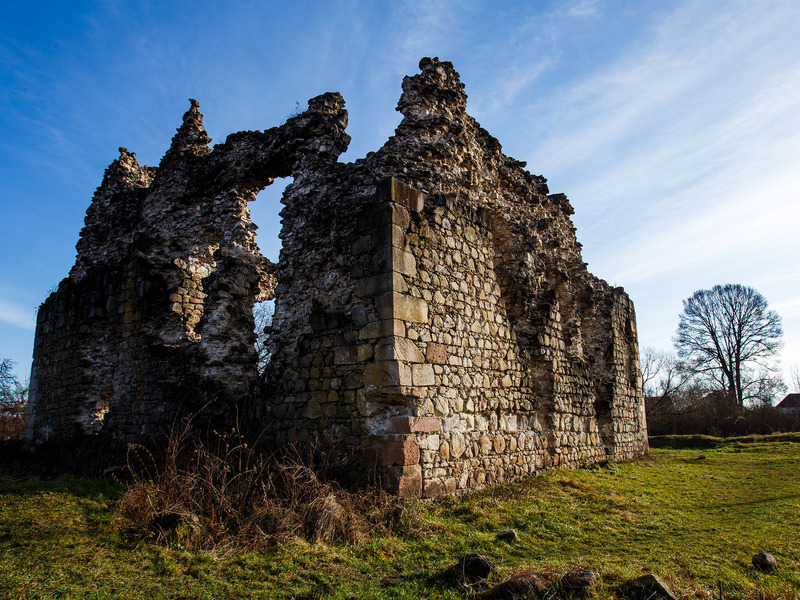
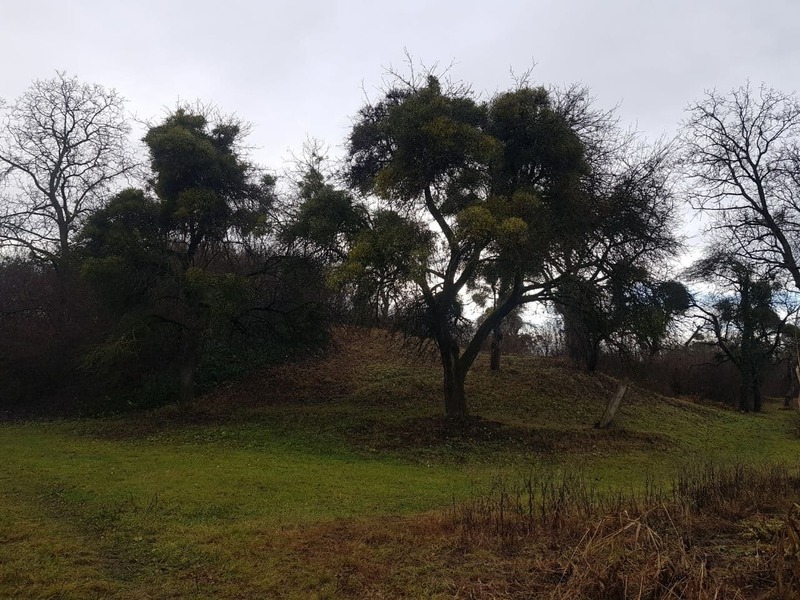
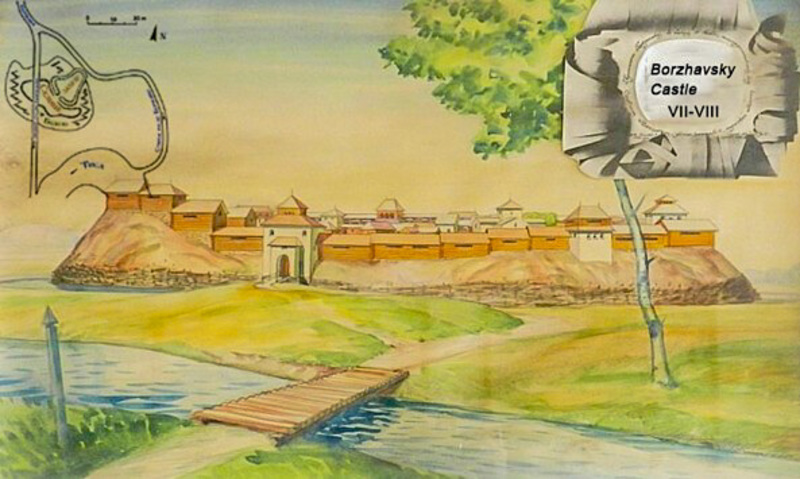
Borzhava Castle in the village of Vary, Berehove district, is considered to be one of the oldest fortifications in Ukraine. Today, alas, what is left of the castle can hardly be called an architectural object, and it is solely of archaeological interest. There one sees a meadow overgrown with grass and bushes. And only fragments excavated from the ditches and ramparts on the site of the ancient settlement provide an opportunity to imagine the size of the castle that disappeared in the course of history.
The castle was big indeed: the fortification system was located on a triangular site measuring 120 * 110 meters, between two rivers – the Tysa and Borzhava, which did not meet. From the other sides, the fortress was surrounded by swamps, which significantly increased the defensive capacity of the fortification, limiting access to it.
Researchers disagree on the exact date of origin of Borzhava Castle. According to the chronicles, it existed as early as 903: the fortification is mentioned in the oldest Hungarian chronicle by an unknown author, who is called Anonym or Anonymous.
In the 11th century, when the Hungarians dominated these lands, a real stone castle began to be erected on the site of the hillfort and its construction was completed in the 12th century. In 1214, Borshov comitat-zhupa was formed around the castle. The first reliable written mention about Borshovar («var» is translated from Hungarian as a castle), that is, Borshov castle, refers to 1320. Prior to that, information about the fortress is found in the chronicles.
However, not all historians adhere to the version set forth in Anonym’s Chronicle. A number of researchers attribute the fortifications near the village of Vary to the Hungarian hillforts of the later period – 10-11 centuries.
It is not known for certain when exactly and under what circumstances Borzhava castle was destroyed. According to one version, the fortress fell during the Tatar-Mongol invasion led by Batu khan in 1241-1242. Other sources state the fortification could have been destroyed later, in the 14th century, during the period of internecine strife in the Hungarian kingdom.
After the destruction and decline of the castle, the local population used its remains as building material. One of the towers of the fortification, preserved in relatively good condition, was adapted by people for a chapel. But it was finally destroyed in the middle of the 17th century, during the attack of Polish troops during the war between Transylvania and the Polosh-Lithuanian Commonwealth.
Professional archaeologists began to take interest in the remains of the castle already in the 20th century, and the first official exploration here was carried out in 1961.
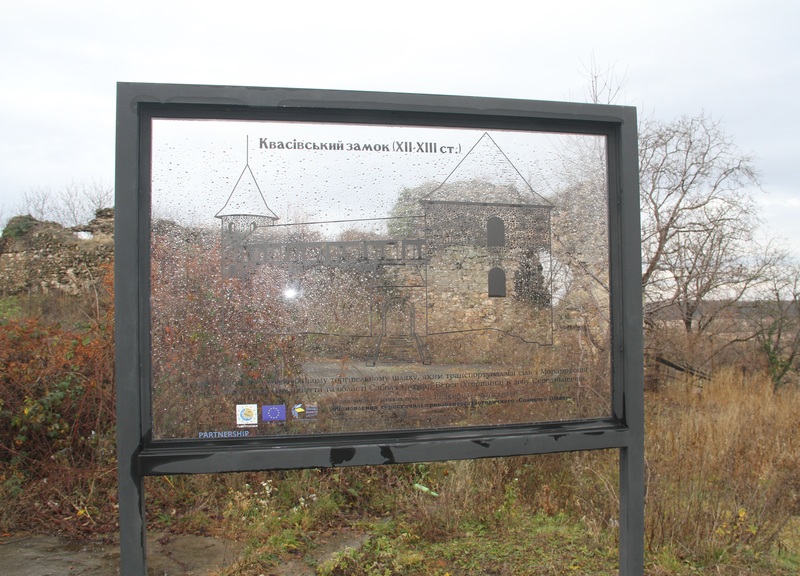
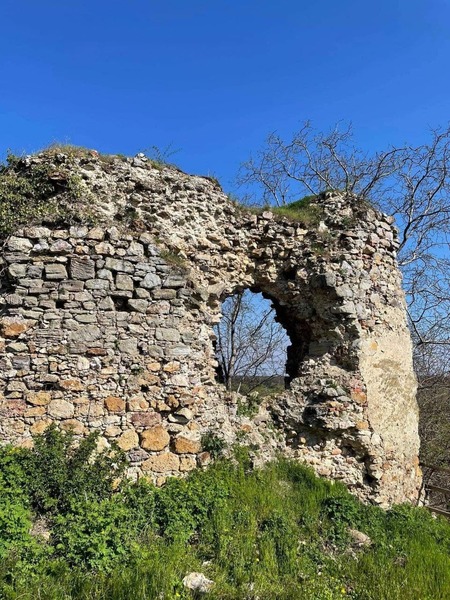
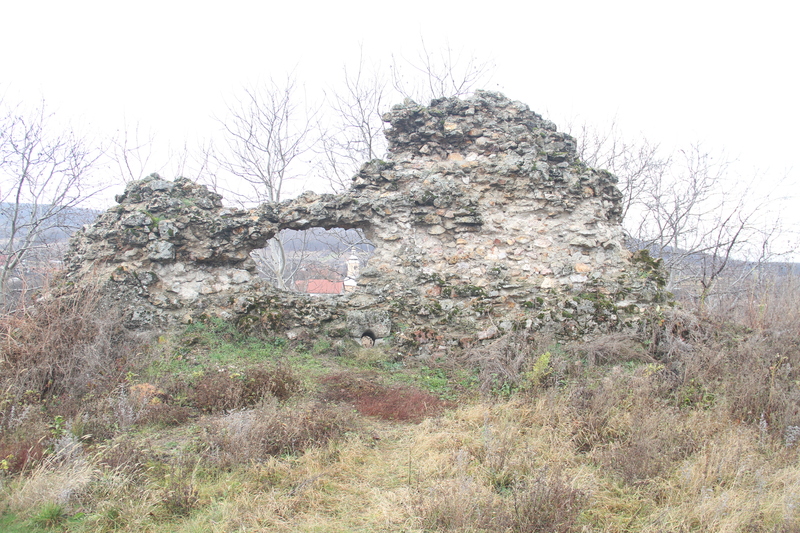
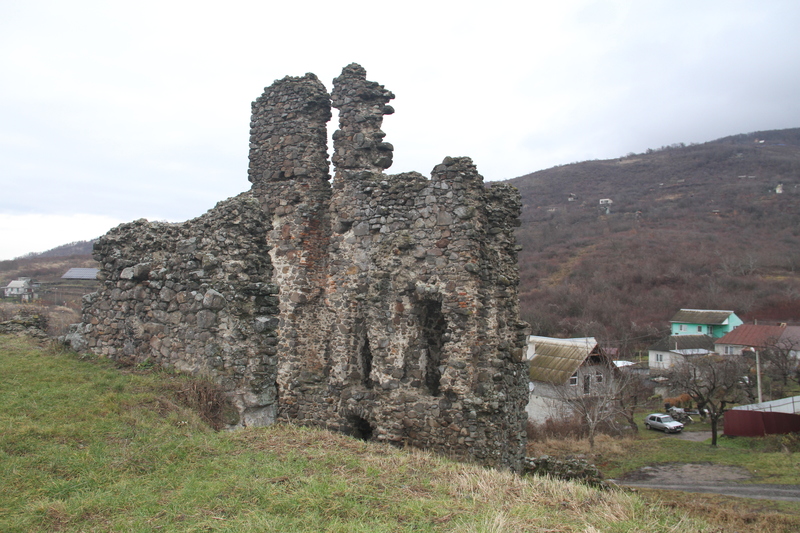
Kvasovo Castle
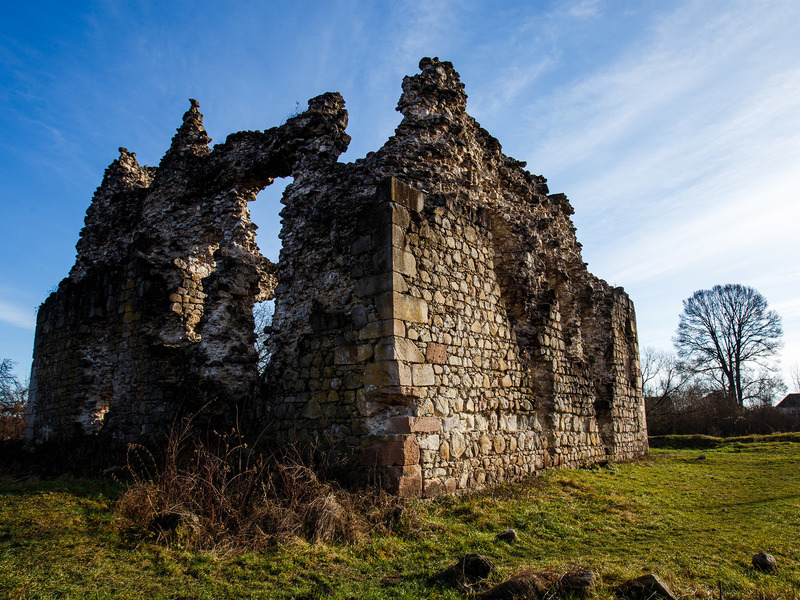
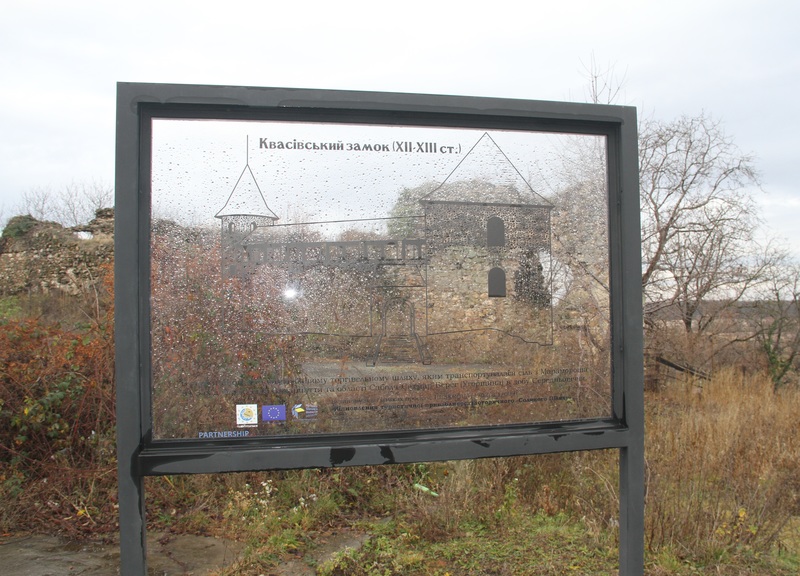
The first mention of Kvasovo Castle dates back to 1390. Despite the fact that only the castle ruins remain visible, the fortress is considered one of the earliest fortifications not only in Zakarpattia, but generally in Ukraine. The castle was built in the village of Kvasovo and its strategic goal was to defend the overland Salt Route and the exit from Borzhava Valley because it stood on the trade route from Maramorosh to Transdanubia.
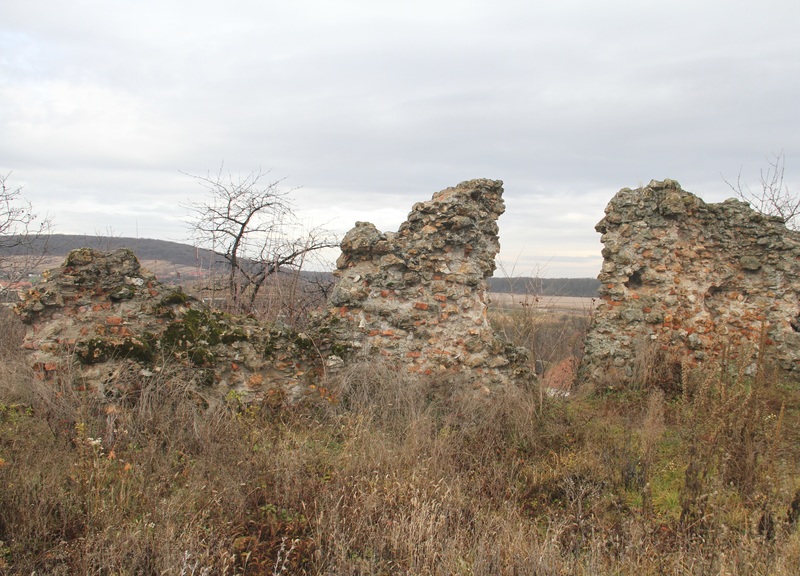
The castle was built on the rock, at a distance of 100 meters from the Borzhava river bed, at a height of 15 meters above the river level. The fortification was built of unprocessed stone, and the researchers explain the admixtures of brick found in the setting with a later intervention in the concept of the castle.
The castle complex was triangular-shaped, it was surrounded by strong walls 6 meters high and about 1.3 meters thick. The castle was protected by a moat whose depth was 4 meters. The outbuildings were also protected by the walls, and a deep well was hollowed out in the rock in the eastern part. According to historians, the tower donjon was the oldest construction of the castle complex. The area of the central part of the castle was 450 square meters.
According to historical documents, the first owner of Kvasovo Castle in 1390 was Janos, the son of the feudal lord Yurii Nodmihali. After his death, the right to rule in the fortress was transferred to the Bathory family. In 1461 Erzsebet Szilagyi, the mother of the Hungarian king Matyash Hunyadi, became the owner of the castle. Admittedly, in the middle of the 16th century another owner of the fortress Elizabeth Ekchi to Pavel Motuznai.
Pavel Motuznai was known for his robbery and predatory assaults not only on ordinary peasants, but also on the neighboring feudal lords’ possessions. Therefore, quite expectedly, very soon the Hungarian nobles’ patience ran out. In 1563 the Hungarian Sejm, during the meeting in the city of Pozsony (modern Bratislava), decided to destroy the castle as a sign of punishment for Pavel Motuznai, and confiscate the owner’s property in favor of the state. However, when in 1564 the people’s militia troops and a detachment of imperial soldiers approached the castle walls, they did not find Pavel Motuznai in the fortress. Having found out about the the Sejm’s decision, he disappeared. By the decision of the Sejm the castle was destroyed and burned. However, later the fortress was rebuilt because at the beginning of the 17th century Kvasovo Castle was again in the possession of the Motuznai family. In 1623, the castle became the property of the Transylvanian prince Gabor Bethlen who then transferred the fortress to the commander of the princely cavalry Peter Redei.
In 1627, the castle became the property of David Belavary de Szikava, and this was the last owner of the fortress, whose name has been preserved in history.
It is stated that in the 17th-18th centuries the castle was definitely inhabited, and in the same period, living quarters and cellars were built here. The nineteenth-century topographic map of Kvasovo indicates that the fortress stood intact and undamaged.
During the 19th and 20th centuries, the castle, which was in decline, was dismantled piece by piece and used as building material by the locals.
Vynohradiv Castle
Vynohradiv Castle is located at the foot of the Chorna Hora Mountain and has a long interesting history. During its existence, from the 10th century until its destruction, the citadel served as a defensive structure, a fortress and even a monastery.
Kankiv Castle is another name used for Vynohradiv Castle, and there are several versions of its origin. According to one legend, during the feudal strife, the castle was owned by a robber named Kanko. Another legend says that the monks who once lived in the fortress wore clothes made of sheep wool which was called «kanko».
Reaching the castle, you can see only the ruins of the once mighty fortress. There can be seen only fragments of the majestic walls, several wallpieces with firing ports and the foundation of the chapel.
It is stated that there was once an underground passage leading from the castle to Vynohradiv, which was called Sevlush in ancient times. This statement is obviously not groundless: while studying the castle, archaeologists found a passage whose length was 12 meters.
It is believed that Kankiv’s history begins in the 10th century. At that time, there was a fortified Slavic settlement here, which protected the people from attacks. In the 11th century, after the annexation of Zakarpattia to the Kingdom of Hungary, a feudal castle was built here, which was used as an observation checkpoint for defense coordination. Vynohradiv Castle was one of the strongholds along the Salt Route, employed for delivering salt from Solotvyno, and which housed a unit of soldiers who accompanied a cargo of salt.
At the beginning of the 14th century, when Kankiv belonged to the royal treasurer Beke Barshi, the castle was converted into a stone fortress, which is first mentioned in the records of 1308. A few years later, Beke Barsha sided with the rebels against the Hungarian king. In 1317, the royal troops captured Sevlush and stormed Kankiv. Consequently, the castle was severely damaged.
In 1399, the then King of Hungary Sigismund gave the fortress to Baron Pereni. The magnate Peter Pereni built a new stone castle instead of the old one on the site of Kankiv and gave it to the Franciscan monks for use, and he himself moved to one of his other castles, namely Korolevo Castle or Nialab.
During the Reformation period, a descendant of Baron Pereni became a Catholic and expelled the Franciscan monks from Kankiv. The monks who resisted were brutally killed and their bodies were thrown into the castle well. There is a legend that in such a bloody way the baron took revenge on the monks who had previously imprisoned his daughter in the dungeons of the fortress.
Vynohradiv Castle was finally destroyed in the second half of the 16th century by order of the Austrian authorities which at that time were actively fighting the Hungarian nobility. The castle has not been restored since then.
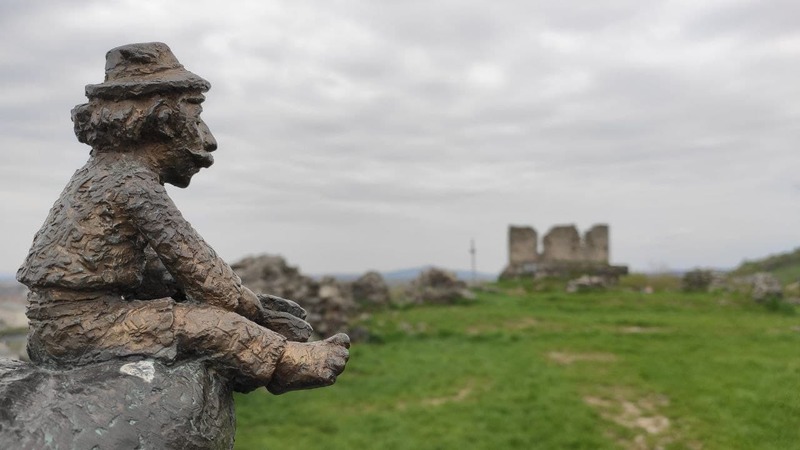
However, even its picturesque ruins still inspire people of art and cinema. Kankiv’s centuries-old walls served as successful scenery for a number of films, such as «Rainstorm over the Mountains», «Over the Tysa» and the legendary film «The Gypsy Camp Goes to Heaven».
Korolevo Castle
Korolevo Castle in Zakarpattia, also known as «Nialab», used to be not only the stronghold but also the scientific and cultural center of this area at that time.
Nialab Castle was first mentioned in the censuses of the 13th century. During the period the forests there abounded in game. That is why King Istvan V of Hungary, who was so fond of hunting, ordered to build a wooden hunting lodge there and so it was called «the King’s lodge», or in Hungarian Király háza. This name subsequently entrenched itself because it was used to refer to the fortress and the settlement that arose in the area and, in the future, the village was named after it: Kiralhaza turned into Korolevo.
Researchers state that in the late 13th – the early 14th centuries stone fortifications were constructed to replace the hunting lodge. The erection of the fortified fortress is associated with the period of the Tatar-Mongol invasion of the Hungarian kingdom in 1241-1242, when the Hungarian monarchs began a large-scale campaign on building fortresses to protect the borders.
Nialab Castle became one of such fortresses. Erected on the top of a 52-meter mountain, with the walls almost 7 meters high and 2 meters thick, with a reliable system of fortifications, Korolevo Castle was an important military stronghold of Uhocha comitat and the Upper Tysa, which also provided security of «the Salt Route».
Nialab Castle officially belonged to the kings of the Arpad Dynasty until their line was ended in 1301. Thus, in the early 14th century, the fortress was perhaps already the property of the king of the new Dynasty of Anjou. Nialab Castle had changed owners several times since then. Feudal lords, who had the courage to oppose the king, were hiding there. The king’s troops besieged it to regain ownership of the crown. Korolevo Castle was in the possession of the Wallachian Orthodox voivodes of the Drahy family over 27 years. In the late 14th century it was presented by the king to the Pereni family.
In 1401, within the walls of the castle, Stanislav Hramatyk rewrote the «Royal Gospels» which is an object of interest in view of manuscript art and Ukrainian literature.
In 1514, the rebellious peasants tried to storm the castle, but they failed to capture the fortress.
In 1526, the owner of the castle, Gabor Pereni, died in the war, so Nialab passed to his wife Katalin Frangepan. Staying in the castle at her invitation, the philosopher and humanist Benedict Komiati translated part of the Bible from Latin and he also translated the Apostle Paul’s 13 epistles.
In 1661 the castle was besieged by the Tatars (according to other sources – the Turks). However, they were not the ones who ultimately destroyed the powerful Nialab.
The decision to destroy the castle in 1672 was made by the Austrian military council with the emperor’s participation. During this period, the mentioned part of Zakarpattia was under the influence of the Austrian Habsburgs. After another anti-Habsburg uprising of the Hungarians, the Austrian emperor Leopold I sent his troops to the territory of Zakarpattia, and ordered to destroy «Nialab». The verdict was executed without delay: Korolevo Castle was ruthlessly ruined and never rebuilt.
Khust Castle
Khust Castle was one of the fortifications, which was once built to protect the Salt Route running from Solotvyno mines along the Tysa. The construction of the stone fortress on the site of the former wooden fortification began in 1090 by order of King Laszlo I and was completed a century later - in 1191, during the reign of Béla III.
During the Tatar-Mongol invasion in 1242, Khust Castle was destroyed. As evidenced by the Hungarian chronicles, at that time the fortress belonged to voivode named Khust. The castle was restored in 1318; and it must be added that the outpost was constantly restructured to strengthen and improve its defense capabilities.
From 1281 to 1321, the fortress belonged to the princes of Galicia-Volyn state, however, it was subsequently in the possession of the Hungarian kings and noblemen again. At the time the fortress was used as a prison, and in 1447, during the reign of Janos Malomvizi, a сhurch was erected on the territory of the castle.
In the 16th – 17th centuries, the Habsburgs and Semyhorod princes fought for the city of Khust and its castle. The strategic and defensive role of the stronghold could hardly be assessed since the entire plain and all the roads around were under its control. The military inventory of Khust castle consisted of 50 guns, several tons of gunpowder and 3 thousand cannonballs kept in three warehouses. Admittedly, on the territory of the castle there was a deep well, which, in case of siege, could provide drinking water to all the inhabitants of the castle. Any attempt to take the fortress by assault failed; these were only bribery or deception due to which it could be seized.
During the liberation war of 1703 – 1711, Khust castle was an important stronghold of the Kuruc rebels. It was here that the rebel leaders during the Semyhorod Sejm in 1905 proclaimed the independence of Transylvania. However, during the uprising, the fortress was severely damaged and gradually began to lose its strategic role.
In 1717, the city of Khust survived the attack of the 12,000-strong Tatar horde. The soldiers of the garrison of Khust castle caught up with the horde near the village of Vyshkovo and, together with the peasants, defeated the Tatars in the Strymtura tract. This was the last military action of the fortress garrison.
In the summer of 1766, lightning struck the fortress’s powder magazine. As a result of its explosion Khust castle and all the premises were destroyed, several people died in the fire. Despite the fact that there was an intention to restore it and the funds were allocated for this, no success was achieved in the matter. The royal garrison left the castle and it began to gradually fall into decline.
In 1798, a storm damaged the last tower of the castle. With the authorities’ permission, the local community dismantled the castle into stones, which were later used for constructing a Catholic church in Khust. It was enriched with the bell and tower clock whose chimes once sounded in the fortress.
Today, only picturesque ancient ruins remain on the site of the once mighty fortress. However, the Castle Hill offers stunning views on them, which adds special charm to the place.
Vyshkovo Castle
On the place where the mighty Vyshkovo Castle once stood, now there is only a forested mountain. And there is nothing left to remind us that during 13th-14th centuries this fortress was one of the strongholds of national importance because it guarded the strategic «Salt Route» and controlled the transportation of salt.
Vyshkovo Castle was first mentioned in written sources within the period of 1274-1281. The fortress was built on the mountain 589 meters high near the village of Vyshkovo which in the past had the status of the crown city. It is believed that the mountain received its name Varged (translated from Hungarian as «Castle Mountain») after the construction of the castle on it.
Vyshkovo Castle, like fortifications of that time, was triangular in shape. From the north it was protected by steep mountain slopes; the other sides of the fortress were more vulnerable, so a system of earthen ramparts and moats was built here to protect it. Each side of the triangle, formed by moats and ramparts, was 60-70 meters long. Inside this triangle was another line of ramparts that protected the central area of the castle. There might have been a watchtower in the middle of this area. There are small depressions in the rocky outcrops, in which the products were probably stored.
Initially, Vyshkovo Castle belonged to the feudal lords Mika and Istvan Chepa who came from the Gontpazman family. In 1281, King Laszlo IV Kuhn presented Vyshkovo to his brothers as a reward for their heroism in the wars. They built a castle on the mountain, which became their private feudal property. It has to be admitted that the fortress was also used to protect the salt mines of Maramures.
In 1329, during the reign of King Charles I Robert of Anjou, Vyshkovo lost the status of private feudal property and obtained the status of the crown or royal city. At the same time, Maramures Comitat was formed, Vyshkovo became its administrative center, and Vyshkovo Fortress – the royal castle, the main stronghold of the comitat.
At the end of the 14th century, the stone fortress in Khust, which is 20 kilometres from Vyshkovo, became increasingly powerful. Admittedly, the castle in Vyshkovo was gradually falling into disrepair and lost its significance. Thus, the existence of Vyshkovo Castle, in comparison with all the strongholds of Zakarpattia, was the shortest – about 100 years.
Like every «decent» castle with a history, Vyshkovo also has its own legend. It tells us that after the decline of the fortress on its ruins there settled 12 robbers who robbed and kept the local population in fear. They once kidnapped Ilonka, the daughter of the richest merchant in Vyshkovo, locked her in one of the castle’s prisons, and demanded a huge ransom for the girl’s return. Ilonka’s pleas and curses were heard by higher powers: lightning struck the Castle Mountain, causing a rift that engulfed all the robbers. Later, a lake formed nearby, which was the decoration of this place for a long time.
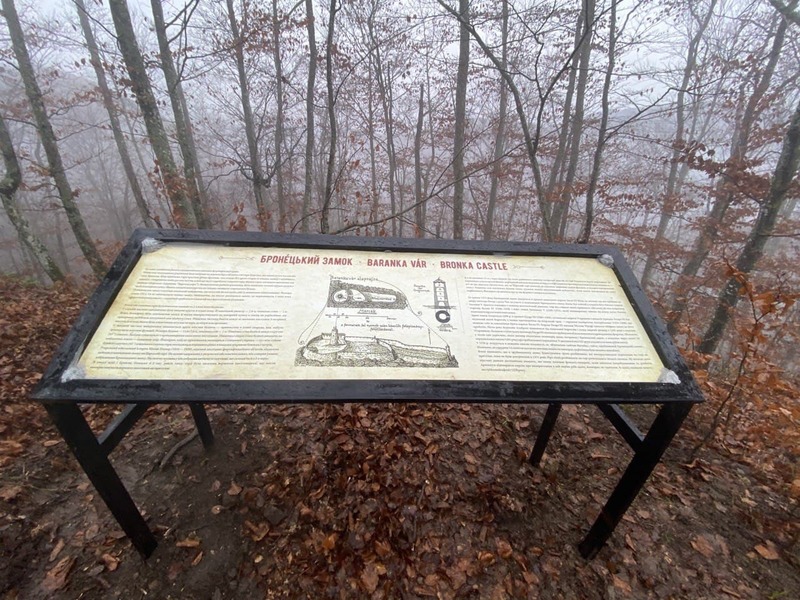
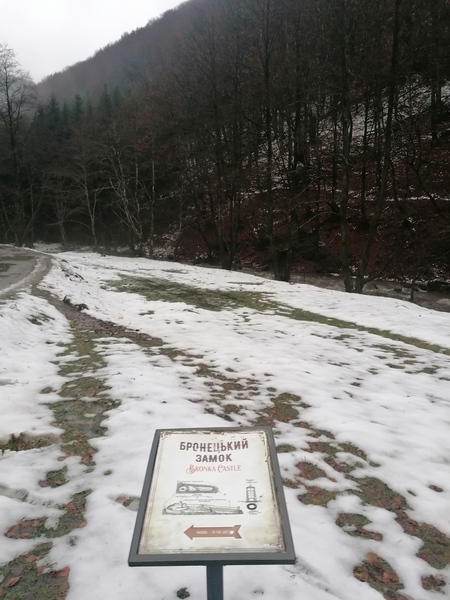
Bronka Castle
Bronka Castle is one of the most mysterious castles in Zakarpattia. These ruins can scarcely be called a castle, though. One can see only a pile of stones and several wall fragments under the soil layers.
It is located on the top of the mountain, which the locals call Tsarska, between the villages of Bronka and Sukha in Khust district. The rocky mountain is surrounded on three sides by the Bronka river. So if looked at from above, it becomes clear that the fortress used to be quite unapproachable.
Bronka Castle is also sometimes called the Black Castle, and it is considered to be the least studied. The remains of the fortress were discovered in 2008.
The exact date of constructing the castle is unknown. The first mentions of it date back to 1265. Interestingly, in the boundary descriptions of the area in 1336, i.e. 70 years after the first mention was made, Bronka Castle was marked as destroyed. The exact reason for the destruction of the fortress is not clear. Some versions are based on legends, others - on historical events that could have led to its ruination.
There are generally many stories and legends connected with Bronka castle. As an example, there can be suggested a story of the robber knight Brynda, who was able to ride from mountain to mountain on his three-legged horse. According to one legend, Brynda made a home for himself in the hard-to-reach Bronka Castle, which he used to leave for a while to carry out his predatory practices. In some legends Brynda appears to be a local Robin Hood, who robbed the rich and did not bother the common people. In others he is described as a robber who terrorized the local population; because of this the locals lost their patience, chased Brynda out and destroyed the castle.
Another legend tells us that Tsarska mountain, on which the castle stands, hides many treasures of the bad ruler. No one has been able to find them yet because they are guarded by a devil with a long black beard, and whoever meets him will lose his mind.
However, the most probable version is related to the destruction of the castle in pursuance of a peace treaty. Thus, at the end of the 13th century, the last king of Hungary from the Arpad Dynasty, Andrew III, was fighting with Albrecht, Duke of Austria for the Hungarian throne. After a year of struggle, the duke renounced his claims to Hungarian possessions and concluded a peace treaty with Hungary. One of the conditions of the treaty that Andrew III was bound to undertake consisted in destroying a number of the border fortresses. Bronka Castle was, quite possibly, one of them.
Since the castle is difficult to reach, there are no convenient paths leading to it, and the fortifications were located on a relatively small area, some researchers suggest that the fortress was constructed to be used as an observation checkpoint.