
Berehove district

The district was established in accordance with the resolution Verkhovna Rada of Ukraine 17 July 2020. It includes: Berehove, Vynohradiv urban, Velykyi Berez, Velykyi Byhan, Koson, Pyiterfolv, Kamianske rural, Bativ, Vylotske, Korolevske settlement territorial communities.
Previously, the district was part of Berehove (1953-2020), Vynohradiv, part of Irshava districts, liquidated by the same resolution of the Verkhovna Rada, and the city of regional significance Berehove.
This is one of the warmest regions of Ukraine, where locals are among the first to harvest their crops. The district is located on the border with Mukachevo and Khust districts of Transcarpathia, as well as on the borders with Hungary and Romania.
Numerous tourist routes pass through the territory of Berehove district, including the Salt Route, Wine Route, Gothic Route, Castles and Palaces of Transcarpathia, Gastronomic Route, the Oprishky Trail, Pinto's Way, and the unique Borzhava Narrow Gauge Railway.
Most tourists visit the former Berigsas (now Berehove) during the International Wine Festival, as this Transcarpathian town is famous for producing a variety of sparkling beverages. However, Berehove has other attractions worth seeing and visiting.
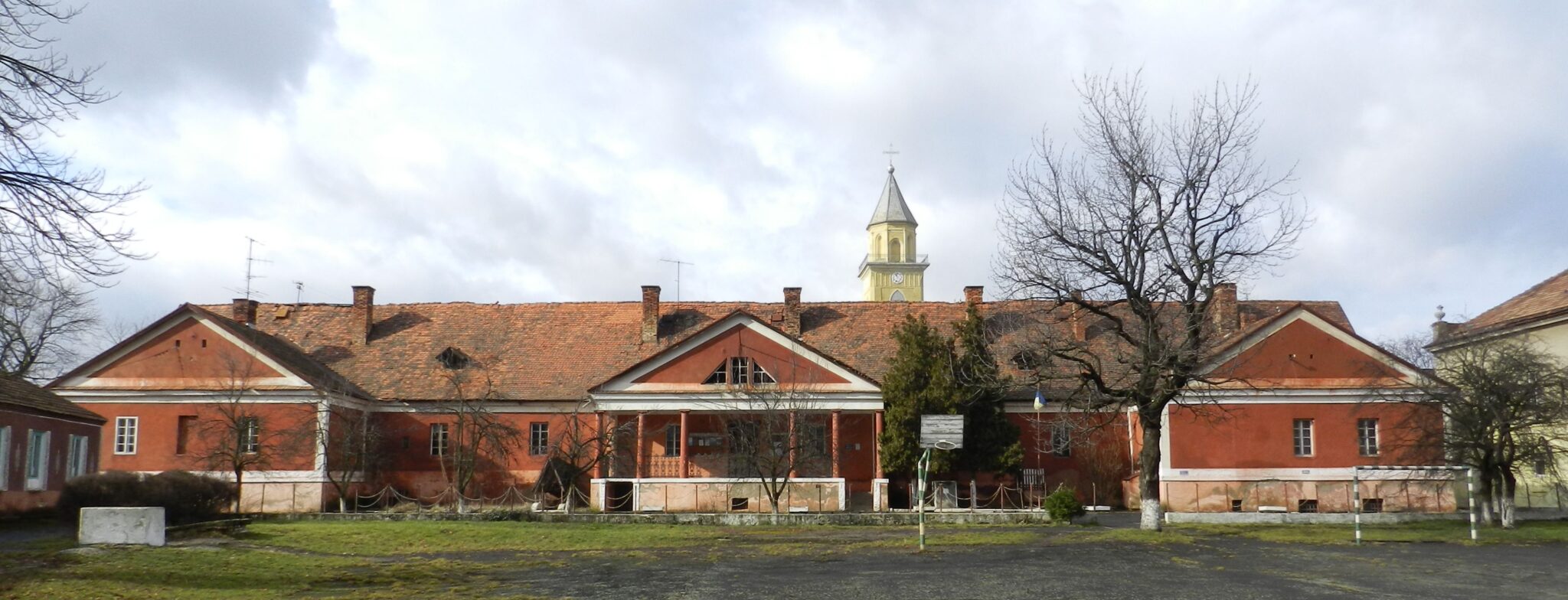
Like every city, Berehove has its own fortress - or rather Palace of Hungarian Prince Gabor BetlenIt was built in 1629 on the site of a Dominican monastery. The residence is located at 1 G. Betlen Street.
The building has a rectangular shape and consists of a central part (built in the Renaissance style) and two outbuildings. The basement of the castle is the remains of a former monastery, so it belongs to the Gothic style. Nowadays, the palace has become the Berehivshchyna Museum, and thanks to Ivan Shepa, the cellar is home to a museum of winemaking (since 2011). Here you can see the equipment and tools used to make wine and care for grapes over the past centuries. However, you are not allowed to taste the sparkling drink. However, do not be upset, because there are other places in Berehove for this purpose. In particular, the wine cellars of the sixteenth century at the Zhayvoronok hotel and restaurant complex and the Old Cellar. The latter is the most popular because it is located in a mountain that once served as the northern border of the Roman Empire (now Vynohradna Street). This brewery is more than 300 years old, but it has been open for only a few years thanks to Oleg and Tatiana Gavrilchenko. The tasting takes place in a room carved into the rock.
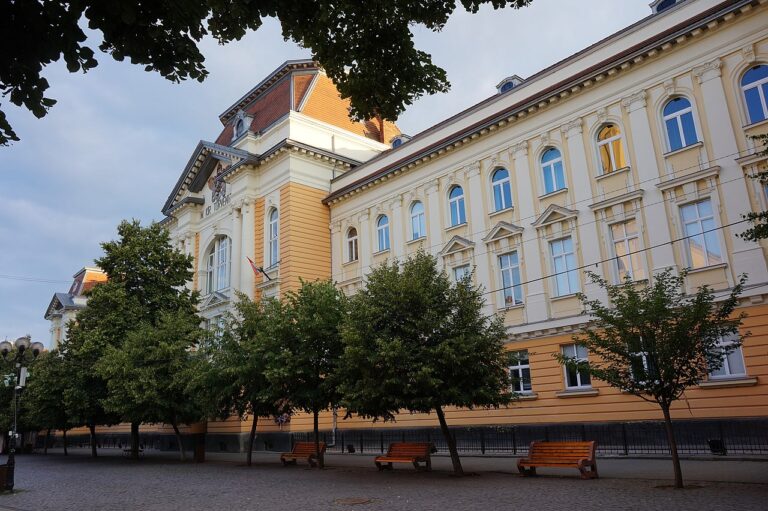
Palace of the Comitatus Court or Palace of Justice is located at 6 Kossuth Square. The building was constructed in the Neo-Baroque style with elements of Renaissance architecture in 1908-1909 by architects Ferenc Jablonsky, István and János Kopács. During its existence, the building was used in different ways: first as a court and prison; during the Second World War, it housed the communist and municipal institutions, the police, and the court; in 1944-1971, as a military barracks; in 1971-2001, as a precision mechanics factory. Today, the building houses the Ferenc Rákóczi II Transcarpathian Hungarian Institute.
Berehove also has one of the oldest stone buildings - the Church of the Exaltation of the Holy Cross, built in 1100. The building combines Romanesque and Gothic styles. The main altar is made in the Baroque Gothic style. An impressive element of the temple is a sundial, which shows Central European time in Roman numerals. The church is located at 3 Rakoczy Square.
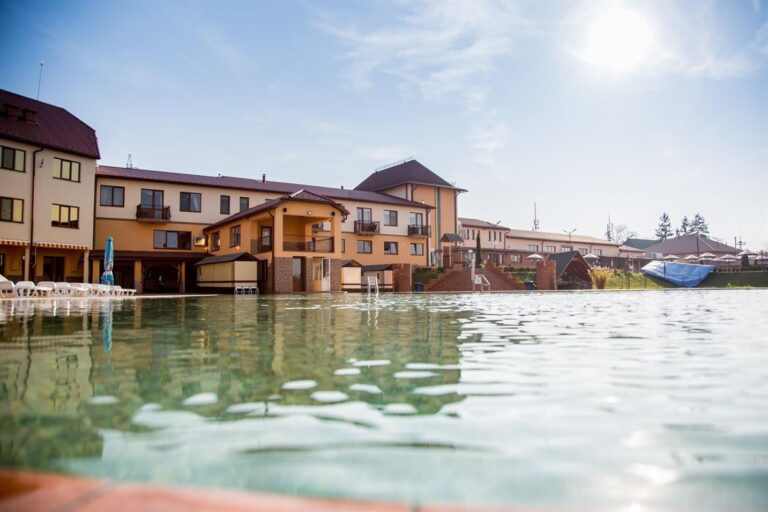
The highlight of Berehove is its thermal pools, which are extremely rare in the world, as they are found only in Hungary, New Zealand and Kamchatka. The water is highly mineralised and comes from underground geysers 1600 metres deep. The water also has a constant temperature of 31-32 degrees and has healing properties for people with problems of the musculoskeletal system, cardiovascular and nervous systems. The most famous swimming pool (open-air) is located at the Zakarpattia sports complex, and another (indoor) pool is located on the territory of the Zhayvoronok tourist and recreation centre (Pachyрта).
In addition to the above-mentioned Berehove attractions, there are others worth visiting. Such as the Golden Pava Casino, the Berehove Hungarian Theatre, the Stone Humpbacked Bridge, the Maximus Water Park, the Verke Embankment, etc.
Nature lovers will be interested to visit:
Chorna Gora Botanical Reserve, a former volcano with an altitude of 570 metres above sea level;
The Tisa River or the Borzhava River;
Novoselytsia village and walk along its paths;
Mount Frasyn, the highest peak in the Vynogradiv district, whose summit is covered with a carpet of spring primrose and other red-book plants in spring. In the village of Veritsa, there is a rock of Maria Theresa.
Architectural monuments
Ugochansky Kankiv Castle, 13th century, in the city of Vynohradiv, which once controlled the salt route along the Tisza. Now in ruins;
Park and palace of the Pereni family, 16th-18th centuries. It used to be part of the city fortifications of Vynohradiv, later rebuilt into a residential residence, now the education department;
The Church of the Ascension, 13th century. In historical times, in addition to its spiritual mission, it had a defensive role for the city of Vynohradiv, and its bell tower was a watchtower;
The Franciscan monastery in Vynohradiv has been known since 1516. Franciscan chapel in the monastery wall;
Nyalab Castle in the village of Korolevo. The first riddle about the castle appeared in Hungarian chronicles in 1279.
Greek Catholic Church, Vynohradiv (1796)
The building of the former synagogue, Vynohradiv (XIX century)
Wooden church in the village of Novoselytsia, 1669
The Reformed church of Shalanky village, built by the Roman Catholic community in the fourteenth century, is one of the oldest in Transcarpathia. In 1711, a congress of the rebellious Kurucs led by Ferenc Rákóczi II took place on the territory of the church in the war of liberation against the Habsburgs.
On the territory of Berehove district there are museumsthat are worth visiting:
Historical Museum of Vynogradiv, 4 Myr Street
Zatyssia Museum Complex, which includes the historical (located in the Fogorosi Palace) and ethnographic (Skansen) museums, Tisobiiken village (near Põiterfolvo)
Museum of Ethnography in the village of Novoselytsia, for more information, see Ethnographic Museum in the village of Novoselytsia.
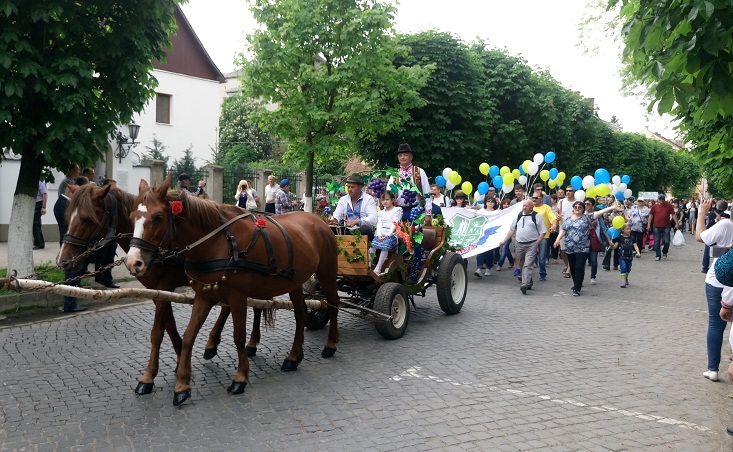
Every year, at the end of August, Vynogradiv hosts the most famous music festival in Transcarpathia, Kryshtalevi Hrona. In addition, the Ugochanska Loza gastronomic wine festival is very popular.
Fans of active tourism can choose to go cycling around the area, or can rafting on the Tisza River by ordering the services of specialised clubs for organising outdoor activities.
It is worth noting a unique farm in the village of Botar, where Hungarian grey cows and Mangalitsa pigs are bred and organic crops are grown. Another interesting place to visit is a buffalo farm on the outskirts of Vynogradiv.
In the Vynogradiv district, health improvement and treatment is provided in a sanatorium using thermal water.
Accommodation is provided by hotels, rural estates, and meals are provided by restaurants, chards and tasting rooms.

